Why do my symptoms keep getting missed when the camp medic only has a phone?
Overstretched medics in low-resource settings face immense cognitive loads, leading to missed symptoms. Smartphone-based tools can help by providing objective data.
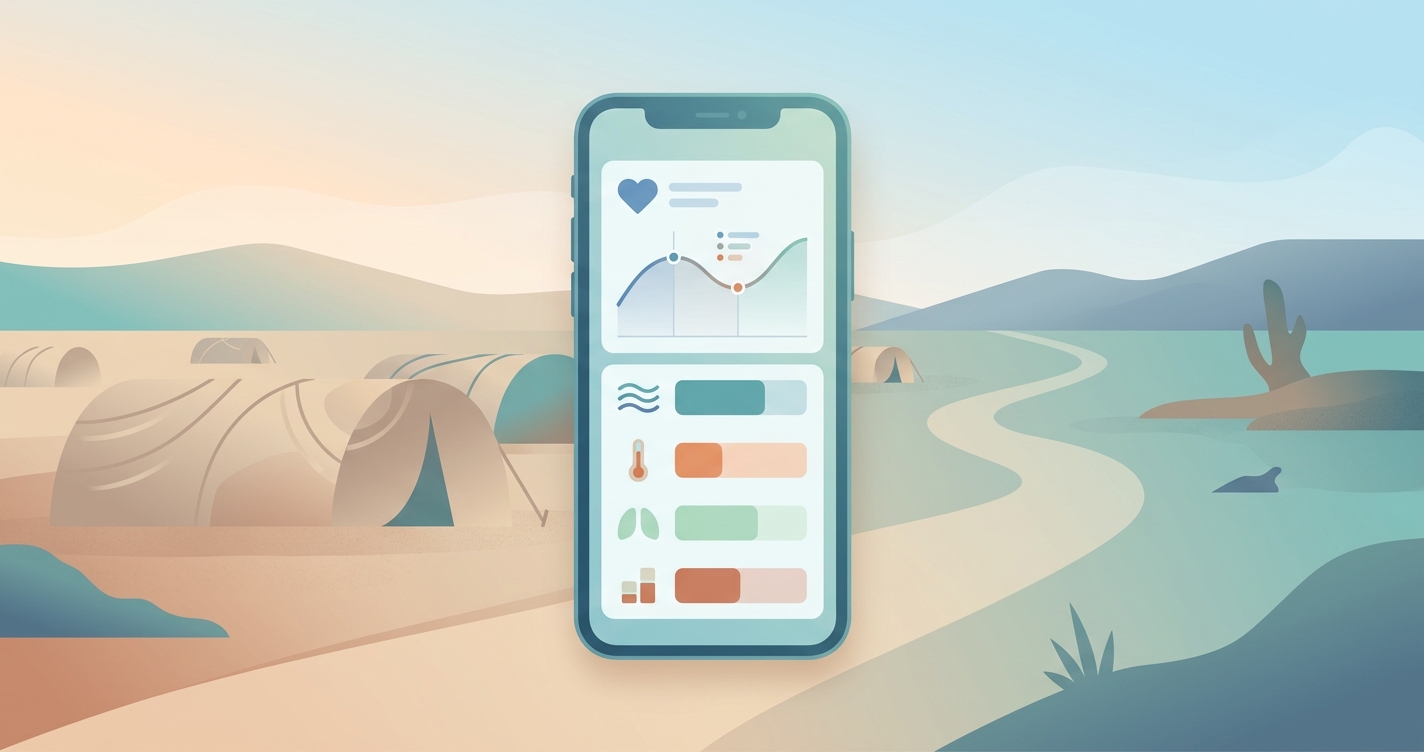
In settings of human displacement, the demand for healthcare drastically outpaces the supply. A single camp medic can be responsible for hundreds, if not thousands, of individuals, creating an environment where even the most dedicated professionals are forced to make difficult triage decisions with minimal information. The reliance on verbal symptom reporting and visual assessment alone is a significant structural weakness. When a medic's primary tool is a basic mobile phone for communication, the potential for critical health signals to be overlooked increases dramatically. This is not a failure of individual medics, but a systemic challenge rooted in the operational realities of delivering care in crisis.
"The first World report on the health of refugees and migrants, published by the World Health Organization in 2022, shows that these populations often have poorer health outcomes and face numerous barriers to care, including resource limitations that hinder accurate and timely diagnosis."
The diagnostic challenge of limited field care
The core problem is that many symptoms missed limited field care scenarios are a direct result of data scarcity and overwhelming cognitive load on the provider. A medic rushing between tents must rely on subjective patient descriptions, which can be inconsistent or incomplete, especially when dealing with language barriers, cultural differences in expressing pain, or the health literacy of the patient. This environment makes it difficult to detect subtle but important clinical changes.
Conditions with non-specific early symptoms, such as sepsis, severe dehydration, or the onset of non-communicable diseases like hypertension, are particularly prone to being missed. A patient's complaint of fatigue or a headache could be one of a dozen minor ailments or the first sign of a life-threatening condition. Without objective data points, the medic is forced to pattern-match based on limited information, under immense time pressure. Research on cognitive load in pre-hospital environments shows that such high-stakes, uncertain conditions directly impair decision-making and increase the likelihood of errors. The medic's phone, in this context, is a communication device, not a diagnostic one, leaving a critical gap in their toolkit.
| Feature | Traditional Field Screening | Smartphone-Assisted Screening |
|---|---|---|
| Data Capture | Manual, subjective notes; verbal history | Automated, objective vital signs; standardized digital checklists |
| Triage Accuracy | Dependent on medic's experience and cognitive state | Augmented by data-driven risk scores and trend analysis |
| Speed & Scalability | Slow; one-to-one assessment limits throughput | Rapid; allows a single worker to screen many individuals quickly |
| Longitudinal Tracking | Anecdotal or paper-based; difficult to track changes over time | Digital records enable monitoring of patient status across encounters |
| Equipment Burden | Requires separate tools (thermometer, BP cuff, pulse oximeter) | Minimal; uses the camera and sensors of a single device |
Industry Applications
The transition from a simple phone to a smartphone equipped with diagnostic software represents a significant leap in capability for field health workers. This approach is not about replacing medics but augmenting their capacity to see and interpret clinical signals.
Triage and prioritization
In a mass-casualty or high-volume screening scenario, the ability to quickly differentiate between the "worried well" and the critically ill is critical. Smartphone-based tools that measure key vital signs like heart rate, respiratory rate, and blood pressure in seconds can provide an objective layer of data for triage. This allows community health workers (CHWs) or medics to rapidly flag high-risk individuals for more thorough assessment, ensuring limited clinical resources are directed where they are most needed.
Longitudinal health monitoring
For displaced populations, many of whom may have chronic conditions, continuity of care is a major challenge. Digital health tools create a persistent record. A medic visiting a tent can pull up a patient's history, view their vital sign trends, and make more informed decisions. This is particularly crucial for managing non-communicable diseases (NCDs), which require consistent monitoring that is nearly impossible in paper-based systems.
Data for programmatic decision-making
When data from individual screenings is aggregated and anonymized, it provides an invaluable resource for camp administrators and public health organizations. Identifying a cluster of individuals with elevated respiratory rates, for example, could provide an early warning of a respiratory disease outbreak. This allows for targeted interventions and more efficient allocation of resources, moving from a reactive to a more proactive model of camp health management.
Current research and evidence
The evidence base for mHealth (mobile health) in humanitarian settings has been growing steadily. Researchers have noted that in crises, mHealth interventions enhance disease surveillance and management. A comparative effectiveness study published in the International Journal of Medical Science and Research Technology highlighted the value of hybrid systems using smartphone apps. Similarly, work by researchers like Alain B. Labrique at Johns Hopkins University has consistently pointed to the potential of digital tools to strengthen health systems in low-resource settings. His research, dating back over a decade, emphasizes moving from pilot projects to scaled, evidence-based implementations. The WHO's 2022 report on refugee and migrant health further reinforces the need for innovative solutions to bridge healthcare gaps, with digital health being a key enabler. These tools are increasingly seen not as a novelty but as essential infrastructure for effective humanitarian response.
The future of diagnostics in humanitarian settings
The future points towards increasingly sophisticated, equipment-free diagnostics powered by artificial intelligence running on commodity smartphones. As sensor technology and AI algorithms improve, the ability to derive a wider range of physiological indicators from a simple video feed of a person's face will expand. This moves beyond basic vital signs to potentially include markers for anemia, jaundice, and other conditions currently requiring more invasive tests. For the camp medic, this means their phone becomes a powerful, multi-modal sensor platform, capable of flagging risks they could not possibly detect with the naked eye. This technology will be instrumental in closing the diagnostic gap in the world's most challenging environments.
Frequently asked questions
How can a phone-based tool work without a reliable internet connection? Many modern mHealth platforms are designed to work offline. Data is collected and stored securely on the device during field use and then synced to a central server when a connection becomes available. This "store-and-forward" model is essential for functionality in remote or low-connectivity areas.
Isn't collecting this much health data a privacy risk for vulnerable people? Data privacy and security are critical. Reputable digital health platforms use robust encryption, data anonymization, and strict access controls. The design of these systems is often guided by principles of data sovereignty, ensuring that health data is managed in a way that respects both individual privacy and the governance structures of the host country or organization.
What kind of subtle symptoms are most commonly missed without this technology? Early signs of clinical deterioration are often subtle changes in vital signs. For example, a slowly increasing respiratory rate can be an early indicator of pneumonia or sepsis. A gradual rise in blood pressure might signal developing pre-eclampsia in a pregnant woman. These are changes that are very difficult to track without consistent, recorded measurements.
The challenge of missed symptoms in limited field care settings is a critical issue that technology can help address. By providing overstretched medics with tools that offer objective, rapid, and longitudinal data, we can enhance their ability to detect danger signs and save lives. Circadify is actively working in this space, developing solutions to empower frontline health workers. You can learn more about these deployments by visiting our case studies at circadify.com/blog.