
Why is 'mobile health' the fastest-growing category of global aid?
Explore why mobile health is the fastest-growing global aid category, analyzing market trends, its impact on low-resource settings, and future directions.
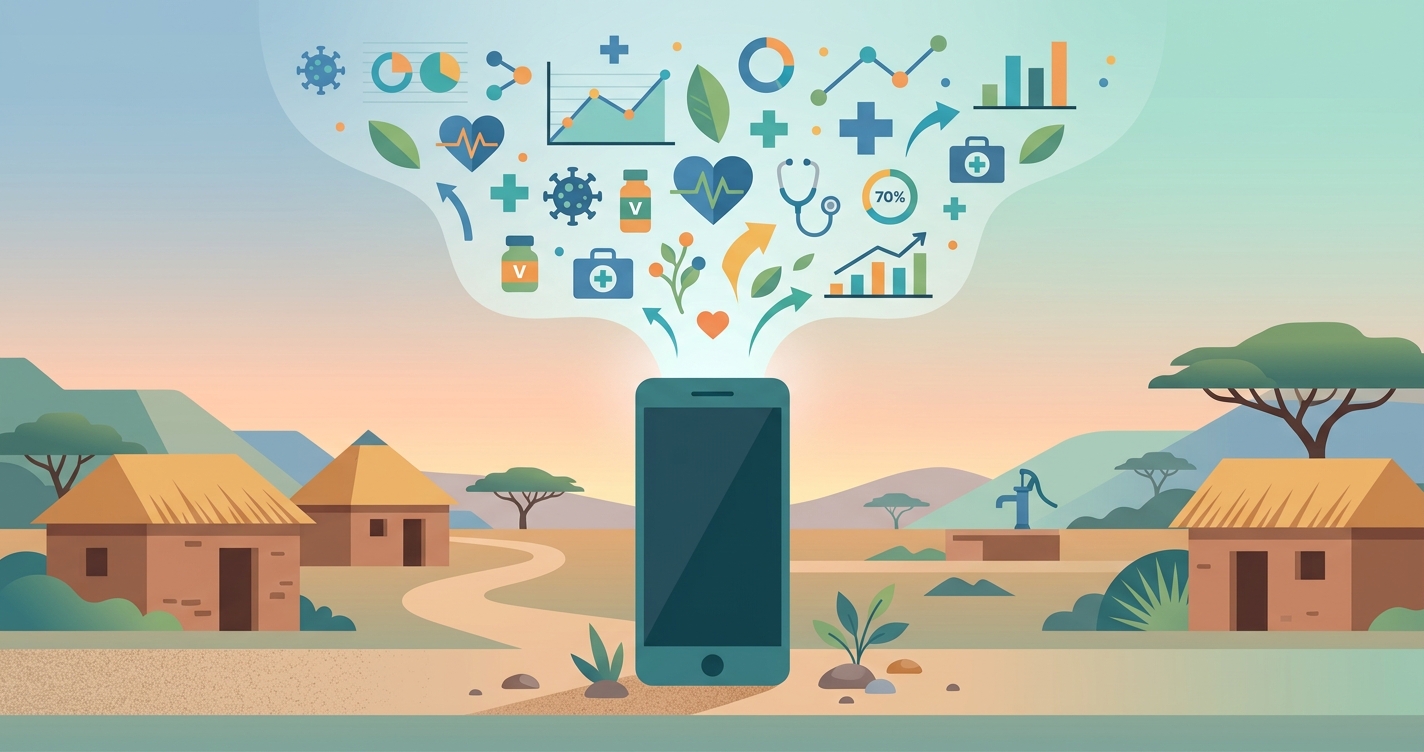
Mobile health (mHealth) has emerged as a uniquely resilient and rapidly expanding category within international development assistance. While overall development assistance for health (DAH) faces projections of decline in the coming years, investments in digital health tools continue to accelerate. This divergence highlights a strategic shift among donors, governments, and implementing partners, who now view mobile technology not as a novel experiment, but as a core component of building sustainable health systems. The phenomenon of mobile health fastest growing aid is rooted in its power to extend the reach of healthcare services, improve data quality, and empower local health workers in even the most remote and under-resourced environments.
"The global mHealth market was valued at USD 71.49 billion in 2024 and is projected to reach USD 228.84 billion by 2033, growing at a Compound Annual Growth Rate (CAGR) of 13.8%." - Precedence Research, 2024
The convergence of technology and need
The primary driver behind mobile health's rapid ascent in global aid is the unprecedented proliferation of mobile phones. Over 70% of the world's 5 billion wireless subscribers now reside in low- and middle-income countries (LMICs), according to the World Health Organization. This existing infrastructure provides a powerful platform for delivering health interventions directly to populations that have historically been difficult to reach. Unlike traditional aid programs that often require building physical infrastructure from the ground up, mHealth uses a technology that people already own and use daily. This reality makes mobile health the fastest growing aid category because it offers a more efficient and scalable model for impact.
This growth is happening even as institutions like the Institute for Health Metrics and Evaluation (IHME) forecast a potential 21% decline in overall DAH between 2024 and 2025. This fiscal pressure forces donors and ministries of health to seek out higher-value interventions. Mobile health platforms, which can reduce the costs associated with patient follow-up, health worker training, and data management, present a compelling case for investment. Major funders like The Global Fund, which invests around $150 million annually in digital health, are channeling resources into these technologies to maximize the effectiveness of their programs fighting AIDS, Tuberculosis, and Malaria.
| Feature | Traditional Health Aid | Mobile Health (mHealth) Aid |
|---|---|---|
| Scalability | High cost, slow; requires physical infrastructure and on-site staff. | Low cost, rapid; uses existing mobile networks and devices. |
| Data Collection | Manual, paper-based; prone to errors, delays, and loss. | Digital, real-time; enables faster analysis and decision-making. |
| Reach | Limited to proximity to clinics and health posts. | Extends to remote and last-mile populations via CHWs and SMS. |
| Cost-Effectiveness | High overhead for logistics, personnel, and facilities. | Lower operational costs; reduces travel and administrative burden. |
| Patient Engagement | Episodic, based on facility visits. | Continuous; uses reminders, health tips, and telehealth consultations. |
Industry Applications
The practical applications of mHealth are diverse, addressing critical bottlenecks in health systems across LMICs. These tools are not just replacing analog systems but are creating entirely new workflows for outreach, screening, and care coordination.
Maternal and child health (mch)
Maternal and child health has been a major area of impact for mHealth. A systematic review published in BMC Public Health (2021) found that mHealth interventions significantly improve antenatal care attendance and the timeliness of child immunizations.
- Appointment Reminders: Simple SMS or automated voice messages help reduce missed appointments for prenatal check-ups and vaccinations.
- Health Information Dissemination: Mobile apps and messaging services deliver vital information to expectant mothers on nutrition, danger signs, and postnatal care.
- CHW Support: Community Health Workers (CHWs) use mobile applications with built-in protocols to screen for high-risk pregnancies and ensure timely referrals to health facilities.
Infectious disease management
In the fight against diseases like HIV and Tuberculosis, mHealth is crucial for case management and adherence support. For example, PEPFAR implementing partners are increasingly integrating contactless screening into their HIV programs. Mobile tools allow field workers to triage individuals, collecting preliminary data and assessing risk factors without specialized medical equipment. This helps focus limited clinical resources on high-priority cases. Video-Observed Therapy (VOT) for TB patients, where individuals record themselves taking medication via a smartphone, is another mHealth intervention that improves adherence while reducing the burden on the health system.
Community health worker empowerment
Perhaps the most significant application of mHealth in global aid is its role in empowering Community Health Workers. CHWs are the bedrock of primary healthcare in many LMICs, and mobile tools have transformed their work. Digital platforms like CommCare, ODK, and DHIS2-integrated apps enable CHWs to:
- Register households and individuals electronically.
- Follow standardized screening and treatment protocols.
- Collect health data in real-time, improving program monitoring.
- Manage stock levels of essential medicines and supplies.
This digital enablement makes CHWs more efficient and effective, extending the formal health system's reach into underserved communities.
Current research and evidence
The evidence base for mHealth's effectiveness is growing. A 2022 review in Frontiers in Public Health analyzed mHealth interventions aimed at reducing maternal and child mortality in Sub-Saharan Africa and Southern Asia, confirming their positive impact on care utilization. Researchers noted that success is often context-dependent and that technology alone is not a panacea. The most effective programs integrate mHealth tools with broader health system strengthening, such as improved supply chains and enhanced training and supervision for health workers.
However, challenges remain. Studies highlight issues of limited digital literacy, poor connectivity in some areas, data privacy and security concerns, and the risk of pilot projects failing to scale. A study by Angella Musiimenta et al. (2018) in rural Uganda found that while mHealth was promising, barriers like device charging, network issues, and the cost of data could limit its potential if not addressed. Therefore, a central focus of current research is on developing sustainable and scalable deployment models that account for these real-world constraints.
The future of mobile health
The trajectory of mHealth in global aid points toward greater integration and intelligence. The next wave of innovation will likely focus on interoperability, connecting standalone mHealth apps with national Health Management Information Systems (HMIS) like DHIS2. This integration is critical for turning fragmented project data into a coherent national picture of health trends.
Furthermore, the incorporation of artificial intelligence (AI) and machine learning is poised to unlock new capabilities. AI-powered algorithms could help CHWs make more accurate clinical decisions, analyze images for diagnostic purposes, or predict disease outbreaks based on real-time data streams. As smartphone capabilities increase and costs decrease, the potential for sophisticated diagnostics and "clinic in a pocket" solutions will become a reality for more health workers globally.
Frequently asked questions
What exactly is mobile health (mHealth)? Mobile health (mHealth) is a subset of digital health that involves the use of mobile and wireless technologies, including mobile phones, patient monitoring devices, and other wireless devices, to support the achievement of health objectives. It is commonly used to improve access to healthcare information, services, and community-based care.
Why is mHealth so effective in low-resource settings? mHealth is effective in these settings because it uses the widespread availability of mobile phones to overcome traditional barriers to healthcare, such as distance, cost, and a shortage of trained health professionals. It allows for remote data collection, patient monitoring, and health education at a fraction of the cost of traditional methods.
What are the biggest challenges to scaling mHealth programs? The biggest challenges include ensuring interoperability between different digital systems, securing sustainable funding beyond the pilot stage, addressing gaps in digital literacy among users, navigating data privacy and governance regulations, and building resilient systems that can function in areas with limited electricity and internet connectivity.
As the landscape of global health funding evolves, the focus on high-impact, scalable, and cost-effective solutions will only intensify. Mobile health is proving to be a critical enabler of these goals, transforming how aid is delivered and measured. For organizations and researchers working at the intersection of technology and global health, understanding these dynamics is essential for designing the next generation of life-saving interventions. Circadify is actively contributing to this space by developing zero-equipment solutions for frontline health workers. To learn more about implementation strategies and outcomes, explore our deployment case studies at circadify.com/blog (global health section).