What happens when a health worker's kit fits entirely on a phone?
The consolidation of a health worker's toolkit onto a single smartphone is driving significant efficiency and data quality gains in global health programs.
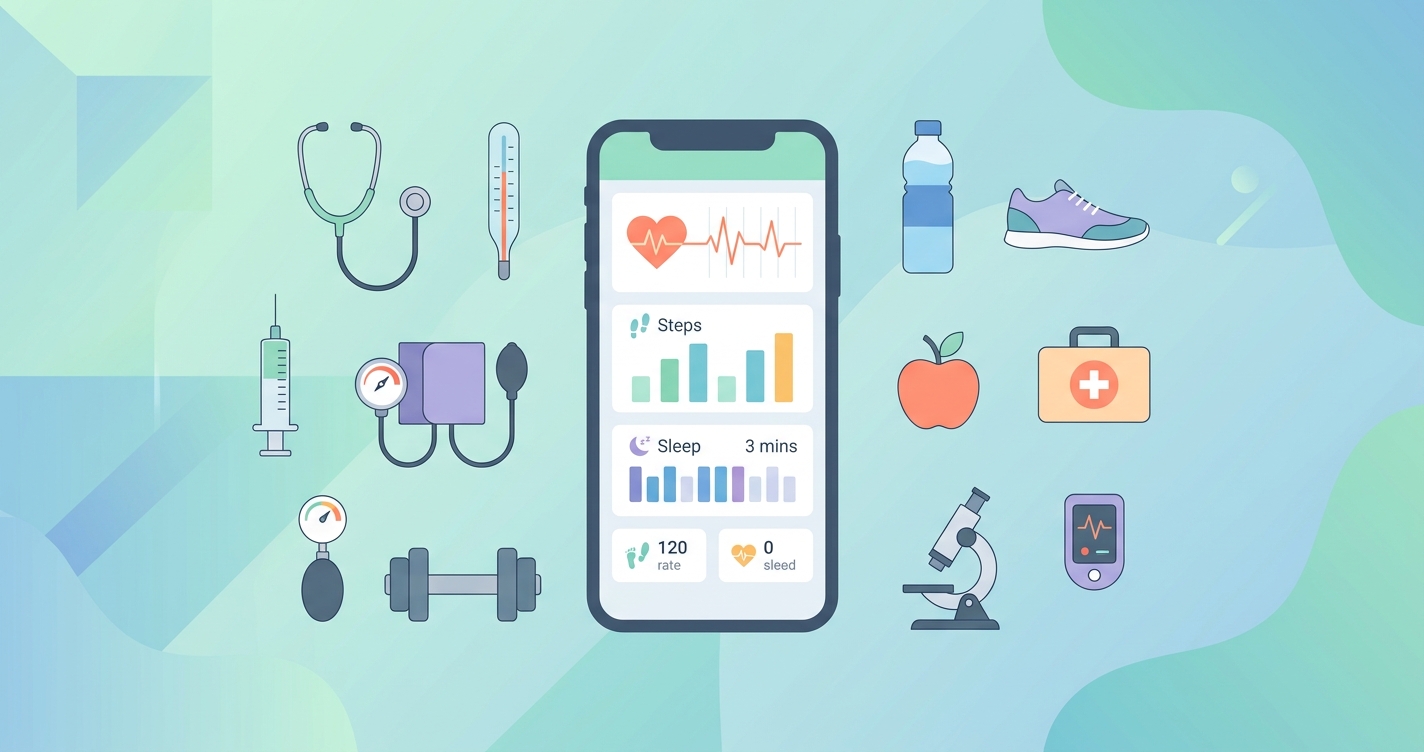
When a community health worker's entire toolkit is consolidated onto a single smartphone, the nature of field-based primary care fundamentally changes. This shift is not about replacing healthcare professionals with technology, but about augmenting their capabilities to improve reach, efficiency, and data quality in low-resource settings. The concept of a complete health worker kit phone moves beyond simple data collection, integrating decision support, diagnostics, and patient management into one portable device. This concentration of resources is creating new possibilities for program design and delivery in global health.
"Globally, 86% of the population is covered by a 4G network... In Sub-Saharan Africa, mobile penetration is at 88%, with smartphone connections expected to reach 1 billion by 2030."
- GSMA, "The Mobile Economy Sub-Saharan Africa," 2023
The smartphone as a health worker kit: a main analysis
The transformation of a smartphone into a comprehensive health worker kit phone represents a significant leap forward from earlier mobile health (mHealth) applications, which were often limited to SMS reminders or basic data entry. Today, a single device can manage a multi-stage patient encounter, from initial screening to ongoing follow-up. This integration is critical in environments where health workers may be the only point of contact for communities living far from a clinic.
A key driver of this trend is the increasing sophistication of software platforms combined with the falling cost of hardware. Researchers like Alain Labrique at Johns Hopkins University noted as early as 2018 that the digital health revolution was poised to dramatically expand the capacity of frontline health workers. The core value lies in bundling functions that previously required multiple separate tools and a paper-based workflow. A health worker can now use one device to identify a patient, screen for multiple conditions, access evidence-based protocols for next steps, record all data in a structured format, and schedule a follow-up. This streamlined process reduces the cognitive load on the worker and minimizes opportunities for error.
| Feature | Traditional Health Worker Kit | Smartphone-Based Health Worker Kit |
|---|---|---|
| Data Collection | Paper forms, logbooks | Digital forms (ODK, CommCare), automated data capture |
| Diagnostic Tools | Thermometer, BP cuff, weighing scale, paper charts | Software-based vital signs, image analysis, questionnaires |
| Decision Support | Laminated protocol cards, memory | Integrated clinical guidelines, automated risk scoring |
| Patient Records | Individual paper booklets, central registry | Longitudinal digital record, unique patient ID |
| Supervision & Reporting | In-person meetings, manual tallying | Real-time dashboards, automated reports, remote supervision |
| Upfront Cost | Low (paper, basic tools) | High (smartphones, software licenses) |
| Recurring Cost | High (printing, transport, manual data entry) | Moderate (data plans, device maintenance, training) |
Industry Applications
The shift to a phone-based kit has practical implications across several key areas of global health programming, particularly for organizations implementing large-scale field operations.
Integrated community case management (iccm)
For iCCM programs focused on childhood illnesses like pneumonia, diarrhea, and malaria, a smartphone-based kit is invaluable. Health workers can use an app that guides them through the WHO-standard "Assess, Classify, Treat" protocol. The app can ensure every danger sign is checked, calculate a respiratory rate from a video feed, and provide the correct dosage for medication based on the child's age or weight. This reduces the risk of misdiagnosis or incorrect treatment.
HIV/TB Screening and Linkage to Care
In HIV and TB programs, a major challenge is a "leaky cascade" where patients are lost at each step from screening to treatment initiation. A health worker kit phone helps plug these leaks. Workers can use a screening questionnaire to identify high-risk individuals, capture vital signs like respiratory rate that may indicate TB, and then use the device to immediately refer the patient to a clinic. The system can track that referral, ensuring the patient arrives and is linked to care.
Non-communicable disease (ncd) management
As the burden of NCDs like hypertension and diabetes grows in low- and middle-income countries (LMICs), so does the need for community-level management. Health workers equipped with smartphones can screen for high blood pressure using contactless video-based methods, monitor blood glucose readings, and provide patients with lifestyle counseling through educational videos stored on the device. This approach supports long-term management and reduces the burden on overcrowded clinics.
Current research and evidence
The evidence base for the effectiveness of digital tools for health workers is growing. A landmark 2019 publication from the World Health Organization provided formal guidelines on a range of digital health interventions, lending institutional credibility to the field. The WHO's review confirmed that digital job aids and decision-support tools for health workers can improve adherence to protocols and enhance the quality of care provided.
More specific studies have quantified the benefits:
- Efficiency: Research in several countries has shown that digitizing data collection can save health workers several hours per week, time that was previously spent on manual data entry and travel to submit reports.
- Data Quality: A study of mHealth tools used in Ethiopia found that digital data collection led to a significant reduction in errors compared to paper-based systems. Timeliness of reporting also improved dramatically.
- Protocol Adherence: A randomized controlled trial published in a leading health journal demonstrated that health workers using a smartphone app with integrated decision support were more likely to correctly diagnose and treat common childhood illnesses compared to those using paper-based guidelines.
However, research also highlights challenges. A 2016 paper in JMIR mHealth and uHealth proposed a checklist for reporting on mobile health interventions, reflecting the need for more rigorous and standardized evidence. Issues such as usability, the need for robust training, and the importance of co-designing tools with health workers are recurring themes.
The future of the health worker kit on a phone
The trajectory of the health worker kit phone points toward greater integration and intelligence. The next generation of tools will likely incorporate more advanced AI-driven diagnostics, such as analyzing cough sounds to screen for respiratory disease or using machine learning to predict disease outbreaks based on real-time field data. As connectivity improves, the link between the field and the central health system will become stronger, enabling true continuity of care.
Furthermore, the focus is shifting from single-purpose apps to comprehensive platforms. These platforms Support the health worker. Provide program managers with the visibility needed to manage supply chains, supervise staff, and make data-driven decisions. The ultimate goal is a responsive, resilient health system where data flows seamlessly from the community to the national level and back again.
Frequently asked questions
What is included in a digital health worker kit on a phone? A typical digital kit includes data collection forms (e.g., ODK, CommCare), a decision-support tool for following protocols, a video-based measurement tool for vital signs, patient education materials, and communication apps to connect with supervisors.
What are the biggest barriers to adoption? The primary barriers include inconsistent internet connectivity in remote areas, the need for reliable electricity to charge devices, ensuring data privacy and security, and the ongoing cost of training and technical support for health workers.
How does a health worker kit on a phone improve patient outcomes? It improves outcomes by enabling earlier and more accurate screening, ensuring adherence to evidence-based care protocols, reducing data errors that can affect decision-making, and allowing for faster referrals and follow-up for high-risk patients.
Can a smartphone replace all traditional medical equipment? No, a smartphone cannot replace all equipment. While it can handle screening, data management, and some diagnostics, health workers still need physical supplies for treatment, sample collection (like blood for malaria tests), and certain diagnostic procedures.
As the technologies enabling zero-equipment screening and data management mature, Circadify is actively working in this space to solve the key challenges of field deployment and system integration. The insights from this work are regularly shared in our Deployment case studies.