What does a modern mobile-health field kit actually contain in 2026?
By 2026, the mobile health field kit has transformed. Explore the essential contents, from smartphone-based diagnostics to AI-powered platforms, for global health.
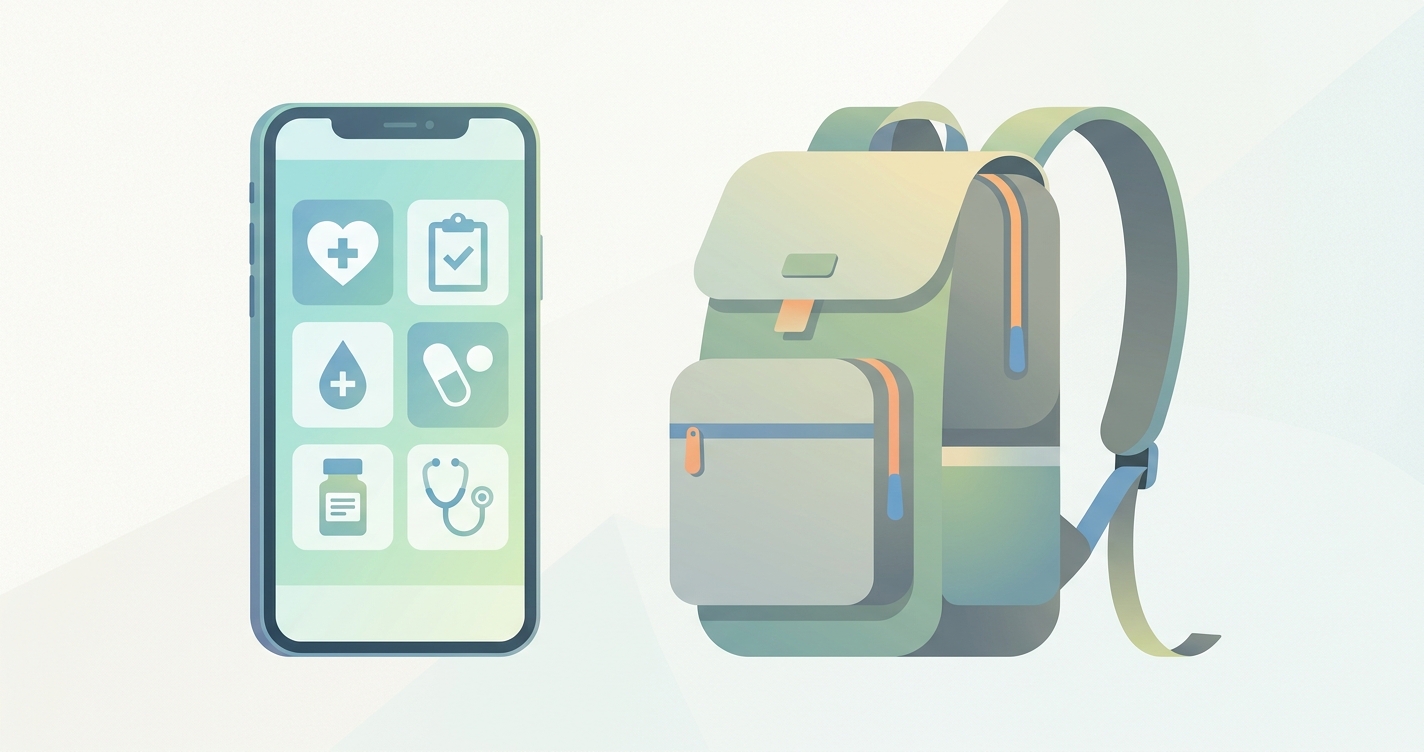
The classic image of a community health worker is one of dedication and resourcefulness, often characterized by a worn backpack filled with essential, but analog, tools: a blood pressure cuff, a thermometer, paper forms, and a clipboard. This picture of field-based healthcare has been stable for decades. But by 2026, that image will be, and in many ways, already is, a historical artifact. The contents of a modern mobile health field kit are undergoing a radical transformation, driven not by better hardware, but by the near-universal adoption of the smartphone as a primary care platform. The kit is no longer the bag; it is the device in the CHW's pocket.
"Digital health interventions, when appropriately integrated into the health system, can bring transformative improvements in health outcomes." - World Health Organization, "Recommendations on digital interventions for health system strengthening," 2019.
The core of a modern mobile health field kit in 2026
The essential mobile health field kit contents 2026 are less about physical items and more about software, data, and connectivity. While a few physical peripherals remain, the overwhelming trend is the consolidation of diagnostic and data management functions onto a single, powerful, and adaptable device. The smartphone has shifted from a communication tool to the central processing unit for field-based healthcare delivery. This change allows for a lighter logistical footprint, greater standardization of care, and real-time data flow that was previously impossible. A CHW can now carry in their pocket what once required a backpack, or even a small vehicle, to transport.
The kit's components are best understood as layers built upon the foundation of the smartphone itself. The hardware is the base layer, followed by the operating system, the specialized applications, and finally the secure data connection to the broader health system. This software-first approach is what defines the modern mHealth deployment.
| Feature | Traditional Field Kit (c. 2010) | Modern Field Kit (c. 2026) |
|---|---|---|
| Primary Tool | Physical backpack with assorted supplies | Smartphone with specialized applications |
| Vital Signs | Manual blood pressure cuff, thermometer, pulse oximeter | Contactless smartphone-based screening (rPPG), connected sensors |
| Diagnostics | Separate glucose meters, malaria RDTs | AI-powered analysis via smartphone camera, integrated lab-on-a-chip peripherals |
| Data Collection | Paper forms, patient ledgers | Digital data entry forms (e.g., ODK, CommCare), offline-first capability |
| Patient Records | Paper files, facility-based storage | Encrypted, cloud-synced electronic health records |
| Training & Support | In-person workshops, printed manuals | On-demand video modules, real-time remote support, AI-driven decision support |
| Connectivity | None; data transported manually | 4G/5G/Satellite for real-time data sync, telemedicine consultations |
Industry applications of the software-defined kit
The shift to a smartphone-centric model enables new workflows across various public health domains. The flexibility of software allows a single device to be configured for multiple screening and data collection scenarios, making CHWs more efficient and effective.
Screening for infectious diseases
In tuberculosis (TB) and HIV programs, the first point of contact is crucial for identifying at-risk individuals. Instead of relying on symptom checklists alone, CHWs can use smartphone apps that guide them through a more sophisticated risk assessment, including capturing vital signs like respiratory rate through contactless video analysis. This data can be instantly and securely transmitted to a central platform like DHIS2, alerting clinical teams to follow up with individuals who meet specific criteria. This workflow reduces the time between initial screening and clinical assessment.
Maternal and child health
For maternal and child health, the mobile kit provides a powerful tool for longitudinal monitoring. A CHW can use a smartphone to:
- Track a child's growth using photo-based measurement tools.
- Screen for malnutrition using AI-powered assessments.
- Monitor a pregnant woman's blood pressure and heart rate using contactless methods, flagging potential signs of pre-eclampsia.
- Deliver targeted educational content via video or audio in the local language.
Non-communicable disease (ncd) management
The rising burden of NCDs like hypertension and diabetes in low-resource settings requires a scalable screening solution. The 2026 field kit moves beyond bulky cuffs. Using techniques like remote photoplethysmography (rPPG), a smartphone's camera can be used to estimate blood pressure and heart rate, sorting individuals into low, medium, or high-risk categories for further clinical review. This "zero-equipment" approach allows a single CHW to screen hundreds of people in a day, a scale unimaginable with traditional hardware.
Current research and evidence
The move towards the smartphone as a medical device is well-documented. Research has evolved from early studies on the efficacy of SMS reminders to sophisticated validation of AI-based diagnostics. A key 2019 guideline from the World Health Organization provided a framework for how countries could thoughtfully integrate these digital tools to support health workers.
More recent work has focused on the "smartphonization" of diagnostics. Researchers like Lee and Lee, in a 2021 article in JMIR mHealth and uHealth, described this trend as the migration of diagnostic functions from dedicated hardware into software on a general-purpose smartphone. This includes not just vital signs but also the use of smartphone cameras and microphones to detect conditions ranging from skin diseases to respiratory illnesses. The evidence base is now shifting from "can this work?" to "how can we scale this effectively and equitably?"
The future of mobile health field kits
Looking beyond 2026, the field kit will become even more intelligent and integrated. The next evolution will likely involve:
- Predictive Analytics: AI models running on the CHW's device will not just collect data but will start to predict local disease outbreaks based on real-time inputs.
- Enhanced Sensor Integration: While the core remains the smartphone, low-cost, disposable sensors for specific biomarkers (e.g., saliva-based tests for dehydration or stress) will connect seamlessly.
- Hyper-Personalized Education: The device will deliver health education that is dynamically tailored to the individual's specific health data, language, and literacy level.
- Environmental Data: The kit may start to incorporate environmental data, such as air quality or temperature, correlating it with health symptoms in the community.
Frequently asked questions
What is the most significant change in the mobile health field kit? The most significant change is the shift from a collection of single-purpose physical devices to a single multi-purpose software platform, the smartphone. This consolidates functionality, reduces cost and logistical burden, and enables real-time data flow.
Are physical tools completely gone from the field kit? No, but their role has changed. The kit may still contain essentials like gloves, basic wound care supplies, and certain rapid diagnostic tests. However, the core diagnostic and data management functions have moved to the smartphone.
How do you ensure data security with a smartphone-based system? Data security is critical. Modern mHealth platforms use end-to-end encryption, secure cloud storage compliant with standards like HIPAA, and device-level security policies. Data is typically anonymized at the point of collection, and access is strictly controlled.
What skills does a CHW need to use a 2026 field kit? CHWs need a combination of clinical knowledge and digital literacy. This includes navigating mobile applications, understanding data privacy principles, and basic device troubleshooting. Training programs are increasingly focused on building these hybrid skills.
The transition to a software-defined health kit is not just a technological upgrade; it represents a fundamental shift in how healthcare is delivered in the most challenging environments. For organizations deploying field teams, understanding the mobile health field kit contents 2026 is the first step toward building more efficient, scalable, and impactful health programs. As this space continues to evolve, organizations that embrace these new tools will be best positioned to improve health outcomes at a population scale. For teams exploring these deployments, understanding the landscape of available tools is critical. Circadify is actively contributing to this space by developing zero-equipment solutions for vital sign screening. To see how these technologies are being used in the field, explore our deployment case studies.