How to Train Community Health Workers on a Vitals App
A practical curriculum for training community health workers on a vitals app, built for low-literacy, low-connectivity field settings and program managers.
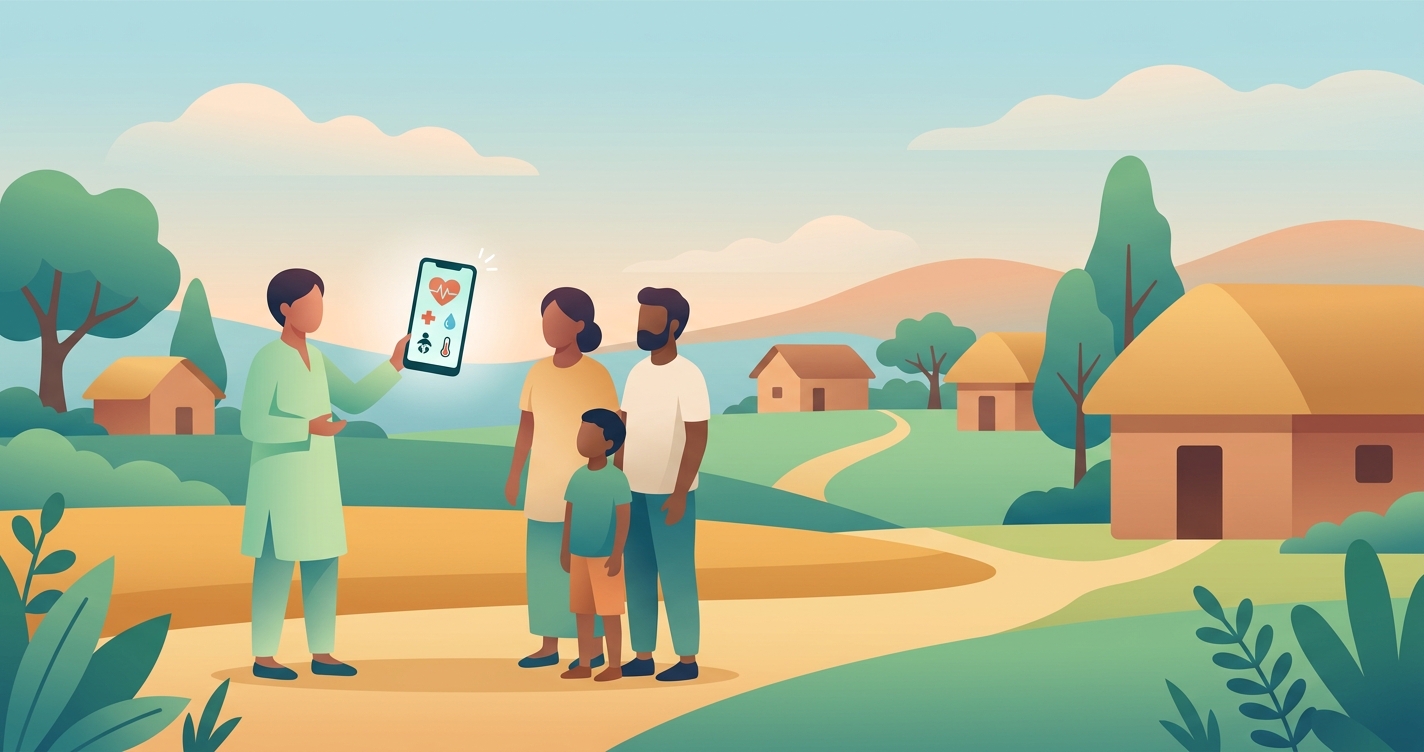
Most mobile health programs budget carefully for devices, connectivity, and software licenses, then treat onboarding as an afterthought handled in a single afternoon. That sequence is backwards. The single biggest predictor of whether a frontline team actually uses a screening tool six months after rollout is not the hardware in their hands but how they were taught to use it. Training community health workers on a vitals app is where field deployments quietly succeed or fail, and it deserves the same rigor program managers apply to procurement.
The challenge is specific. Many community health workers (CHWs) have limited formal schooling, varying literacy levels, and little prior experience with smartphone applications beyond messaging. A vitals app adds another layer: workers are not just entering data, they are capturing physiological readings that feed clinical decisions and referrals. Get the training wrong and you get skipped fields, misread results, and abandoned devices. Get it right and a worker with no prior tech background can screen dozens of people a day with confidence.
A 2023 scoping review in JMIR Medical Education found that digital training for community health workers in low- and middle-income countries consistently improved knowledge and skills, but the authors cautioned that rigorous evidence on downstream service-delivery outcomes remains thin, and that training design itself is often underreported.
Building a curriculum for training community health workers on a vitals app
A workable curriculum for training community health workers on a vitals app does not start with the app. It starts with the worker's baseline comfort with the device. PATH's Community Health Worker Foundational Digital Literacy Framework, published to guide ministries and implementing partners, breaks the prerequisite skills into clear domains: device operation, information and data literacy, communication, and basic digital safety. Skipping these foundations and jumping straight to app-specific workflows is the most common onboarding mistake in the field.
The structure that holds up across settings is layered. First, basic device fluency. Second, the app's core capture workflow. Third, interpretation and action, meaning what a reading means and what the worker should do next. Fourth, supervised practice with real or simulated patients. Fifth, ongoing reinforcement after the classroom day ends. The competency-based education literature is consistent on one point: a single training event does not transfer to durable practice. Repetition and supervision do.
Different training formats suit different constraints. The table below compares the approaches program managers most often weigh when onboarding frontline workers with limited tech experience.
| Training approach | Best for | Literacy demand | Connectivity needed | Cost per worker | Retention risk |
|---|---|---|---|---|---|
| Single in-person workshop | Small cohorts, launch events | Moderate | None | Medium | High without follow-up |
| Blended (in-person + app modules) | Mixed-experience teams | Low to moderate | Intermittent | Medium | Lower |
| In-app guided onboarding | Self-paced, dispersed teams | Low (icon-led) | Offline-capable | Low | Moderate |
| Peer mentor / cascade model | Large national rollouts | Low | None | Low at scale | Lower with active mentors |
| Video and audio job aids | Low-literacy cohorts | Very low | Download once | Low | Lower |
No single column wins. The strongest programs combine an in-person foundation with offline in-app guidance and a peer mentor structure that keeps support close after the trainers leave.
A few design principles consistently separate effective onboarding from the kind that produces certificates but not competence:
- Teach the device before the app. Workers who cannot reliably charge, unlock, and navigate a phone will not master a vitals workflow.
- Use the worker's spoken language and local examples, not translated clinical jargon.
- Replace text-heavy screens with icons, color cues, and audio prompts wherever the app allows.
- Build training around real tasks, not feature tours. Workers learn "screen this person" faster than "here is the menu."
- Plan for the offline reality. Modules and job aids must work without a signal, because the field rarely has one.
- Schedule reinforcement at two weeks and six weeks, when initial confidence dips and habits either form or fade.
Industry Applications
National CHW Programs and Ministries of Health
For ministries scaling to thousands of workers, cascade or peer-mentor training is usually the only affordable model. The risk is dilution: each training layer loses fidelity. Programs counter this by standardizing content in the app itself so that in-app guided onboarding delivers the same core workflow regardless of who ran the in-person session. PATH's suggested model curriculum for foundational digital literacy was designed precisely so that national programs can adopt a common competency baseline rather than reinventing it per district.
USAID and PEPFAR Implementing Partners
Donor-funded programs operate against tight reporting timelines and high turnover. Here, blended training plus structured supervision tends to protect data quality, which is what audits scrutinize. Implementers increasingly pair classroom onboarding with supportive supervision delivered through the same platform, an approach documented in human-centered design work on digital health interventions for CHW training and supervision published in Oxford's journal Health Policy and Planning.
mHealth Platforms and Vendors
For the companies building these tools, training is a product design problem as much as a curriculum problem. The Community Health Toolkit, an open-source initiative, integrates learning and care into the same application so that onboarding happens inside the tool workers already hold, with offline-first modules. That design choice reflects a wider shift: the best training is increasingly embedded in the app rather than bolted on beside it.
Current research and evidence
The evidence base is growing but uneven. The 2023 JMIR Medical Education scoping review on digital training outcomes for CHWs in low- and middle-income countries found reliable improvements in knowledge and skills, while flagging that few studies measured whether better-trained workers actually changed patient outcomes. A 2025 narrative review in Frontiers in Public Health described a CHW curriculum distributed through a mobile app for offline study in low-income communities, reinforcing that offline access is now treated as a baseline requirement rather than a nice-to-have.
Effectiveness research adds nuance. A hybrid effectiveness-implementation evaluation of an mHealth tool for CHWs in the Peruvian Amazon, published in a PubMed-indexed study, found measurable gains in caregiver knowledge of child health, but the authors attributed much of the effect to how workers were prepared to use the tool, not the tool alone. The competency-based education scoping review echoes this, noting that learning transfers to practice only when training is structured around defined competencies and reinforced over time.
A recurring theme across these studies is the workforce gap driving urgency. The World Health Organization has projected a global shortage of community health workers reaching into the millions by the mid-2030s, which means programs cannot afford long, attrition-prone training cycles. Faster, more reliable onboarding is not a convenience. It is a workforce strategy.
The future of CHW vitals app training
Three shifts are visible. First, training is moving inside the app. In-app guided onboarding, icon-led flows, and embedded video job aids reduce dependence on scarce master trainers and shorten time to competence. Second, content is becoming adaptive. Early human-in-the-loop and AI-assisted approaches are being explored to tailor refreshers to the specific steps a worker struggles with, though this remains experimental and demands careful oversight in low-resource settings. Third, measurement is maturing. Programs are beginning to track competency and ongoing usage rather than counting attendance, which finally connects training investment to field performance.
The direction is clear: less reliance on the single workshop, more on continuous, embedded, low-literacy-friendly support that meets workers where they are and follows them into the field.
Frequently asked questions
How long does it take to train a community health worker on a vitals app?
It varies with baseline digital comfort, but most programs find that one to two days of foundational and supervised practice, followed by reinforcement at two and six weeks, produces durable competence. Workers with no prior smartphone experience need more time on basic device skills before app workflows.
Can workers with low literacy be trained on a vitals app?
Yes. Evidence and field practice both point to icon-led screens, audio prompts, local-language instruction, and task-based teaching rather than text-heavy manuals. Video and audio job aids are particularly effective for low-literacy cohorts.
What is the most common onboarding mistake?
Skipping basic device fluency and jumping straight to app features, then treating training as a one-time event. Without follow-up reinforcement and supervision, initial confidence fades and usage drops within weeks.
Does offline capability matter for training?
Considerably. Field settings rarely have reliable connectivity, so training modules and job aids must work offline. Recent reviews treat offline-first design as a baseline requirement for CHW training tools, not an optional feature.
Circadify is working on this exact problem, building zero-equipment vital signs capture for community health workers alongside the onboarding resources that make field adoption realistic. Program managers planning a rollout can review practical deployment case studies and training approaches in the global health section at circadify.com/blog.