How do I know if I'm getting sick before it's too late and there's no clinic?
Smartphone diagnostics for global health offer an early warning system in remote areas, helping detect illness before symptoms force a costly clinic trip.
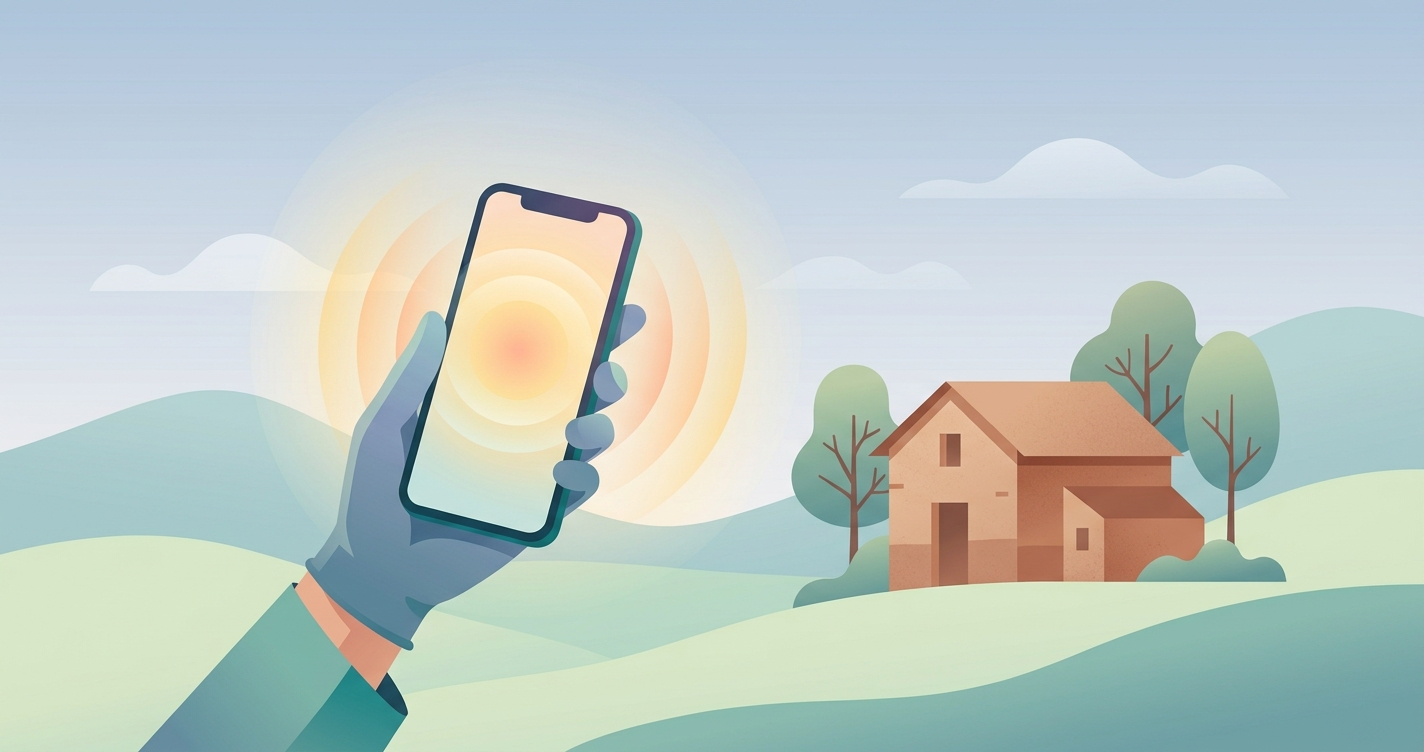
For a family living a full day's travel from the nearest health post, the most dangerous part of an illness is rarely the illness itself. It is the silent window before anyone notices. By the time a fever, cough, or shortness of breath becomes severe enough to justify the journey, the condition has often advanced past the point where simple intervention would have helped. This is the practical problem behind a question that millions ask without the language of epidemiology: how do I know if I am getting sick before it is too late? The emerging answer for program designers is smartphone diagnostics global health teams can deploy at the household level, turning the device already in a community's pocket into an early warning system rather than a last resort.
A 2023 study led by Dorota S. Temple at RTI International found that an anomaly-detection model using wearable physiological sensors correctly identified 94 percent of presymptomatic and asymptomatic influenza cases, on average 23 hours before symptoms appeared (Temple et al., Journal of Infectious Diseases, 2023).
That 23-hour head start is the entire premise. In a well-resourced city, a day of warning is convenient. In a setting where the road floods, the fuel is rationed, and the clinic is hours away, a day of warning can be the difference between a manageable case and an emergency evacuation that never arrives in time.
Why smartphone diagnostics matter for global health early warning
The core insight is that illness does not begin at the moment a person feels sick. Physiological changes such as elevated resting heart rate, altered heart rate variability, rising respiratory rate, and reduced activity often precede conscious symptoms. Clinical-grade equipment can measure these signals, but it does not exist at the household level in most low-resource settings. What does exist is the smartphone. By 2024, mobile network coverage reached the large majority of the global population, and the camera, flashlight, and processing power on a mid-range phone are sufficient to estimate several vital signs through optical techniques.
Smartphone diagnostics for global health early warning are not about replacing a doctor's judgment. They are about closing the detection gap. A community health worker (CHW) equipped with a screening app can capture a baseline for the people in their catchment area, then flag deviations that warrant a closer look. The goal is triage at the edge: sorting the worried-but-well from the genuinely deteriorating, before a small problem becomes a referral emergency.
The WHO Compendium of Innovative Health Technologies for Low-Resource Settings (2024) frames this shift directly, highlighting smartphone-based and sensor-driven screening as priority categories for closing access gaps in remote and underserved regions. Early detection of both infectious disease and non-communicable conditions is repeatedly named as the highest-value use case.
Here is how the household reality compares across three common scenarios:
| Detection pathway | Time to first signal | Equipment required | Cost per encounter | Works without a clinic visit |
|---|---|---|---|---|
| Wait for severe symptoms | Days to weeks | None | High (late treatment, transport) | No |
| Periodic clinic check-up | Months between visits | Fixed facility | Medium (travel, lost wages) | No |
| Smartphone-based screening by a CHW | Hours to days | Existing phone | Low (no new hardware) | Yes |
The contrast is not subtle. The first two pathways depend on either a crisis or a calendar. The third depends only on a phone and a trained worker who is already part of the community.
Key advantages that make smartphone screening viable as an early warning layer include:
- No new hardware to procure, calibrate, or repair in the field
- Screening that can happen at the doorstep rather than requiring a journey
- A digital baseline that makes deviations easier to spot over time
- Data that can sync to district systems when connectivity allows
- A workflow CHWs can learn quickly without clinical degrees
Industry applications for preventative programs
For USAID and PEPFAR implementers focused on prevention, the relevant question is not whether the technology is interesting but where it changes program outcomes. Three applications stand out.
Infectious disease surveillance at the edge
Respiratory illness, malaria-related fever, and other acute conditions often spread faster than reporting systems can track them. Household-level screening lets CHWs detect clusters of physiological anomalies before laboratory confirmation, giving program managers a faster signal for where to direct testing and treatment. The same approach that flags an individual's risk can, aggregated, hint at an outbreak.
Continuity of care for chronic and immunocompromised patients
For HIV programs, people living with compromised immune systems are more vulnerable to opportunistic infections that escalate quickly. A regular, low-friction screening touchpoint between appointments helps catch deterioration that would otherwise go unnoticed until the next scheduled visit, which may be months away.
Maternal, newborn, and child health
Caregivers of young children face the hardest version of the early warning problem, because children deteriorate fast and cannot describe symptoms. A CHW screening visit that captures vital signs without specialized equipment offers a structured way to decide who needs urgent referral and who can be safely monitored at home.
Current research and evidence
The evidence base for presymptomatic detection has matured quickly. The Temple et al. (2023) influenza work built on a broader body of research using physiological signals as digital biomarkers of infection. A 2023 review of continuous physiological monitoring for early infectious disease detection catalogued how heart rate, heart rate variability, blood oxygen saturation, sleep, and activity patterns shift before symptom onset across multiple pathogens, including COVID-19 and influenza.
Parallel work at Duke University, associated with Peter Jaeho Cho and colleagues through the Bass Connections program, examined the practical side of these deployments, including adherence and retention in digital health studies. That distinction matters for global health: a model that performs well in a controlled cohort still has to survive real-world use, where battery life, intermittent connectivity, and user trust determine whether the early warning ever reaches anyone.
Reviews of smartphone-based AI screening published through the US National Library of Medicine (PMC, 2023 to 2024) report promising performance for conditions such as anemia, respiratory issues, and skin disease using only a phone's existing sensors. The consistent caveat across this literature is the same one any serious implementer should hold: rigorous local validation, attention to the digital divide, and clear data governance are prerequisites, not afterthoughts. Smartphone diagnostics in global health settings earn trust through evidence, not novelty.
The future of smartphone diagnostics in global health
The trajectory points toward screening that is continuous rather than episodic. As on-device processing improves, more of the analysis can happen on the phone itself, reducing dependence on connectivity and easing data sovereignty concerns by keeping raw signals local. The likely near-term model is a hybrid one: CHWs conduct structured screening encounters, while individual baselines accumulate over repeated visits to make anomaly detection more accurate for each person.
The harder work ahead is not technical. It is integration. An early warning signal is only useful if it connects to a referral pathway, a transport plan, and a stock of treatment at the other end. The programs that succeed will be the ones that treat smartphone screening as the first link in a chain, not a standalone gadget. Detection without a response pathway simply moves anxiety from the patient to the data dashboard.
Frequently asked questions
Can a smartphone really detect illness before symptoms appear?
Smartphones can estimate vital signs and physiological patterns that often shift before a person feels sick. Research using wearable and optical sensors has detected infection signals roughly a day before symptom onset. A phone-based tool is best understood as an early warning and triage aid, not a diagnostic verdict.
Is this meant to replace clinics or community health workers?
No. The aim is to extend reach, not replace care. Smartphone screening gives community health workers a structured way to decide who needs urgent referral and who can be safely monitored at home, especially when a clinic is hours or days away.
What are the main risks for global health programs?
The principal risks are false reassurance, data privacy, and the digital divide. Programs need local validation, clear consent and data governance, and a working referral pathway so that any warning leads to a real response rather than just a record.
Does it require expensive new equipment?
The central appeal for low-resource settings is that screening runs on phones communities already use. There is no specialized hardware to procure, calibrate, or repair, which removes one of the most common reasons field deployments stall.
Circadify is working on exactly this gap, building zero-equipment vital signs screening that community health workers can run from a standard phone in the field. To see how early warning screening is being structured for real deployments, explore the deployment case studies in the global health section at circadify.com/blog.