
Smartphone Diagnostics for Child Health in Villages
Discover how smartphone diagnostics are transforming child health in low-resource settings by enabling community health workers to monitor vital signs offline.
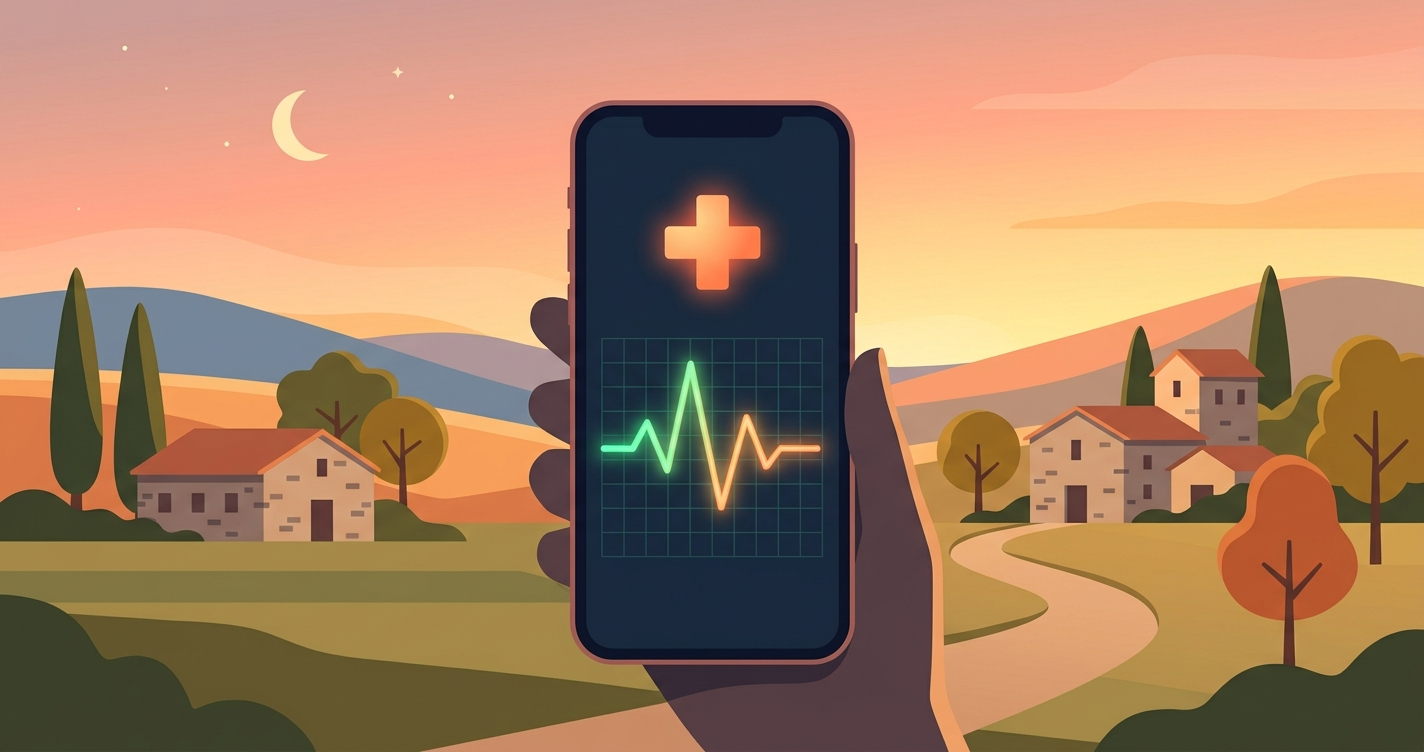
In rural clinics and isolated villages across low- and middle-income countries, the gap between a sick child and a timely diagnosis is often measured in days of travel. Community health workers face the continuous challenge of triaging pediatric conditions, such as severe pneumonia, dehydration, and sepsis, with limited or broken equipment. Traditional vital sign tools degrade in harsh climates, batteries fail, and supply chains break down, leaving frontline workers to rely on subjective visual assessments. However, through the integration of smartphone diagnostics global health programs are replacing fragile physical instruments with standard mobile devices to perform robust clinical screening.
"Hypoxemia is a critical risk factor for mortality in children with lower respiratory infections in low-resource settings, yet pulse oximeters remain inconsistently available in rural outpatient clinics despite their proven impact on survival rates."
- Malaria Consortium, Multicenter Trial on Frontline Diagnostics, 2023
The impact of smartphone diagnostics global health rollouts
Scaling pediatric screening in developing nations requires a permanent departure from hardware-dependent supply chains. Smartphone diagnostics global health initiatives achieve this by using the optical sensors already present in commercial mobile phones. For USAID and PEPFAR implementers, this means the logistical burden of procuring, shipping, calibrating, and maintaining pediatric cuffs, plastic thermometers, and standalone oximeters can be significantly reduced, if not entirely eliminated.
A community health worker equipped with a standard smartphone can assess a child's baseline vital signs without needing to carry a heavy secondary bag of fragile medical devices. The underlying technology relies on established techniques like remote photoplethysmography (rPPG), which detects micro-vascular changes in skin color with each heartbeat, alongside mobile applications that standardize historically subjective measures like capillary refill time. By migrating the diagnostic capability from the hardware into the software layer, global health systems can bypass the equipment graveyards that plague many rural health posts.
Comparing diagnostic modalities
The transition from physical tools to integrated software fundamentally alters the deployment logistics for global health initiatives.
| Diagnostic Modality | Traditional CHW Equipment | Smartphone-Based Diagnostics | Supply Chain Requirement |
|---|---|---|---|
| Heart Rate | Manual pulse count, pediatric cuff | rPPG via standard device camera | High (for cuffs/stethoscopes) vs. None |
| Oxygen Saturation | Standalone pediatric fingertip oximeter | Phone-integrated optical oximetry | High vs. Low |
| Dehydration (CRT) | Manual visual counting (subjective) | Video analysis via standard mobile app | None vs. None (but software improves accuracy) |
| Respiratory Rate | Manual chest rise counting (ARI timer) | Computer vision chest movement tracking | Low vs. None (drastically reduces human error) |
Systemic advantages of mobile screening
When ministries of health transition to software-based pediatric screening, several systemic advantages emerge immediately:
- Immediate deployment of updated diagnostic algorithms across thousands of active field devices simultaneously.
- Complete elimination of cross-contamination risks inherent in shared physical cuffs, clips, and thermometers.
- Automated data logging that removes transcription errors commonly found in paper-based community health registers.
- Standardization of subjective measurements, greatly reducing the diagnostic variance between different community health workers assessing the identical child.
- Drastic reduction in the carbon footprint associated with shipping replacement plastic hardware across international borders.
Industry applications for pediatric care
Frontline pediatric care relies heavily on the rapid, accurate assessment of three main crisis vectors: respiratory distress, severe dehydration, and systemic infection. Mobile diagnostic tools are actively being optimized to address each of these directly in the field, moving triage from a guessing game to an evidence-based clinical decision.
Hypoxemia and respiratory rate monitoring
Pneumonia remains a leading infectious cause of death for children worldwide, and detecting low oxygen saturation is the most reliable way to identify cases requiring immediate medical evacuation to a regional hospital. Standard fingertip oximeters are frequently too large for infants or fail to register accurately on uncooperative, crying children. Mobile health developers are addressing this through integrated phone oximetry and camera-based respiratory tracking.
Furthermore, traditional World Health Organization Acute Respiratory Infection (ARI) timers require a community health worker to stare at a child's chest and manually count breaths for a full 60 seconds. A moving child makes this nearly impossible. Computer vision tracking maps the chest movement frame by frame, offering a highly accurate respiratory rate reading even if the child squirms, which is a massive leap forward for community case management of pneumonia.
Capillary refill time and dehydration
Severe dehydration resulting from diarrheal diseases requires immediate, aggressive intervention. The standard field test is capillary refill time (CRT), pressing on a child's fingernail or sternum and mentally counting the seconds it takes for the pink color to return. This manual process is notoriously subjective and heavily dependent on both the ambient lighting in the village and the health worker's personal experience.
Smartphone applications have been developed to capture high-frame-rate video of the skin during the pressure application and release. By using pixel-level color tracking, the software calculates the exact millisecond the red hue returns to baseline, providing an objective CRT. This definitively limits the danger of overlooking severe dehydration that can rapidly lead to hypovolemic shock.
Systemic infection and heart rate detection
A high fever alone is largely non-specific, but when combined with tachycardia (an abnormally fast heart rate) and tachypnea (fast breathing), it strongly signals a severe systemic infection like pediatric sepsis or advanced malaria. Extracting an accurate heart rate from a distressed toddler using manual methods is difficult. Contactless monitoring technologies measure the pulse by analyzing the light absorption of the facial capillaries via the mobile camera. Because this pulse wave is invisible to the naked eye but easily read by a smartphone sensor, community health workers can secure an immediate reading without forcing cold, intimidating medical equipment onto a frightened child.
Current research and evidence
The global health research community is actively validating these mobile applications against gold-standard clinical hospital equipment to ensure their clinical viability in low-resource environments.
In South Africa, clinical engineers leading the Phefumla Project are designing and testing smartphone-based pulse oximeters tailored specifically for children in low-resource clinics. Their research aims to entirely bypass the routine supply chain failures of traditional hardware by utilizing the ubiquitous presence of mobile phones among health workers.
Similarly, a robust multicenter trial conducted by the Malaria Consortium across Cambodia, Ethiopia, South Sudan, and Uganda evaluated various pulse oximeters for detecting hypoxemia in children under five. The research demonstrated that specialized phone-integrated pulse oximeters delivered high performance and were actually better suited for infants aged 0 to 2 months compared to standard adult fingertip models that often fail to read on tiny fingers.
For dehydration screening, researchers have developed and rigorously tested CapApp, a mobile health application specifically designed to measure capillary refill time in pediatric populations. Studies published through the American Society of Mechanical Engineers confirm that using a smartphone camera to assess CRT provides a far more standardized and precise measurement than human observation, successfully removing the coarse-grained subjectivity of manual counting.
Furthermore, the ongoing VISION-Junior Observational Study is evaluating clinical-grade software that measures vital signs in pediatric patients using only the standard device camera. By comparing software-derived pulse and respiratory rates against standard-of-care hospital equipment, researchers aim to solidify the clinical foundation for entirely contactless pediatric vital sign collection.
The future of pediatric screening
The trajectory of pediatric diagnostics in developing nations points squarely toward unified digital toolkits. Future field deployments will likely move away from disparate single-function applications and toward comprehensive, offline-first triage platforms.
The most effective mobile health tools designed for global deployment will process complex algorithms locally on the edge device, functioning entirely off-grid. While an internet connection will be utilized later to sync data to a national health registry for epidemiological mapping, the actual diagnostic assessment and vital sign extraction will happen securely in a remote village without a cell signal.
This transition from scaling hardware to scaling software represents a structural shift in global health economics. Implementing partners will no longer need to allocate massive, recurring budgets for replacing broken thermometers and lost pulse oximeters. Instead, international funding can be redirected toward training community health workers, expanding the community workforce, and scaling the mobile platforms themselves.
Frequently asked questions
What makes traditional diagnostic equipment fail in low-resource settings? Standard medical hardware is typically engineered for climate-controlled clinical environments with reliable electricity. In rural villages, extreme heat, high humidity, airborne dust, and a chronic lack of replacement batteries cause physical sensors to degrade rapidly, while supply chain bottlenecks prevent timely hardware replacement.
How does a smartphone measure a child's vital signs? Mobile devices utilize their built-in optical sensors, primarily the high-resolution camera and flash. Techniques like remote photoplethysmography analyze the micro-variations in skin color associated with blood flow to calculate heart rate. Other specialized applications use computer vision to measure chest rise for respiratory rate or pixel-level color changes to assess capillary refill time.
Are mobile diagnostics suitable for very small infants? Yes, in many deployment scenarios they are highly preferable. Traditional equipment, like adult-sized pulse oximeter clips, often fail to secure properly on an infant's finger or toe, leading to inaccurate readings. Software-based and integrated mobile solutions bypass the need for perfectly sized physical attachments, making them highly effective for pediatric patients under two years old.
Can these digital triage tools operate without internet access? The most robust mobile health tools designed for global deployment process all diagnostic algorithms locally on the device itself. While an internet connection is eventually required to sync the anonymized triage data to a central health registry, the actual diagnostic assessment happens entirely offline in the field.
As global health organizations look for sustainable ways to equip their frontline workforce, moving away from fragile physical diagnostic tools is becoming a logistical imperative. Implementing partners requiring zero-equipment vital signs for community health workers in the field are already exploring the next generation of mobile triage platforms. Circadify is directly addressing this space by developing infrastructure that turns standard devices into comprehensive assessment systems. To see how these technologies perform in real-world scenarios, review our Deployment case studies.