Why can't I get my vitals checked if there's no nurse in my village?
Explores how community health workers (CHWs) use mobile, zero-equipment technology to conduct vital signs screening in areas with no nurses or clinics.
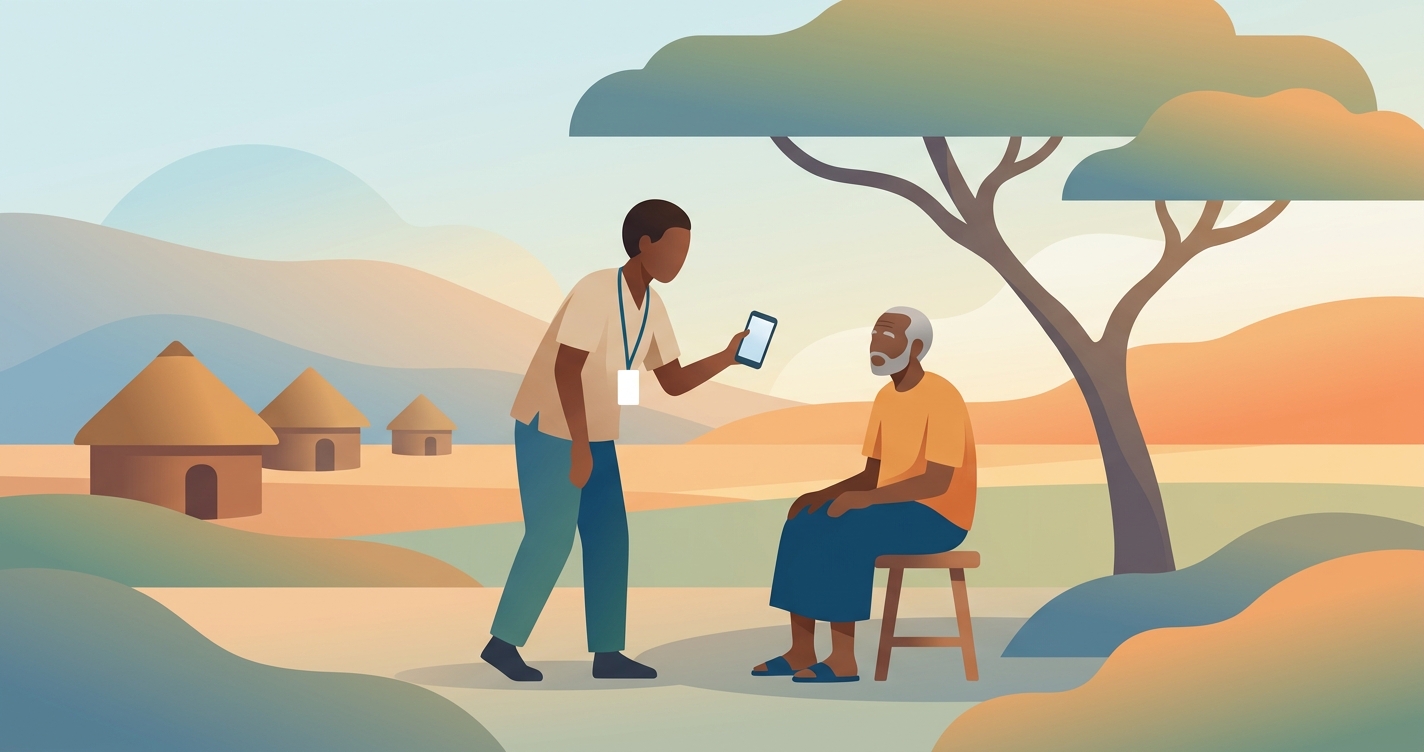
For hundreds of millions of people globally, the question in the title is not a hypothetical; it is a daily reality. The absence of trained medical personnel in a village or remote community creates significant barriers to basic healthcare, including routine screenings for vital signs like heart rate, blood pressure, and respiratory rate. This gap in healthcare access is a primary driver of poor health outcomes, as preventable or manageable conditions go undetected. The core of the problem lies in the global health workforce crisis, a challenge that requires innovative models of care delivery that move beyond the traditional clinic.
"The World Health Organization projects a global shortfall of 11 million health workers by 2030, with the burden falling most heavily on low- and lower-middle-income countries. This deficit means that for entire communities, access to even the most basic health services is not guaranteed."
- Based on data from the WHO Health Workforce Support and Safeguards List 2023
The challenge when there is no nurse in village vitals screening
The conventional model of healthcare is facility-based. A patient travels to a clinic or hospital, where a trained nurse or doctor uses specialized equipment to perform diagnostics. When this infrastructure is absent, the entire model collapses. With no nurse in village vitals checks simply do not happen. This leaves populations vulnerable to undetected hypertension, a leading risk factor for cardiovascular disease, and complicates the management of chronic and infectious diseases.
The strategy emerging to address this gap is known as "task shifting." As defined by the World Health Organization, task shifting involves the rational redistribution of tasks among health workforce teams. Specific tasks are moved from highly qualified workers to health workers with shorter training and fewer qualifications, where appropriate. In this context, the task of routine vital signs screening is shifted from nurses to Community Health Workers (CHWs). Armed with new technology, CHWs can bridge the gap between the community and the formal health system.
| Feature | Traditional Clinic-Based Screening | CHW-Led Contactless Screening |
|---|---|---|
| Personnel | Licensed Nurse or Doctor | Trained Community Health Worker (CHW) |
| Location | Fixed health facility or hospital | Patient's home or community setting |
| Equipment | BP cuff, pulse oximeter, thermometer | Smartphone with specialized software |
| Accessibility | Limited by distance, cost, and hours | High; meets patients where they are |
| Data Management | Manual paper records, local EMR | Automated, real-time sync to cloud platform |
| Patient Burden | High (travel time, lost wages) | Low (minimal disruption to daily life) |
Industry Applications
This new model of CHW-led screening is not just a theory; it is being deployed in global health programs to address a range of challenges. By equipping CHWs with zero-equipment mobile tools, health systems can extend their reach dramatically.
Screening for Hypertension and NCDs
Non-communicable diseases (NCDs), particularly hypertension, are a silent epidemic in many low-resource settings. CHWs can conduct large-scale population screenings for high blood pressure using only a smartphone. Individuals identified as high-risk can be referred to a clinic for confirmatory diagnosis and treatment, optimizing the use of scarce clinical resources.
Supporting antenatal care
Regular monitoring of a pregnant woman's vital signs is critical for detecting complications like pre-eclampsia. In many rural areas, expectant mothers may only see a clinician a few times during their pregnancy. CHWs equipped with mobile tools can perform more frequent checks during home visits, creating a safety net and an early warning system. Research from a 2023 study in Lusaka, Zambia demonstrated the feasibility of CHWs performing these assessments during antenatal outreach.
Infectious disease surveillance
During outbreaks of diseases like COVID-19 or Ebola, monitoring vital signs such as respiratory rate and temperature is key for triage and surveillance. Contactless screening allows CHWs to safely assess individuals for fever and other signs of illness, enabling rapid response and helping to contain the spread of disease without putting health workers at unnecessary risk.
Current research and evidence
A growing body of evidence supports the effectiveness of task shifting vital signs assessment to CHWs, especially when supported by mHealth (mobile health) technology. Researchers have found that with proper training and supportive supervision, CHWs can collect vital signs data accurately and reliably.
A study conducted in Niger by researchers and published in 2018 found that an mHealth intervention significantly improved the quality of care provided by CHWs, including the completeness of health assessments. Similarly, a 2021 systematic review published in PMC concluded that CHW-based mHealth approaches are effective in improving the management of common childhood infections.
The core challenge has always been the equipment. Traditional devices are expensive, require regular calibration, and are difficult to deploy at a population scale. The development of software-based, contactless screening tools that use a smartphone's existing camera is a significant breakthrough. Research from institutions like the University College Cork is focused on validating these novel sensors and ensuring they are fit for purpose in low-resource environments.
The future of remote vital signs screening
The future of healthcare in remote settings will be increasingly decentralized and digitally enabled. As smartphone penetration continues to grow and the software for contactless measurement becomes more refined, the ability to screen for health risks will no longer be tied to a physical clinic. We can expect to see greater integration of this data into national health information systems like DHIS2, allowing ministries of health to have a real-time view of population health.
This technology empowers a different model of healthcare, one that is proactive, community-based, and resilient. It directly answers the question of how to get vitals checked when there is no nurse, transforming the smartphone into a powerful tool for public health.
Frequently asked questions
Q: Is a vital signs screening from a CHW with a phone as accurate as one from a nurse with equipment?
A: Smartphone-based screening tools are designed for risk assessment and triage, not for clinical diagnosis. They are highly effective at identifying individuals who may be at risk and require further evaluation at a health facility. They are validated against clinical-grade devices to ensure they meet standards for sorting high-risk from low-risk individuals.
Q: What kind of training do Community Health Workers receive to perform these screenings?
A: CHWs undergo specific training on how to use the mobile application, the importance of patient consent and data privacy, and the protocol for referring high-risk individuals to the nearest health facility. The training is focused on the specific task of screening and referral.
Q: What happens if a CHW finds a potential health issue during a screening?
A: The primary role of the CHW in this model is to identify and refer. If the mobile tool indicates a high-risk reading (e.g., very high blood pressure), the CHW follows an established protocol to connect the individual with the nearest clinic or health post for a full diagnostic evaluation by a clinician.
The challenge of providing consistent healthcare in the world's most remote villages is vast, but the landscape of what's possible is changing. Circadify is at the forefront of developing and deploying the zero-equipment, smartphone-based technologies that empower community health workers to conduct vital signs screenings. By turning the phone in a CHW's pocket into a powerful tool for health assessment, we are helping global health programs extend their reach and build more equitable health systems. To see how these deployments work in practice, review our deployment case studies.