How to Screen Newborns for Health Risks Using a Phone
A field-focused look at newborn health screening with a smartphone, covering breathing and heart rate checks for community health workers in low-resource settings.
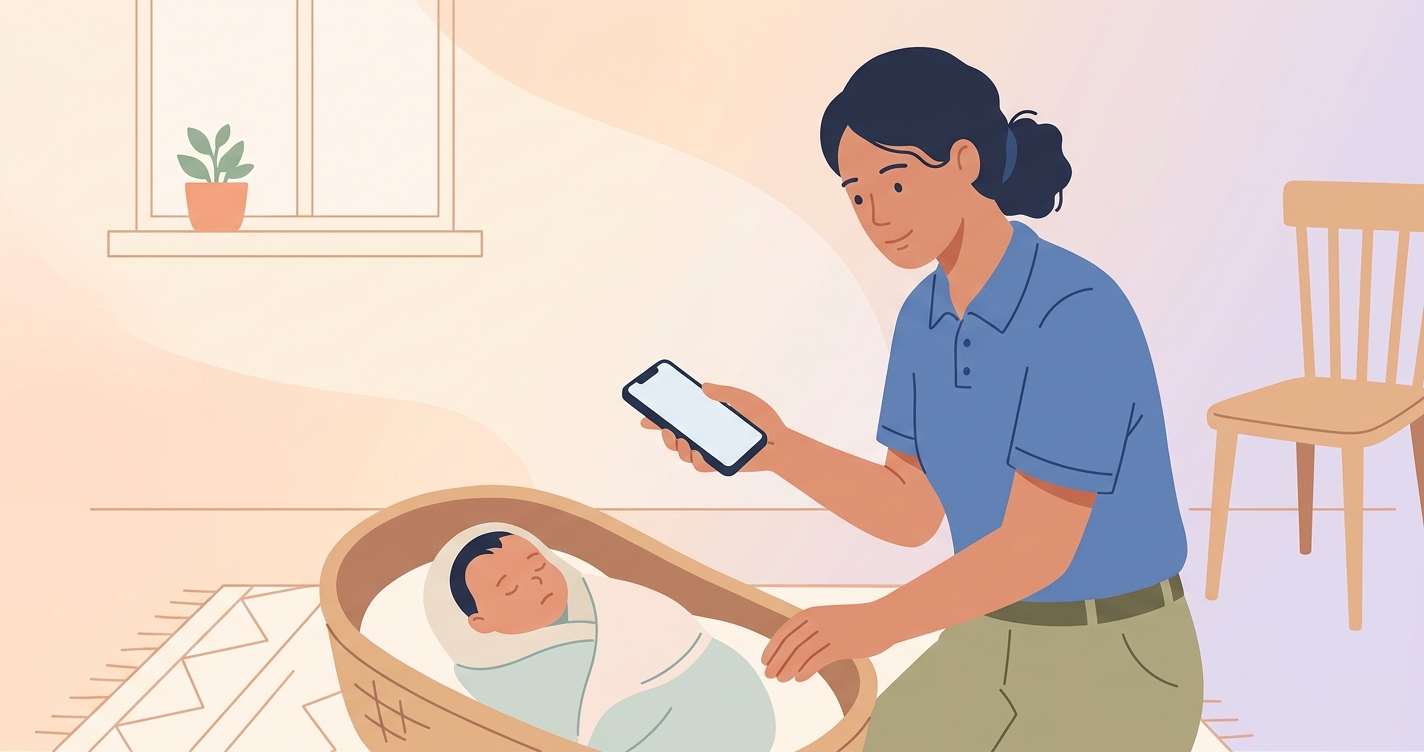
The first 28 days of life are the most dangerous a person will ever face, and for most newborns in remote communities, no clinical instrument is ever placed near them during that window. Frontline workers visiting homes after a birth often carry nothing but their own hands, a notebook, and a phone. That last item is changing what is possible. Newborn health screening with a smartphone is moving from research curiosity to a credible way to flag the two signals that matter most in the field: how fast a baby is breathing and how fast its heart is beating. For global health researchers and implementing partners designing maternal-child programs, the practical question is no longer whether a phone can read these signs, but how reliably it can do so in a hut, a tent, or a courtyard far from any health post.
In 2022, approximately 2.3 million newborns died within their first 28 days of life, accounting for 47 percent of all deaths in children under five, and roughly 75 percent of those deaths occurred during the first week., World Health Organization, 2024
What newborn health screening with a smartphone actually measures
The danger signs that drive early neonatal death are surprisingly few and surprisingly measurable. Premature birth, birth asphyxia, and neonatal infection account for the majority of deaths the WHO tracked in 2022, and each of them shows up early as a change in breathing pattern, heart rate, or both. A baby with sepsis breathes too fast. A baby with respiratory distress works visibly harder for each breath. A baby in trouble after a difficult delivery has a heart rate that drifts outside the normal 100 to 160 beats per minute range. None of these require a laboratory to detect. They require a careful count, and counting is exactly what a phone can support.
Newborn health screening with a smartphone generally relies on two sensing approaches. The first is video-based respiratory tracking, where the phone camera observes the subtle rise and fall of a sleeping infant's chest and abdomen and converts that motion into a breaths-per-minute estimate. The second is camera photoplethysmography, or PPG, where small color changes in the skin caused by each heartbeat are read from video frames to estimate heart rate. Both methods are contactless, which matters enormously for a fragile newborn whose skin is delicate and whose caregivers may be reluctant to have equipment strapped on.
A 2023 systematic review by researchers led by groups publishing in pediatric and biomedical engineering journals examined smartphone-based photoplethysmography for heart rate monitoring in neonates and concluded the approach is feasible, while noting that motion and lighting remain the central engineering challenges. On the respiratory side, a 2024 study on non-contact respiratory rate monitoring for newborns using digital camera technology and deep learning reported a mean absolute error of roughly 1.0 to 1.1 breaths per minute against reference counts, a margin that is clinically workable for triage.
| Screening method | Equipment needed | Contact with baby | Field readiness | Main limitation |
|---|---|---|---|---|
| Manual breath counting | Phone timer only | None | High | Counter fatigue, miscounts |
| Smartphone video respiratory rate | Standard phone camera | None | Moderate to high | Needs a still, sleeping baby |
| Smartphone camera PPG (heart rate) | Standard phone camera | None or fingertip | Moderate | Sensitive to motion and light |
| Wearable IoT sensor | Sensor plus phone | Skin contact | Low to moderate | Cost, supply chain, charging |
| Pulse oximeter | Dedicated device | Skin contact | Moderate | Procurement, calibration, cost |
Why the field setting changes everything
A method that performs beautifully in a neonatal ward can fall apart in a village. The difference is not the algorithm but the conditions around it. Researchers consistently report that the same factors keep surfacing when infant vital signs mobile app tools move from controlled trials into real deployments.
- Lighting varies from harsh midday sun to a single bulb or a phone flashlight, which directly affects camera PPG signal quality.
- Newborns rarely stay still, and crying or feeding introduces motion that corrupts both breathing and heart rate estimates.
- Frontline workers may have minutes, not the long stable windows that a research protocol allows.
- Network coverage is intermittent, so any tool must work offline and sync later.
- Phones in the field are shared, older, and run a wide range of camera hardware.
For neonatal screening in low resource settings, these constraints push design toward tools that capture a short clip, give a clear pass-or-refer result, and store data locally. A baby health check by phone that demands perfect conditions will not survive contact with a real home visit. The most promising deployment models treat the smartphone reading as a triage signal that sorts newborns into watch, refer, or reassure categories, rather than as a diagnostic replacement for a clinician.
Industry Applications
Postnatal home visits
The WHO recommends multiple postnatal contacts in the first week, yet coverage in many regions falls far short. A community health worker equipped with a contactless newborn monitoring workflow can turn a routine visit into a structured screen, counting breathing and heart rate, checking against age-appropriate thresholds, and escalating anything abnormal. This converts a subjective home visit into a documented data point that programs can audit.
Facility overflow and discharge
Even where births happen at a facility, crowded wards discharge mothers quickly. A phone-based screen at the doorstep, or during a follow-up call-and-visit, extends observation beyond the few hours a newborn spends under a nurse's eye. It also creates a record that travels with the family.
Research and surveillance
For investigators studying neonatal outcomes, an infant vital signs mobile app generates timestamped, geolocated readings that feed directly into surveillance systems. This is far richer than the recall-based data that maternal-child surveys have traditionally relied on, and it lets programs see where danger signs cluster.
Current research and evidence
The evidence base is young but moving in a consistent direction. The 2023 systematic review on neonatal camera PPG found the technique can estimate heart rate without contact, while flagging that few studies had been done in genuine low-resource field conditions rather than wards. The 2024 deep-learning respiratory study demonstrated that breathing rate can be tracked from ordinary camera footage with errors near one breath per minute, which is within the tolerance most triage protocols use.
A counterweight comes from a 2023 study asking whether caregivers could reliably assess a child's heart rate and respiration using smartphone or smartwatch applications. The researchers reported wide limits of agreement, especially for respiratory rate, when untrained caregivers did the measuring at home. The lesson is not that the technology fails, but that the operator and protocol matter as much as the sensor. Trained frontline workers following a standard capture procedure are a different population from caregivers improvising alone.
Separate work on wearable IoT monitoring for infants in settings such as Sierra Leone, and on time-of-flight depth sensors built into phones for counting breaths in children, shows the field is exploring several sensing paths at once. No single approach has won, and the most likely outcome is a layered toolkit where a contactless camera screen is the first filter and more involved methods are reserved for flagged cases.
The future of newborn health screening with a smartphone
The trajectory points toward integration rather than novelty. The sensing already works well enough for triage; the unsolved problems are operational. Three shifts are likely to define the next few years. First, capture quality will be enforced in software, with apps refusing low-light or high-motion clips and coaching the worker to retake them, which addresses the reliability gap the caregiver studies exposed. Second, results will flow into national digital health platforms automatically, so a flagged newborn becomes a referral the system tracks rather than a note that gets lost. Third, validation will move out of wards and into the homes and camps where these tools are meant to live, because field accuracy, not bench accuracy, is what ministries will buy on.
For programs, the strategic value is reach. A screen that needs no consumables and no dedicated device can be added to every postnatal visit a worker already makes, at almost zero marginal cost. That is the kind of economics that lets maternal-child screening scale to the populations the WHO data shows are dying earliest and in the largest numbers.
Frequently asked questions
Can a smartphone really measure a newborn's breathing and heart rate?
Yes, within limits. Video-based methods can estimate breathing rate to within about one breath per minute under good conditions, and camera PPG can estimate heart rate without contact. Both work best as triage signals that sort babies into refer or reassure groups, not as replacements for clinical examination.
Is contactless newborn monitoring safe for a fragile baby?
Contactless camera methods involve no physical attachment, no adhesives, and no pressure on delicate skin, which is one of their main advantages. The phone simply records a short video clip while the baby rests. This makes the approach easier for caregivers to accept than strapped-on sensors.
What conditions make smartphone screening unreliable in the field?
Poor lighting, a moving or crying baby, very short capture windows, and older phone cameras all degrade accuracy. Research on untrained caregivers found wide error margins, which is why a standard capture protocol and trained frontline workers matter as much as the underlying technology.
How does phone-based newborn screening fit into existing programs?
It slots into postnatal home visits and facility discharge follow-up that frontline workers already conduct. Because readings can be timestamped and synced to national digital health systems, each screen becomes a documented data point for referral and surveillance rather than an informal note.
Circadify is working on zero-equipment vital signs screening built for exactly these field conditions, with maternal-child deployment as a focus area for community health worker programs. Global health researchers and implementing partners can review deployment case studies and the broader evidence on contactless screening in our global health section at circadify.com/blog.