
How to Plan an mHealth Field Deployment in 6 Steps
A 6-step mHealth field deployment roadmap for USAID and PEPFAR implementers: site selection, data systems, worker training, and field rollout planning.
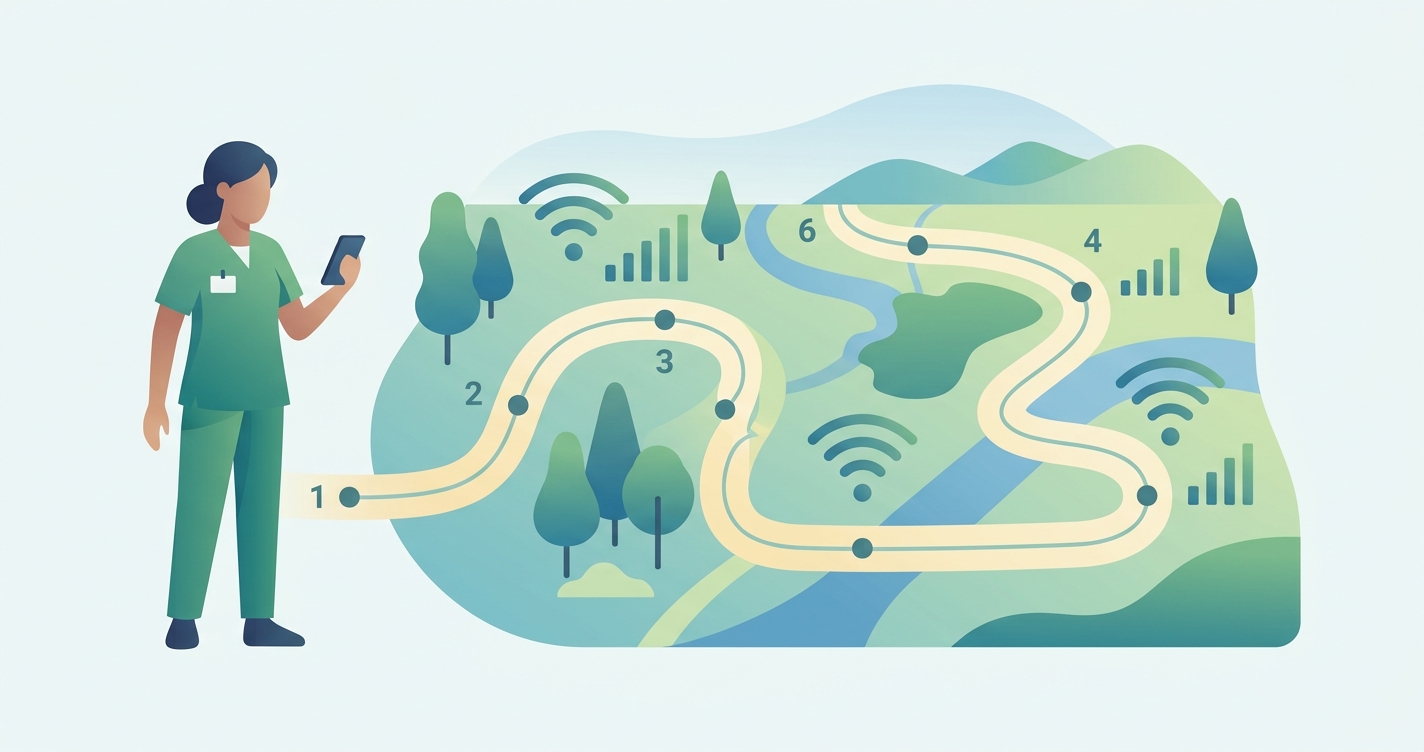
Most mobile health programs do not stall because the technology fails. They stall because the rollout plan never matched the field. An mHealth field deployment is an operations problem first and a software problem second, yet implementing partners working under USAID and PEPFAR awards routinely inherit deployment timelines built around procurement milestones rather than the realities of community health worker (CHW) sites, connectivity gaps, and supervision capacity. The result is a familiar pattern in global health: strong pilots, weak scale, and a tool that quietly disappears once donor funding cycles end.
A 2023 review of digital health scaling in low- and middle-income countries found that programs offering tangible end-user benefit, paired with trained and engaged stakeholders and simple technical profiles, were far more likely to move beyond the pilot phase than those that did not, with sustainable financing repeatedly named as the deciding factor.
This guide breaks an mHealth field deployment into six sequenced steps, written for the program managers and technical leads who own the rollout from site selection through worker training. It draws on WHO implementation guidance and the implementation-science literature on what separates programs that scale from those that join the long list of abandoned pilots.
A step-by-step mhealth field deployment roadmap
The phrase mHealth field deployment covers a wide range of activity, from a single-district screening pilot to a national CHW program touching thousands of workers. Regardless of scale, the same six steps apply. They are sequential for a reason: skipping site assessment to hit a training deadline, or launching before data flows are tested, creates failure modes that are expensive to reverse once workers are in the field.
The WHO guideline on digital interventions for health system strengthening (2019) frames deployment decisions around health-system context rather than features, and the WHO/ITU National eHealth Strategy Toolkit reinforces the same principle: alignment with existing workflows and policy matters more than the sophistication of the tool. The six steps below operationalize that thinking.
| Step | Primary question | Owner | Common failure point |
|---|---|---|---|
| 1. Site selection | Where do need, infrastructure, and readiness overlap? | Program lead + M&E | Choosing sites by convenience, not data |
| 2. Needs and readiness assessment | What gaps will this tool actually close? | Technical lead | Assuming readiness instead of measuring it |
| 3. Technical and data architecture | How does field data reach the national system? | Data team | Building before testing interoperability |
| 4. Workflow integration | Where does the tool fit a CHW's day? | Field supervisor | Adding steps without removing any |
| 5. Worker training and support | Can workers use it unsupervised? | Training lead | One-off training, no ongoing mentorship |
| 6. Monitoring and iteration | Is it being used as intended? | M&E + leadership | Measuring outputs, not actual use |
Step 1: Site selection grounded in data
Strong site selection weighs disease burden, geographic access, existing CHW coverage, and basic infrastructure together rather than separately. A district with high HIV or hypertension prevalence but no mobile coverage and no functioning supervision structure is a poor first site, even when the epidemiological case is strong. Build a simple scoring matrix and rank candidate sites against it before committing.
- Map disease burden against current screening or treatment coverage gaps
- Verify mobile network and electricity reliability at the facility and outreach level
- Confirm CHW density and active supervision already exist
- Assess local government and facility buy-in early
Step 2: Needs and readiness assessment
Before deploying mobile health programs, document the specific bottleneck the tool addresses. Researchers studying pilot failures consistently find that tools added for their own sake, rather than to close a named operational gap, lose worker trust quickly. Co-design methods that bring CHWs and facility staff into the assessment improve fit across cultural, linguistic, and technical barriers, and lower the chance that the tool collides with how work is actually done.
Industry Applications Across USAID and PEPFAR Programs
The six-step model adapts to different program types. The structure stays constant while the emphasis shifts.
HIV and TB case-finding programs
PEPFAR implementing partners often deploy mHealth tools to reduce friction at the first point of patient contact, where contactless or low-equipment screening can sort people into risk tiers before a facility visit. Here, steps 3 and 4 dominate: field data must reach the national reporting system cleanly, and the screening step must not lengthen an already crowded intake workflow.
Community-based NCD screening
For hypertension and diabetes screening at the community level, step 5 carries the most weight. Workers need confidence using the tool unsupervised, often far from any facility. A field rollout checklist for these programs should treat ongoing mentorship, not initial training, as the core investment.
Maternal and child health outreach
These programs live or die on step 1. Site selection that ignores seasonal road access or flooding produces coverage maps that look complete on paper and collapse in the rainy season. Deployment plans should model access across the full year, not a single visit.
Current research and evidence
The evidence on what makes an mHealth field deployment succeed has matured beyond anecdote. A 2023 synthesis of best practices in scaling digital health across low- and middle-income countries identified five recurring conditions: tangible end-user benefit shaped by user input, engaged and trained stakeholders, simple and adaptable technical profiles, alignment with broader health policy, and a supportive surrounding ecosystem. Programs missing any one of these conditions struggled to scale.
The same literature names the failure mode directly. "Pilotitis" describes the tendency of mHealth initiatives to multiply as short pilots that never integrate into health systems, largely because they depend on donor funding that ends before sustainable financing is arranged. Researchers studying this pattern note that a striking share of initiatives cease operations once initial funding concludes, which makes financing planning a deployment step, not an afterthought.
The WHO guideline on digital interventions for health system strengthening (2019) adds a methodological point that matters for implementing partners: evidence for a digital tool is context-specific. A tool validated in one health system does not carry automatic proof of effectiveness into another, which is why local monitoring under step 6 is treated as essential rather than optional. WHO and ITU guidance through the National eHealth Strategy Toolkit similarly emphasizes interoperability, data security, and governance as planning inputs rather than late-stage compliance tasks.
Co-design research reinforces step 2. A research toolkit on overcoming barriers to mHealth co-design in low- and middle-income countries argues that structured stakeholder involvement during design and assessment is what allows tools to clear cultural, linguistic, and technological hurdles that otherwise surface only after launch, when changes are far more costly.
The future of mhealth field deployment
Three shifts are reshaping how implementers plan a mobile health rollout. First, the equipment burden is falling. Tools that require no peripheral devices reduce the logistics, calibration, and theft-risk problems that have complicated field deployments for years, which changes step 1 site selection by widening the range of viable sites. Second, interoperability is becoming a precondition rather than a feature, as ministries of health standardize around national data platforms and expect new tools to feed them without parallel reporting. Third, financing is moving toward domestic and blended models, pushing sustainability planning earlier in the deployment timeline.
For implementing partners, the practical consequence is that a health tech implementation plan can no longer treat deployment as a one-time event. The programs positioned to scale are building rollout, monitoring, and iteration into a continuous cycle, where step 6 feeds back into site selection and training for the next wave. The deployment plan becomes a living document rather than a launch checklist filed away after go-live.
Frequently asked questions
How long should an mHealth field deployment take from planning to launch? There is no fixed number, but compressing the six steps to hit a procurement deadline is the most common avoidable error. Site selection, readiness assessment, and data architecture work often need several weeks each, and rushing them tends to surface as field failures later. Budget realistic time for steps 1 through 3 before scheduling training.
What is the single most overlooked step when deploying mobile health programs? Ongoing supervision and mentorship after initial training. Many plans treat training as a one-off event, but the research on field rollouts consistently shows that unsupervised workers drift from intended use without continued support. Build mentorship into the budget from the start.
How do we avoid building yet another pilot that never scales? Plan financing and health-system integration during deployment, not after. Programs that align with national data systems, secure a path beyond donor funding, and demonstrate tangible benefit to end users are far more likely to move past the pilot stage, according to 2023 scaling research.
Does a field rollout checklist replace a full deployment plan? No. A checklist is useful for the launch window, but it cannot substitute for the assessment, architecture, and monitoring work in the six-step model. Treat the checklist as the operational layer on top of a deeper plan.
Circadify is working on this exact problem space, building zero-equipment vital signs tools designed for community health workers and the realities of field deployment. Implementing partners planning a rollout can review deployment case studies and the global health section at circadify.com/blog to inform the next program launch.