Signs of Low Oxygen You Can Catch With a Phone Camera
How frontline workers and families spot low oxygen signs with smartphone screening when no oximeter is available, and what the research says about accuracy.
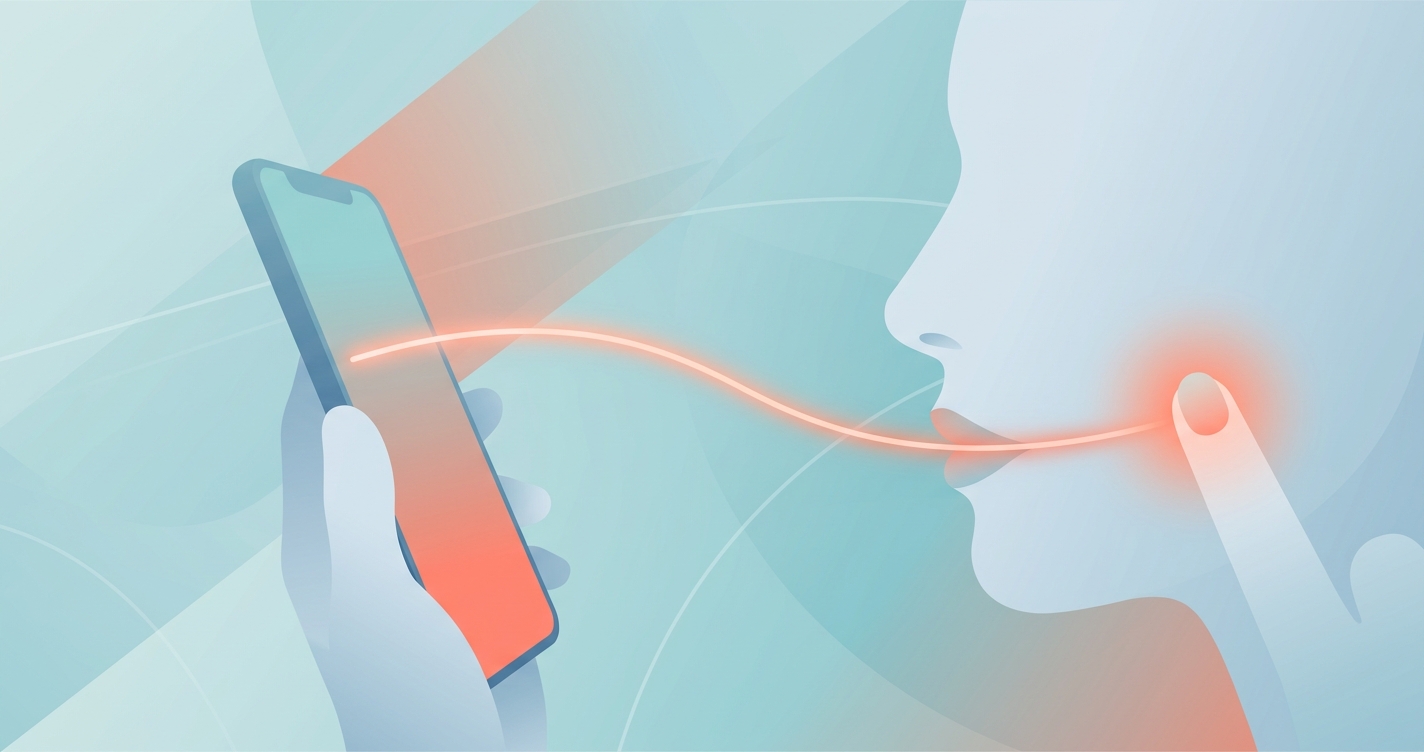
Low blood oxygen is one of the few clinical danger signs that can kill quietly, and it is also one of the hardest to catch in places where a pulse oximeter is a luxury item. A child with pneumonia, an adult with worsening respiratory infection, or an older person whose lungs are failing can all slip past a visual check because the most dangerous form of hypoxemia produces no dramatic gasping at all. For community health workers and families operating hours from the nearest clinic, the practical question is no longer whether low oxygen matters, but whether the device already in their pocket can flag it. The case for low oxygen signs smartphone screening rests on a simple observation: the same camera and flash used for photos can read color changes in tissue that track with oxygen saturation, and the human eye can be trained to spot the rest.
A 2020 study by Michael Sjoding and colleagues at the University of Michigan, published in the New England Journal of Medicine, found that Black patients had nearly three times the rate of occult hypoxemia missed by standard pulse oximeters compared with White patients, a gap that matters enormously for screening tools deployed across diverse populations.
What low oxygen signs smartphone screening can and cannot see
Before reaching for any device, frontline workers are taught to read the body. Low oxygen leaves visible traces, and a phone camera can both magnify and document them. The classic sign is cyanosis, a bluish or gray discoloration that appears first around the lips, the gums, the tongue, and the nail beds. According to a 2023 narrative review on smartphone-based hypoxemia detection led by researchers and published in the journal Sensors (PMC10091398), visible cyanosis typically does not appear until oxygen saturation has already dropped below roughly 80 to 85 percent. That is the central limitation worth stating plainly: by the time the eye sees blue, the patient is often already in danger.
This is why a phone camera offers more than a magnifying glass. Two distinct approaches exist. The first is contact photoplethysmography, where a fingertip is pressed over the camera lens with the flash on, and software analyzes the tiny color pulsations in the captured video to estimate oxygen saturation, similar in principle to how a clinical oximeter works. The second is contactless image analysis, where the camera photographs the lips, face, or nail beds and an algorithm interprets skin and mucosal color. Both try to surface what the eye cannot reliably judge on its own, especially across different skin tones and lighting conditions.
The visible and measurable signs a frontline worker should know:
- Bluish or gray lips, tongue, or gums, most reliable on mucous membranes where pigmentation varies less
- Dusky or pale nail beds that do not pink up quickly after gentle pressure
- Rapid, shallow, or labored breathing, including nostril flaring in children and chest indrawing
- Confusion, restlessness, or unusual drowsiness, which can signal the brain is short on oxygen
- A fingertip video reading from a smartphone app, used as a screening estimate rather than a diagnosis
How the screening methods compare
No single method is a complete answer in a low-resource setting. The table below sets the realistic tradeoffs side by side for teams deciding what to put in a community health worker's hands.
| Method | Equipment needed | What it detects | Main limitation | Best use in the field |
|---|---|---|---|---|
| Naked-eye cyanosis check | None | Severe hypoxemia below ~80-85% SpO2 | Misses early and silent hypoxemia; harder on darker skin | Last-resort triage when nothing else exists |
| Smartphone fingertip video (contact PPG) | Phone with camera and flash | Estimated SpO2 trend, including moderate drops | Needs calibration; motion and lighting sensitive | Repeat screening and referral sorting |
| Smartphone image analysis (contactless) | Phone camera | Color shifts in lips, face, nail beds | Skin tone and ambient light variation | Rapid mass screening, documentation |
| Standalone pulse oximeter | Dedicated device | SpO2 and pulse rate | Cost, supply, battery, calibration drift, known skin-tone bias | Confirmation where a device is available |
The point of the comparison is not to crown a winner. It is to show that smartphone methods sit in the middle ground that matters most: more sensitive than the naked eye, more available than a dedicated device that may not exist in the village at all.
Industry applications for low-resource deployments
Childhood pneumonia case finding
Pneumonia remains a leading cause of death in children under five, and hypoxemia is one of its most dangerous complications. A 2022 systematic review and meta-analysis on pulse oximetry for childhood pneumonia in low-resource settings (PMC8930495) confirmed that oximetry improves identification of severe cases, yet the same body of work documents how many facilities lack functional devices or trained staff. A phone-based screen that a community health worker can run during a home visit extends case finding to the doorstep, where the sickest children are often kept because the journey to a clinic feels impossible.
Respiratory outbreak surveillance
During respiratory surges, the bottleneck is rarely treatment science. It is the first measurement at scale. Contactless oxygen screening in developing nations gives outreach teams a way to sort large numbers of people into watch-and-refer categories without handing a shared contact device person to person, which also reduces infection-control concerns.
Maternal and elderly home monitoring
For pregnant women with respiratory illness and for older adults with chronic lung disease, a repeatable smartphone check creates a trend line. A single reading is a snapshot; a falling trend across several days is a warning a family can act on before a crisis. Pulse oximetry without a device, used this way, becomes a household early-warning habit rather than a one-time event.
Current research and evidence
The strongest proof-of-concept for a smartphone SpO2 check comes from a team at the University of Washington and the University of California San Diego, including Edward Wang and Jason Hoffman, whose work showed that an unmodified smartphone camera and flash, paired with a deep-learning algorithm, could detect blood oxygen levels down to 70 percent, the lowest threshold the US Food and Drug Administration recommends for oximeters. In their dataset of more than 10,000 readings across participants with saturation ranging from 61 to 100 percent, the phone correctly identified low blood oxygen below 90 percent about 80 percent of the time, with 81 percent sensitivity and 79 percent specificity.
Algorithmic accuracy has continued to improve. A 2023 study published in IEEE Transactions on Instrumentation and Measurement reported a deep neural network model estimating SpO2 from smartphone fingertip videos with a mean absolute error of 1.97 percent. Separately, researchers at Purdue University in 2023 described AI methods that reconstruct a fuller light spectrum from an ordinary phone image to detect blood-related conditions such as anemia, hinting at where contactless mobile health vital signs may go next.
These results are encouraging and also incomplete. Sample sizes in the foundational studies were small, and the racial bias documented by Sjoding and colleagues is a warning that any optical method must be validated across the full range of skin tones before it earns trust in global deployment. The honest summary is that smartphone screening is a triage and referral aid backed by growing evidence, not a confirmed replacement for clinical measurement.
The future of smartphone oxygen screening
Three shifts will decide how far this technology travels. First, validation will need to move out of the lab and into community settings with diverse populations, which is exactly where bias and lighting problems show up. Second, the FDA's 2025 draft guidance pushing for oximeter testing across skin tones signals a regulatory direction that smartphone tools will be expected to follow. Third, the value will come from integration rather than the reading alone: a screen that automatically flags a low result, attaches a timestamp and location, and routes the case to a supervisor turns a number into a referral. For ministries of health and implementing partners, the appeal is a screening layer that scales with phones already in the field rather than with devices that must be procured, charged, calibrated, and replaced.
Frequently asked questions
Can a smartphone really measure blood oxygen without any extra hardware? Research from the University of Washington and UC San Diego shows an unmodified phone camera and flash can estimate oxygen saturation down to 70 percent in controlled studies. It works as a screening estimate, not a confirmed clinical measurement, and accuracy depends on technique, lighting, and validation across skin tones.
What low oxygen signs can a phone camera help spot? A camera helps document and analyze cyanosis, the bluish or gray color in lips, gums, tongue, and nail beds, along with pale or dusky tissue. Combined with observed signs like rapid breathing, chest indrawing, and confusion, it strengthens a frontline worker's judgment when no oximeter is present.
Is smartphone screening reliable on darker skin? This is the key open question. Standard oximeters miss low oxygen far more often in people with darker skin, and optical smartphone methods face the same risk. Any tool used in diverse populations must be validated across skin tones before it can be trusted for referral decisions.
Does this replace a pulse oximeter or a clinic visit? No. Smartphone screening is best understood as a triage and early-warning aid that helps decide who needs urgent referral when a device or clinic is far away. Confirmation and treatment still require clinical assessment.
Circadify is building respiratory screening tools aimed squarely at this gap, where the nearest oximeter may be a day's travel away and the phone is the only instrument on hand. Global health researchers and implementing teams evaluating contactless approaches can review deployment case studies and field evidence in the global health section at circadify.com/blog.