Is smartphone-based diagnosis as accurate as equipment-based care?
A research-style analysis of smartphone diagnosis vs. equipment accuracy, exploring current evidence, industry applications, and future trends for global health.
The question of whether a smartphone can match the diagnostic accuracy of traditional medical equipment is no longer a hypothetical exercise. For global health researchers and implementing partners, it is a critical operational question. As mobile health (mHealth) interventions become more integrated into primary healthcare delivery in low-resource settings, understanding the evidence behind smartphone diagnosis vs. equipment accuracy is essential for designing effective and responsible programs. The convenience, portability, and cost-effectiveness of using existing consumer hardware are clear, but only if the clinical data they generate is reliable enough for decision-making.
"A systematic review of diagnostic health apps using inbuilt smartphone sensors found moderate to high overall sensitivity (82%) and specificity (89%), though many studies had a high risk of bias." (Hasan, A. M. et al., 2021)
Smartphone diagnosis vs. equipment accuracy: a detailed comparison
The evidence on smartphone diagnostic accuracy is varied and highly dependent on the specific use case. It is not a simple "yes" or "no" answer. Research shows that for certain applications, smartphones can achieve performance comparable to conventional equipment, while in other areas, they are best utilized as screening or triage tools rather than definitive diagnostic instruments. For instance, studies on smartphone-based ECG have demonstrated high accuracy in detecting atrial fibrillation. At the same time, research on smartphone-captured radiological images notes they are effective for emergency diagnoses like pneumothorax but generally less accurate than traditional PACS systems for a broader range of conditions.
A key factor influencing the discussion of smartphone diagnosis vs equipment accuracy is the role of artificial intelligence (AI). Deep learning algorithms are increasingly used to analyze images and sensor data from smartphones, often achieving expert-level performance. A 2021 study by Johannes A. Schaar and colleagues at the University of Cambridge highlighted the potential of AI to interpret medical imaging on smartphones, a task that would otherwise require a trained specialist who may not be available in a field setting. This suggests the "accuracy" of a smartphone tool is a combination of its hardware sensors and the sophistication of its software analytics.
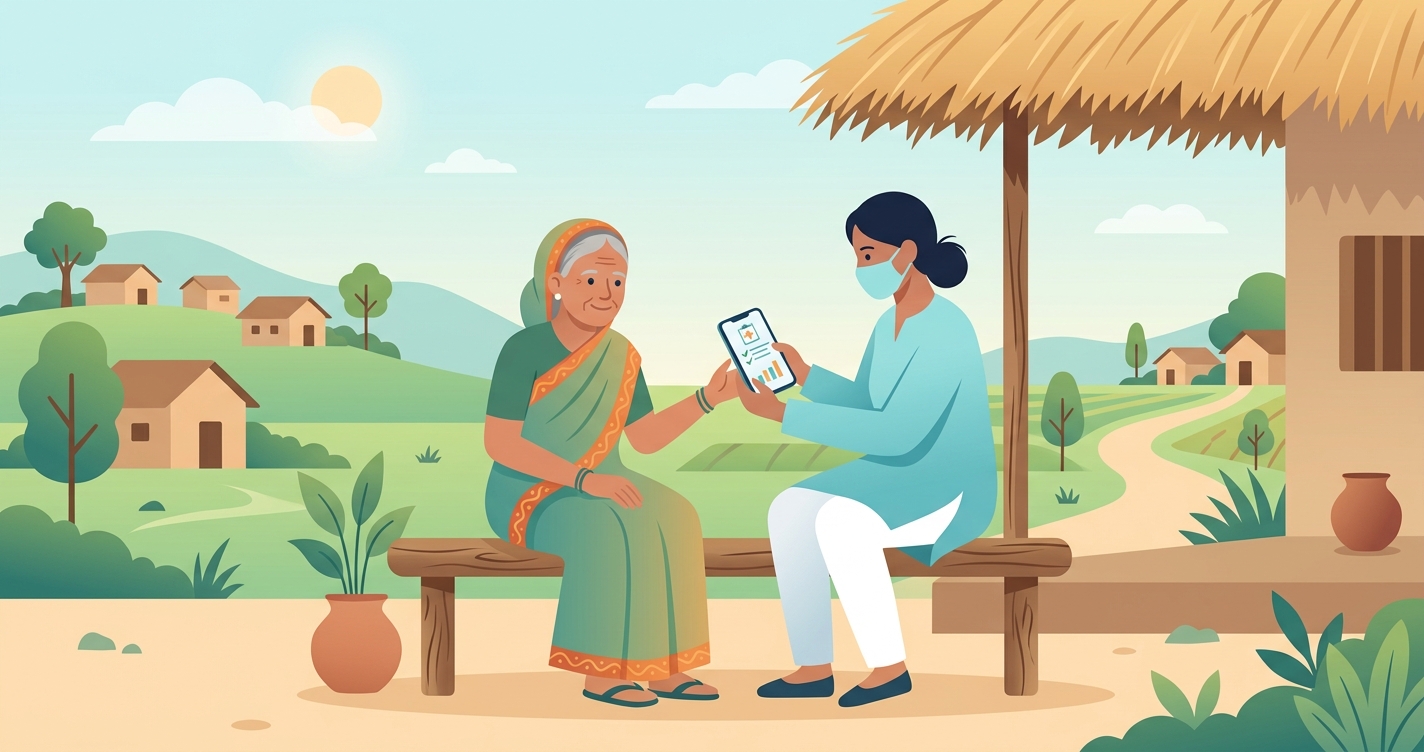
The context of deployment also matters. In a well-resourced hospital, a traditional device may always be preferred. But for a community health worker (CHW) in a rural area, a validated smartphone tool is infinitely more accurate than no tool at all. The comparison must account for the accessibility and practicality of the technology in its intended environment.
| Feature | Smartphone-Based Tools | Traditional Medical Equipment |
|---|---|---|
| Accuracy | Varies by use case; high for specific tasks (e.g., ECG, otoscopy), lower for others. Often positioned for screening. | Generally considered the gold standard; higher precision for a wider range of diagnostics. |
| Portability | High. Utilizes existing, lightweight consumer devices. | Low to moderate. Often bulky, heavy, and requires a stable power source. |
| Cost | Low initial hardware cost; software models vary. Scalable to thousands of users. | High procurement and maintenance costs. Limited by budget for number of units. |
| Training Required | Minimal for basic operation; CHWs can be trained quickly. | Requires trained clinical staff for operation and interpretation. |
| Field Deployment | Excellent. Not dependent on reliable power or transport infrastructure. | Challenging. Susceptible to damage, power outages, and logistical hurdles. |
| Data Connectivity | Built-in. Enables real-time data sync with platforms like DHIS2 or CommCare. | Often offline. Requires manual data entry to digitize records. |
Industry applications in low-resource settings
The value of smartphone diagnostics is most apparent where traditional equipment is least accessible. In global health programs, these tools are enabling new models of care delivery.
Supporting community health worker (chw) programs
CHWs are the backbone of primary healthcare in many countries. Equipping them with smartphone-based tools allows them to conduct sophisticated screening and monitoring tasks that were previously impossible.
- Vitals signs measurement (heart rate, respiratory rate) without contact.
- Anemia screening using smartphone camera images of the conjunctiva.
- Triaging skin conditions using AI-powered image analysis.
Enhancing TB and HIV Screening
For PEPFAR implementing partners and national disease programs, early case identification is a major challenge. Smartphone tools can reduce friction at the first point of contact.
- Using cough analysis algorithms to screen for tuberculosis risk.
- Enabling remote adherence monitoring through video-based confirmation.
- Integrating screening results directly into patient management systems.
Use in humanitarian and conflict zones
In refugee camps and conflict-affected areas, deploying traditional medical equipment is often impossible.
- Aid workers can use smartphones to perform rapid nutritional assessments.
- Mental health screening can be done using validated questionnaires delivered via an app.
- Health surveillance is made easier by collecting and transmitting data from the field in near-real-time.
Current research and evidence
The evidence base for smartphone diagnostics is growing rapidly, but researchers caution against overstating the findings. A 2017 systematic review by Carsten Schulz and colleagues published in BMJ Open found that while many apps claimed diagnostic capabilities, very few had been validated in peer-reviewed studies, and those that existed often had a high risk of bias. This highlights a critical gap between product development and clinical validation.
More recent studies are starting to fill this gap. A meta-analysis on smartphone-based audiometry found high overall sensitivity (89%) and specificity (93%) for hearing loss detection, making it a viable alternative to conventional audiometry, especially for screening purposes in schools or community settings. Similarly, a 2022 meta-analysis on smartphone-enabled otoscopy concluded it had a higher rate of correctness in diagnosing middle ear diseases compared to traditional otoscopy, likely because the digital image can be magnified and reviewed. However, the authors of these studies consistently call for more high-quality, comparative research across diverse populations and settings.
The future of smartphone diagnostics
The trajectory of smartphone diagnosis vs equipment accuracy appears to be narrowing. Several factors are driving this trend. First, smartphone sensors (cameras, microphones, accelerometers) are continuously improving in quality and sensitivity. Second, the deep learning models used to interpret sensor data are becoming more sophisticated and accurate. As these models are trained on larger and more diverse datasets, their performance will continue to improve. Third, the integration of data from multiple sensors, a practice known as sensor fusion, may unlock new diagnostic possibilities, allowing a smartphone to assess a patient's condition more holistically. The ultimate goal is not necessarily to replace all equipment but to create a system where screening, triage, and monitoring can happen anywhere, reserving facility-based equipment for definitive diagnosis and treatment.
Frequently asked questions
Q: Are smartphone diagnostic apps regulated? A: It varies significantly by country and the app's specific claims. Apps that perform complex analysis or are intended to replace a traditional diagnostic device are increasingly subject to regulation by bodies like the FDA in the US or through medical device regulations in other regions. However, many "wellness" or screening apps exist in a less regulated space.
Q: What are the biggest barriers to adopting smartphone diagnostics in the field? A: Beyond the question of accuracy, major barriers include data privacy and security, integration with existing health information systems (like DHIS2), the need for robust training and quality assurance protocols, and ensuring the long-term sustainability and technical support for these digital interventions.
Q: Can a smartphone diagnose all the same conditions as clinic equipment? A: No, and that is not the goal. Smartphones excel at screening and monitoring for a specific set of conditions. They cannot perform blood tests, conduct advanced imaging like MRI or CT scans, or replace a wide range of specialized laboratory equipment. Their strength is in extending the reach of healthcare by enabling early detection and data collection outside of traditional clinic walls.
As this technology matures, organizations are demonstrating how to build effective programs around it. Circadify is actively engaged in developing and deploying zero-equipment solutions to address these challenges in global health. To learn more about how these tools are being used in real-world deployments, explore our case studies at circadify.com/blog.