
How to Measure Breathing Rate With a Phone Camera
An analysis of how mobile optical sensors capture respiratory rates to diagnose pneumonia and respiratory distress in low-resource clinical settings.
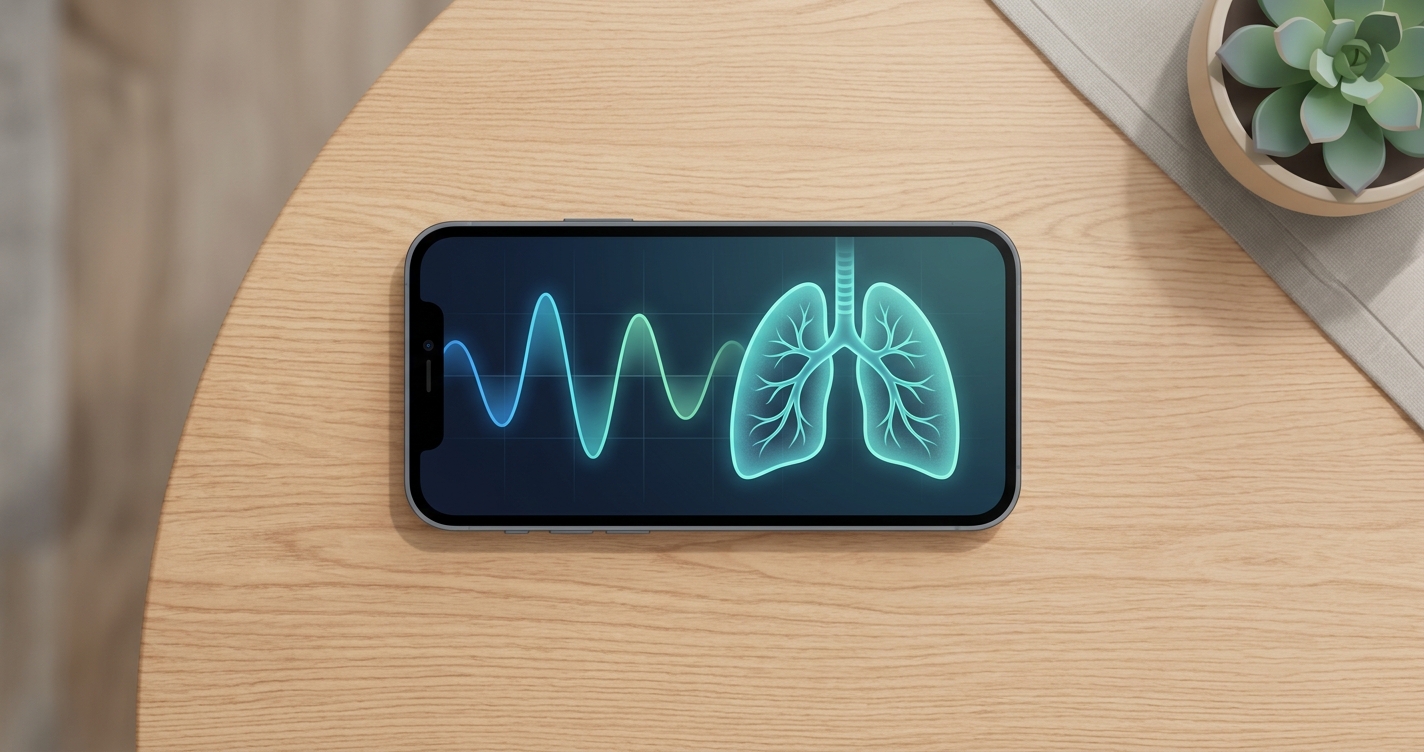
Procuring clinical-grade diagnostic hardware for remote regions is a known logistical bottleneck. Global health implementers operating in low-resource settings frequently face environments where pulse oximeters break, batteries die, and frontline workers must rely on manual observation to triage pediatric respiratory distress. The most common indicator of severe respiratory illness, rapid breathing, historically required community health workers to observe a restless child for a full sixty seconds. This manual approach is highly susceptible to human error. For field teams seeking to measure breathing rate with phone hardware, the shift from subjective counting to automated optical analysis resolves a massive diagnostic gap. The ability to extract vital signs using standard mobile software removes the dependency on fragile supply chains, shifting the diagnostic burden entirely to scalable code.
"Pneumonia remains the leading infectious cause of mortality in children globally. The transition from subjective manual respiratory counting to objective, video-based non-contact monitoring represents a critical structural shift in assessing pediatric respiratory distress in resource-limited settings."
- M. J. M. van der Putten, Frontiers in Pediatrics (2023)
The clinical challenge of manual respiratory assessment
Before examining the software mechanisms, it is necessary to understand why traditional methods fail at the last mile. The World Health Organization (WHO) outlines specific Integrated Management of Childhood Illness (IMCI) guidelines for diagnosing pneumonia. These protocols depend heavily on identifying tachypnea, defined by strict respiratory rate thresholds based on a child's age. For infants aged two to eleven months, a rate of fifty or more breaths per minute signals danger. For children aged one to five years, the threshold is forty breaths per minute.
To determine this rate without hardware, a community health worker must watch a child's chest rise and fall for exactly sixty seconds, often using a basic physical timer. In a controlled hospital ward, this is difficult. In a crowded rural clinic or a dimly lit home, it borders on impossible. Children who are ill are often crying, restless, or moving erratically, which artificially elevates their breathing rate and obscures the natural mechanical motion of the chest. Furthermore, a health worker managing a long queue of patients may lose count or attempt to multiply a fifteen-second observation by four, a shortcut that drastically reduces diagnostic accuracy. The consequences of these errors are severe: over-diagnosing leads to the unnecessary prescription of antibiotics, accelerating antimicrobial resistance, while under-diagnosing results in untreated respiratory failure.
How to measure breathing rate with a phone camera
To eliminate the variables of human observation, mobile developers apply computer vision models directly to a device's camera feed. The underlying technology relies on an optical flow algorithm, a process that tracks the microscopic pixel displacements between sequential video frames.
When a user aims to measure breathing rate with phone sensors, the application first identifies a region of interest, typically the patient's upper chest and abdominal area. As the patient inhales and exhales, the physical expansion and contraction of the thoracic cavity cause the pixels within this bounding box to shift. The software isolates these rhythmic vertical and horizontal movements from ambient background noise.
Because breathing generates a predictable, low-frequency wave, the raw data undergoes bandpass filtering. This mathematical process strips away high-frequency noise, such as sudden body twitches or camera shake, isolating the specific frequencies that correspond to human respiration (typically between ten and sixty cycles per minute). By calculating the peak-to-peak intervals within this filtered waveform, the application derives an objective, standardized respiratory rate. All of this computation happens in a matter of seconds, bypassing the need for a full sixty-second visual observation.
Comparison of Respiratory Rate Measurement Methods in the Field
| Measurement Method | Technical Mechanism | Accuracy and Consistency | Hardware Dependencies |
|---|---|---|---|
| Manual Observation | Human visual count over sixty seconds | Highly variable, prone to bias | Physical stopwatch or timer |
| Tap-per-Breath Applications | Health worker taps screen per breath | Moderate, dependent on user reflex | Standard smartphone |
| Optical Video Processing | Automated pixel displacement analysis | High, objective algorithmic output | Smartphone with working camera |
Deploying optical vital sign capture provides distinct operational benefits for implementing partners and ministries of health:
- Eliminates the need to physically touch or restrain sick children, maintaining a baseline resting respiratory rate.
- Standardizes data collection across decentralized teams, ensuring diagnostic criteria remain identical across all regions.
- Bypasses the supply chain constraints of importing, distributing, and replacing clinical respiratory bands or dedicated monitors.
- Operates independently of battery-powered peripherals that require unique charging cables or constant maintenance.
- Integrates seamlessly with digital health platforms, automatically passing vital signs into patient records without manual data entry.
Industry applications in global health
Pediatric pneumonia triage
In locations lacking radiological equipment or laboratory infrastructure, the respiratory rate is the most valuable data point for diagnosing acute lower respiratory infections. Implementing camera-based vital sign extraction allows frontline workers to categorize pneumonia severity instantly. The software objectively confirms whether a child is breathing above the WHO age-specific threshold, standardizing the decision to administer oral amoxicillin locally or arrange immediate transport to a district hospital for oxygen therapy.
Supply chain resilience
Global health funding frequently leaks through the continuous procurement and replacement of physical hardware. Pulse oximeters, specialized timers, and portable monitors have a remarkably short lifespan in extreme field conditions due to dust, humidity, and accidental damage. Transitioning to software-based diagnostics transforms capital expenditure into highly scalable software distribution. Instead of coordinating the shipment of thousands of physical timers, a ministry of health can push an application update to the existing fleet of Android devices already used for digital data collection.
Current research and evidence
The clinical viability of utilizing consumer mobile devices for vital sign extraction is supported by a growing body of peer-reviewed literature. Researchers have extensively mapped the transition from manual counting to completely contactless digital monitoring.
In 2016, researchers Yunyoung Nam and colleagues published an analysis in the journal PLOS One focused on the simultaneous monitoring of heart and breathing rates using dual cameras on a smartphone. Their study evaluated the efficacy of extracting respiratory metrics via a front-facing camera without any physical contact. The methodology proved that optical algorithms could accurately capture chest and abdominal mechanics. The software demonstrated tight agreement with traditional medical reference sensors across a wide spectrum of breathing frequencies, proving that standard consumer camera lenses were sensitive enough to isolate respiratory cycles.
More recently, research has focused squarely on pediatric applications in low-resource environments. A 2023 prospective observational study authored by M. J. M. van der Putten and published in Frontiers in Pediatrics investigated video-based non-contact monitoring in children suffering from pneumonia. The research explored The accurate counting of breaths per minute. The automated detection of lower chest wall indrawing, a severe mechanical symptom where the chest pulls inward during inhalation. The findings reinforced that optical sensors offer a highly effective, non-intrusive alternative to physical assessment, specifically highlighting the value of video analysis for pediatric patients who become agitated by manual examination.
The future of optical diagnostics
The operational future of mobile diagnostics in global health relies on edge computing. The most robust mobile health applications now process computer vision models locally on the device processor, requiring absolutely no internet connection to analyze the video feed. This offline functionality is a non-negotiable requirement for field deployments in disconnected rural villages.
As processing power increases, these optical modules will integrate directly into the broader digital public goods infrastructure, such as DHIS2 and CommCare. Health ministries will capture real-time epidemiological data on respiratory illnesses at the population level, mapping outbreak clusters based on objective diagnostic data rather than subjective field reports. This convergence of software-defined vital signs and national health registries will fundamentally change how international non-governmental organizations monitor disease burdens.
Frequently asked questions
Can a phone camera accurately measure respiratory rate in dark environments?
Optical flow algorithms track pixel displacement, which inherently requires visible light. In extremely low-light conditions, the camera sensor lacks the necessary contrast to identify the boundaries of the chest and abdomen. Clinical deployment guidelines require assessments to occur in reasonably lit rooms or natural daylight to maintain high algorithmic confidence.
Does measuring breathing rate with a phone require an internet connection?
Modern diagnostic applications designed for remote deployment run computer vision models locally on the device edge. This allows community health workers to capture and process vital signs entirely offline. The application caches the clinical data locally and synchronizes with national servers only when a cellular or wireless network becomes available.
Is camera-based respiratory tracking safe for pediatric triage?
Yes. Camera-based tracking is a completely non-invasive and contactless methodology. It is highly preferred for pediatric populations because it removes the need to attach physical sensors or bands, which frequently cause distress and artificially elevate the child's resting breathing rate.
How does the software handle patient movement during an assessment?
While advanced machine learning filters can ignore minor background motion, significant patient movement disrupts the specific pixel tracking required for respiratory analysis. Standard clinical protocols advise keeping the patient as still as possible for the brief fifteen to thirty-second duration of the video capture to ensure the cleanest data output.
Global health researchers and implementing partners require scalable, evidence-based tools that function reliably at the last mile of care. As organizations look to deploy software-based vital signs monitoring, Circadify is addressing this space with solutions optimized for these exact constraints. To explore how this technology is currently being utilized in the field, review our Deployment case studies.