
How to Keep Patient Data Safe in mHealth Programs
A practical guide to patient data privacy in mobile health programs, exploring offline storage risks, dynamic consent, and securing field deployments.
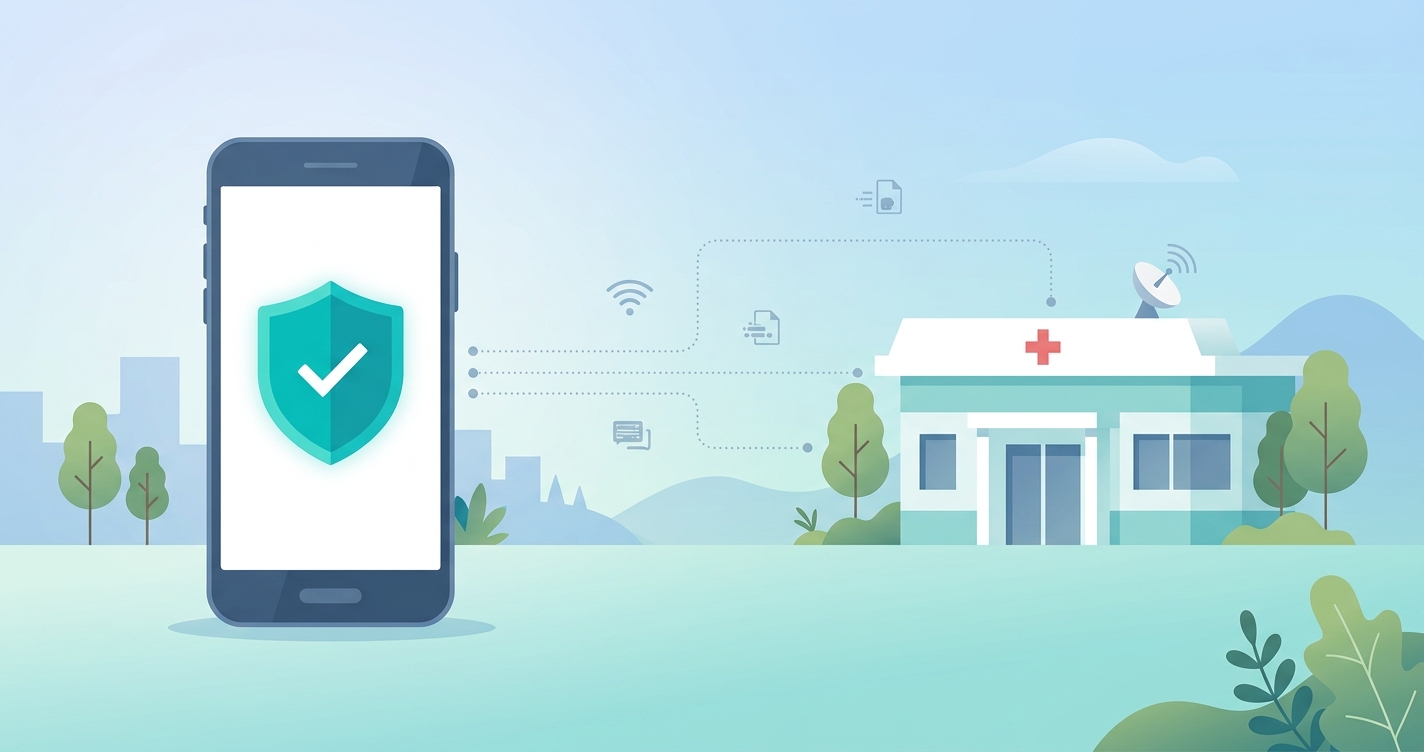
The transition from paper logbooks to digital tracking has radically expanded the capabilities of frontline workers. Equipping community health workers with smartphones allows for rapid screening, continuous monitoring, and complex disease surveillance across remote populations. However, this transition also turns standard consumer devices into walking repositories of highly sensitive clinical information. The issue of patient data privacy mobile health platforms face is fundamentally tied to infrastructure. Operating in environments with unstable internet connections, shared hardware, and emerging regulatory frameworks requires a deliberate architecture that balances clinical utility with absolute security.
"While mobile health initiatives rapidly expand, only 21% of research evaluating patient perspectives on data privacy is conducted in the resource-limited settings where these tools are scaling fastest, leaving a critical gap in our understanding of field-level security."
Arvanitis et al., Systematic Review of mHealth Privacy (2023)
The unique challenge of patient data privacy mobile health
Implementing strict data governance is uniquely difficult in regions where infrastructure constraints dictate operational workflows. When a community health worker is stationed hours away from a reliable cellular network, applications cannot continuously authenticate users or synchronize records to a secure cloud server. The data must live on the local device until a stable connection is established. This store-and-forward reality creates a prolonged window of vulnerability that urban clinic environments do not experience.
Furthermore, many global health deployments operate across borders with highly variable legal standards. A 2022 review of regional data protection policies revealed that barely half of the nations in the African Union had comprehensive data security legislation in place. For implementing partners, relying solely on local compliance is often insufficient. Programs must self-impose rigorous security standards based on international best practices. Organizations are increasingly adopting frameworks modeled after guidelines from the United States Agency for International Development (USAID) and the MEASURE Evaluation project. These frameworks demand end-to-end encryption, strict data minimization, and hardware-level safeguards to protect vulnerable populations.
The nature of the data collected further complicates the security profile. Modern clinical tools do not just record basic text entries. They capture high-resolution photographs of physical lesions, GPS coordinates of remote households, and continuous audio recordings for respiratory analysis. This rich media provides massive clinical value but simultaneously creates severe privacy risks. If a device containing unencrypted GPS data and infectious disease status is intercepted, the consequences for vulnerable patients can be catastrophic. The metadata generated by these applications, such as the timestamps of visits or the frequency of screening in a specific village, can inadvertently reveal disease outbreaks or target marginalized groups if accessed by unauthorized entities.
Another major hurdle involves user behavior and digital literacy. Community health workers often share their devices with family members or use them for personal communication. Without proper containerization of the clinical application, personal use can inadvertently expose protected health information to malware or unauthorized viewers.
| Storage Architecture | Connectivity Required | Security Risk Profile | Ideal Use Case |
|---|---|---|---|
| Local Unencrypted Storage | None | High | Never recommended for clinical data |
| Local Encrypted Storage | Intermittent | Medium | Remote screening with delayed sync |
| Store-and-Forward | Intermittent | Medium | Routine community health data collection |
| Real-time Cloud Sync | Continuous | Low | Urban clinics with reliable broadband |
Core strategies for securing field deployments
Building a secure deployment requires addressing hardware, software, and human factors simultaneously. Implementing partners must design systems that assume the physical device will eventually be lost, stolen, or compromised.
- Role-based access control: Limit data visibility so health workers only access records for patients in their immediate care area. Systems should automatically lock out users after a brief period of inactivity.
- Hardware containerization: Utilize mobile device management software to lock the smartphone into kiosk mode. This restricts the device to running only the approved clinical applications and prevents the installation of unverified software.
- Data minimization and ephemeral storage: Applications should only collect the data strictly required for the immediate clinical decision. Once data is successfully transmitted to the central server, the local copy must be automatically purged from the device cache.
- Edge processing: Whenever possible, process diagnostic data locally and discard raw inputs. For example, if a tool uses the camera to capture clinical signals, the application should calculate the final metric and immediately delete the source video frames.
- Secure data pipelines and transit encryption: Sending patient data via standard SMS or unencrypted networks is fundamentally insecure. Implementers must utilize transport layer security protocols. When a device finally reaches a network zone, the application must establish a secure tunnel to the central server before any data is transmitted, preventing interception by malicious actors monitoring local cellular towers.
- Granular digital consent: Implement dynamic consent modules that clearly explain to patients what data is being collected, why it is needed, and how long it will be kept, using locally appropriate languages and visual aids.
Industry applications of secure mobile health
Non-Governmental Organizations
Non-governmental organizations often act as the primary healthcare providers in post-conflict or extremely remote areas. In these environments, security protocols must be designed for rugged, unpredictable conditions. Patient data could be exploited if it falls into the hands of hostile actors, making privacy a literal matter of life and death. Implementing partners in this sector frequently rely on robust offline encryption, ensuring that if a smartphone is confiscated during transit, the protected health information remains entirely inaccessible without complex cryptographic keys.
Ministry of health national scale-ups
When ministries of health transition national community health programs from paper to digital formats, the attack surface expands exponentially. National scale-ups require centralized data governance and standardized interoperability. The security focus here shifts to ensuring that data moving from a rural smartphone into a national health information system is sanitized, anonymized where appropriate, and routed through secure national gateways. This prevents regional data silos from becoming vulnerable endpoints.
Academic research and clinical trials
Global health researchers conducting field trials face strict institutional review board requirements regarding patient confidentiality. In these applications, tools are heavily audited for compliance with both local laws and international ethical guidelines. Researchers prioritize dynamic consent interfaces that allow participants in low-resource settings to comprehend and modify their data-sharing preferences over time. This transparent approach aligns with ethical standards outlined by global health authorities and builds necessary trust with marginalized communities.
Current research and evidence
The academic literature on digital health security in developing nations highlights a significant tension between rapid technological adoption and lagging security frameworks. Research by Arvanitis et al. (2023) at the National Institutes of Health conducted a comprehensive systematic review emphasizing that the bulk of mobile health privacy research focuses on high-income populations. This leaves major gaps regarding low-literacy and low-resource groups, where the risks of exploitation are often highest.
Additionally, the MEASURE Evaluation guidelines (2021), funded by USAID, provide a definitive framework for program implementers. These guidelines dictate that mobile applications should store minimal to no personal health information permanently on the local device. The framework emphasizes a full-lifecycle approach to data security, covering collection, encrypted transmission, secure cloud storage, and eventual data destruction.
Researchers have also explored the cultural implications of data collection. Harris et al. (2021) analyzed mobile consulting in low-resource settings, concluding that maintaining strict anonymity during data collection is essential for sustaining public trust. Their work indicates that programs failing to prioritize digital privacy risk alienating the very communities they intend to serve. When patients believe their sensitive health information might be leaked or misused, they are significantly less likely to seek care or provide accurate symptom histories.
The future of patient data privacy mobile health
The next phase of global health technology will likely move away from centralized data collection toward decentralized, zero-trust architectures. Edge computing will play a major role in this evolution. By executing complex algorithms directly on the smartphone processor without saving the underlying raw data, edge computing severely limits the amount of sensitive information at risk. This means diagnostic assessments can occur in real-time without generating persistent digital artifacts that could later be compromised.
We will also see the integration of dynamic, blockchain-backed consent ledgers. These systems could allow patients to track exactly which organizations have accessed their health records, granting unprecedented autonomy to populations that have historically been excluded from data governance conversations. As sophisticated algorithms become embedded in frontline diagnostic tools, regulatory bodies will demand that privacy-by-design is treated as a foundational requirement rather than an optional software feature. The focus will shift from mitigating data breaches to architecting systems where widespread data exposure is technically impossible.
Frequently asked questions
What is the biggest risk to data security in remote areas?
The most significant vulnerability is the physical loss or theft of the mobile device. Because low-resource settings often require offline data storage, unencrypted devices can expose hundreds of patient records if they fall into the wrong hands. Implementing strict device management and local encryption is critical to mitigating this threat.
How does offline mode impact data protection?
Offline mode requires health records to be cached locally on the smartphone until an internet connection becomes available. This necessitates strong local encryption and automated sync-and-purge routines to clear the device memory once the data safely reaches the secure server.
What is dynamic consent in digital health?
Dynamic consent is a model that allows patients to review, alter, or revoke their permission for data sharing over time, rather than signing a single, static agreement at the beginning of a health program. This approach provides greater transparency and patient autonomy.
Can standard privacy laws be enforced in low-resource settings?
Enforcement remains highly variable. While many nations are adopting comprehensive data protection legislation, regulatory bodies in developing regions often lack the resources to audit and enforce compliance. This places the primary burden of security on the implementing organizations and the software vendors they choose.
Global health researchers and mobile health platforms are increasingly seeking tools built around privacy-first architectures that do not rely on storing sensitive raw media on local devices. Circadify is actively addressing this space by developing zero-equipment solutions that process vital signs at the edge, ensuring community health workers can operate effectively without compromising security. To read more about secure implementation strategies and explore our Deployment case studies, visit our global health section today.