How Phone Screening Helps Catch Maternal Risks Early
Discover how smartphone maternal health screening provides zero-equipment vital signs to catch preeclampsia and hypertensive disorders in low-resource settings.
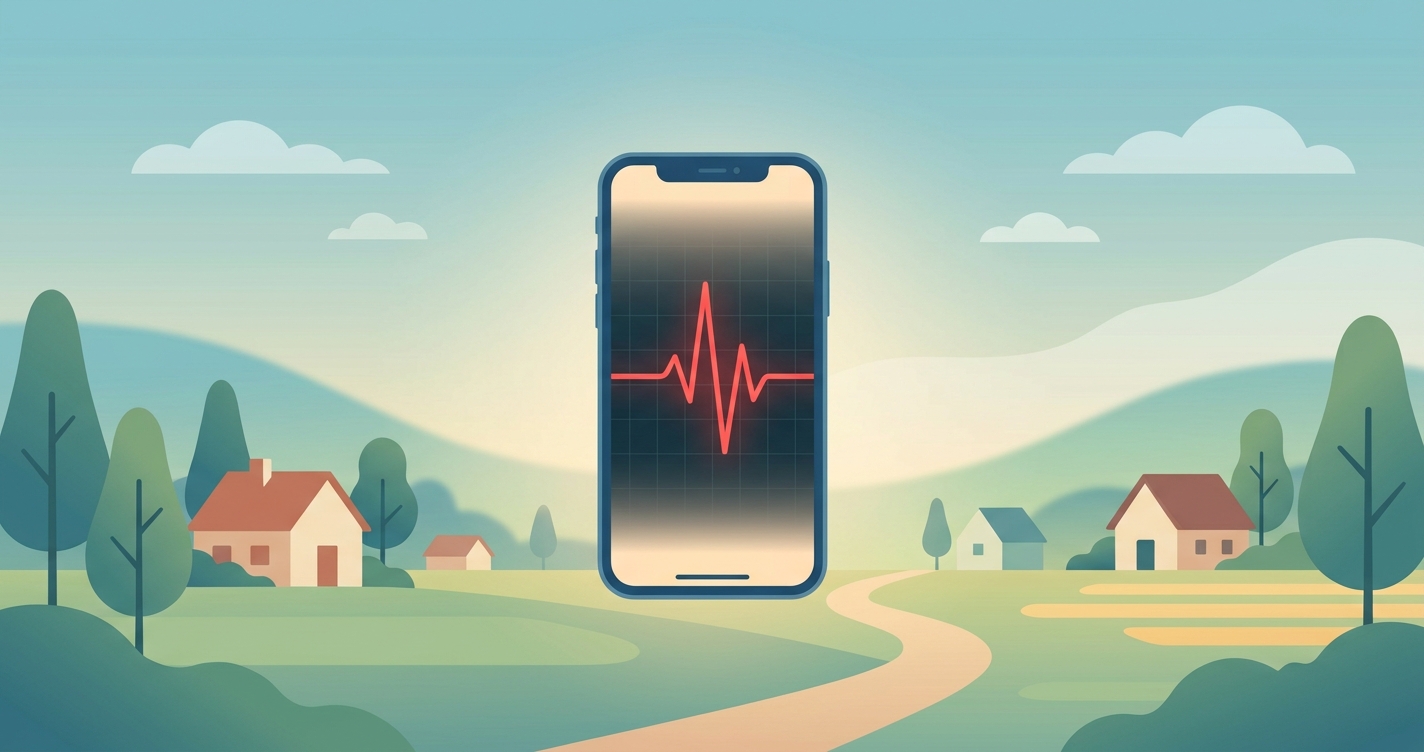
Every day, global health researchers and implementing partners face the logistical friction of antenatal care in low-resource environments. The standard protocol for catching high blood pressure and other pregnancy danger signs relies on specialized equipment: blood pressure cuffs, pulse oximeters, and trained clinical staff. When a community health worker must walk miles between households, carrying and maintaining that hardware limits the scope of any intervention. Moving toward software-based solutions, particularly smartphone maternal health screening, changes this arithmetic. By turning the devices these workers already carry into diagnostic aids, global health programs can spot hypertensive disorders like preeclampsia weeks before they escalate into emergencies. For ministries of health and non-governmental organizations, this represents a transition from hardware scaling to software scaling, allowing vital signs to be captured without the heavy burden of physical supply chains or continuous hardware procurement.
"Digital surveillance and mobile monitoring technologies can detect preeclampsia risk and related hypertensive anomalies 7 to 14 days earlier than traditional in-clinic assessments, fundamentally shifting the timeline for clinical intervention."
- Julian Dewantiningrum et al., Digitally Enabled Early Risk Detection in Preeclampsia, 2024.
The mechanics of smartphone maternal health screening
The ability to capture pregnancy vital signs mobile measurements is driven largely by advancements in remote photoplethysmography (rPPG) and machine learning. Traditional vital sign measurement relies on mechanical or physical contact, such as a cuff inflating to measure arterial pressure or a sensor clipping to a finger to read light absorption. In contrast, contactless screening utilizes the optical sensors built into standard commercial smartphones to measure subtle physiological changes.
When a smartphone camera records a patient's face, it captures micro-fluctuations in skin color that occur with each cardiac cycle. Human eyes cannot see these tiny shifts in the microvascular bed, but high-resolution camera sensors can. The software algorithms extract these color signals, filter out ambient noise and motion, and process them to calculate heart rate, respiratory rate, and indicators of blood pressure.
For implementing partners focused on maternal health low resource settings, this technical shift removes the largest barrier to proactive care: the hardware itself. The processing happens either entirely on the device or via low-bandwidth cloud connections, making it viable for rural villages where connectivity is intermittent at best. By focusing solely on software, global health initiatives avoid the recurring costs of replacing broken cuffs, calibrating dopplers, and sourcing batteries for localized clinics. Instead, an updated algorithm instantly deploys to thousands of frontline workers, immediately upgrading their screening capabilities across an entire region.
Replacing the portable clinic: zero-equipment workflows
When community health workers transition from traditional clinical equipment to smartphone-based diagnostics, the entire workflow of household visits changes. Procurement teams no longer need to forecast equipment depreciation, and field workers no longer need to carry heavy diagnostic bags across difficult terrain.
| Feature | Traditional Antenatal Screening | Contactless Smartphone Screening |
|---|---|---|
| Equipment Required | Sphygmomanometer, pulse oximeter, doppler | Standard smartphone camera |
| Calibration Needs | Regular physical calibration required | Handled via software updates |
| Transportability | Bulky, risk of damage in transit | Zero additional weight |
| Data Integration | Manual entry into health records | Automated capture and syncing |
| Cost to Scale | Hardware costs per field worker | Software licensing (infinitely scalable) |
To understand the practical impact of replacing hardware with software, implementers must look at the daily realities of field workers. When using mobile tools instead of portable clinics, several operational advantages emerge:
- Zero transport weight: Community health workers do not carry fragile, heavy diagnostic equipment across long distances.
- Immediate updates: Accuracy improvements and new diagnostic models roll out instantly via application updates rather than requiring hardware replacement.
- Automated logging: Vital signs are captured and logged digitally in real-time, eliminating manual transcription errors that plague paper-based registries.
- Infection control: Completely contactless measurements reduce the risk of cross-contamination between households, a significant benefit in regions managing concurrent infectious disease outbreaks.
- Wider coverage: Lower equipment costs mean programs can hire and equip more personnel rather than spending their budget on physical diagnostic tools.
Field applications in global health
Contactless preeclampsia screening
Preeclampsia is a leading cause of maternal and perinatal mortality in low- and middle-income countries. Because it often presents without immediate, severe symptoms, regular blood pressure monitoring is the only reliable way to catch the condition early. In areas where women might only see a clinician twice during their entire pregnancy, dangerous spikes in blood pressure go completely undetected until a crisis occurs. mHealth pregnancy monitoring changes this dynamic by allowing a visiting health worker to capture a baseline reading and track deviations over time. Using just a phone for contactless preeclampsia screening, workers flag high-risk mothers and refer them to a district hospital before the onset of eclampsia, turning reactive emergency transport into proactive clinical care.
Remote triage and referral
A core challenge for global health implementers is directing limited transport and clinical resources to the patients who need them most. When every suspected complication requires a full clinical workup, district hospitals quickly become overwhelmed. By deploying smartphone-based screening at the community level, programs create an effective triage layer. Mothers with normal vital signs remain under routine observation in their villages, while those showing respiratory distress or hypertensive anomalies receive prioritized transport to specialized care facilities. This targeted approach protects hospital capacity while ensuring high-risk pregnancies receive urgent attention.
Current research and evidence
The clinical evidence supporting mobile maternal screening has expanded rapidly as algorithms become more sophisticated. In a 2024 prospective longitudinal feasibility study published in the Journal of Medical Internet Research, Maria E. Andersson and researchers at Lund University evaluated the reliability of smartphone-based blood pressure monitoring in normotensive and high-risk pregnancies, including women with preeclampsia. Their work demonstrated the growing viability of using software to capture cardiovascular metrics during pregnancy, though they noted the ongoing need for algorithmic refinement across diverse populations and lighting conditions.
Further supporting this shift, a 2024 systematic review by Julian Dewantiningrum and colleagues on digitally enabled risk detection concluded that remote surveillance technologies can identify preeclampsia risk signatures up to two weeks earlier than standard clinical visits. Additionally, broader studies on mobile health interventions consistently show improved outcomes. A 2025 meta-analysis examining mobile health interventions found they significantly reduced composite neonatal complications by tracking and managing maternal risk factors more effectively than standard care protocols alone.
These studies confirm that while smartphone screening does not replace a trained obstetrician, it functions as a highly effective early warning system. By lowering the threshold for screening, health systems can catch complications that would otherwise remain invisible until the point of acute failure.
The future of smartphone maternal health screening
As machine learning models ingest larger, more diverse datasets, the accuracy of camera-based vital signs will continue to improve. Future iterations of contactless screening will likely combine optical data with other passive inputs, such as movement tracking and speech analysis, to create a comprehensive digital phenotype of maternal health.
For global health programs, the next phase involves deep integration with existing digital public goods like DHIS2 and CommCare. When a vital sign screening automatically triggers a referral workflow in a national health database, the entire health system responds faster. The ultimate goal is a fully decentralized screening network where any frontline worker with a smartphone can instantly assess a pregnancy, completely independent of medical supply chains.
Frequently asked questions
What vital signs can a smartphone camera measure for pregnant women?
Using remote photoplethysmography, standard smartphone cameras can detect micro-fluctuations in skin color to calculate heart rate, respiratory rate, and blood pressure indicators. These metrics are essential for identifying early signs of hypertensive disorders or respiratory distress in the field.
Does contactless preeclampsia screening replace clinical diagnosis?
No. Smartphone maternal health screening acts as an early warning and triage tool. It helps community health workers identify abnormal vital signs so they can refer high-risk mothers to clinical facilities for formal diagnosis, laboratory testing, and medical treatment.
Can these tools work offline in low-resource settings?
Yes. Modern mobile health applications are designed to process optical data locally on the device. This edge-computing approach ensures that health workers can capture vital signs even in remote villages with zero cellular or internet connectivity, syncing the data later when they return to a connected area.
Is camera-based screening accurate across different skin tones?
Early algorithms struggled with darker skin tones, but modern clinical research and advanced machine learning models have significantly improved equitable accuracy. Continuous validation across diverse global populations remains an active area of research and development for engineers in this space.
The shift from hardware to software is reshaping how implementing partners approach maternal care in resource-constrained environments. By removing the need for physical equipment, programs can scale screening capabilities faster and more efficiently. Circadify is actively addressing this space by developing zero-equipment vital signs infrastructure for global deployment. Global health researchers and implementing partners can review our maternal program data and Deployment case studies to see how smartphone diagnostics are improving frontline care.