Why should my health be checked often even if I feel well right now?
Routine preventative screening matters most when you feel fine. How contactless screening in developing nations turns one-off visits into ongoing engagement.
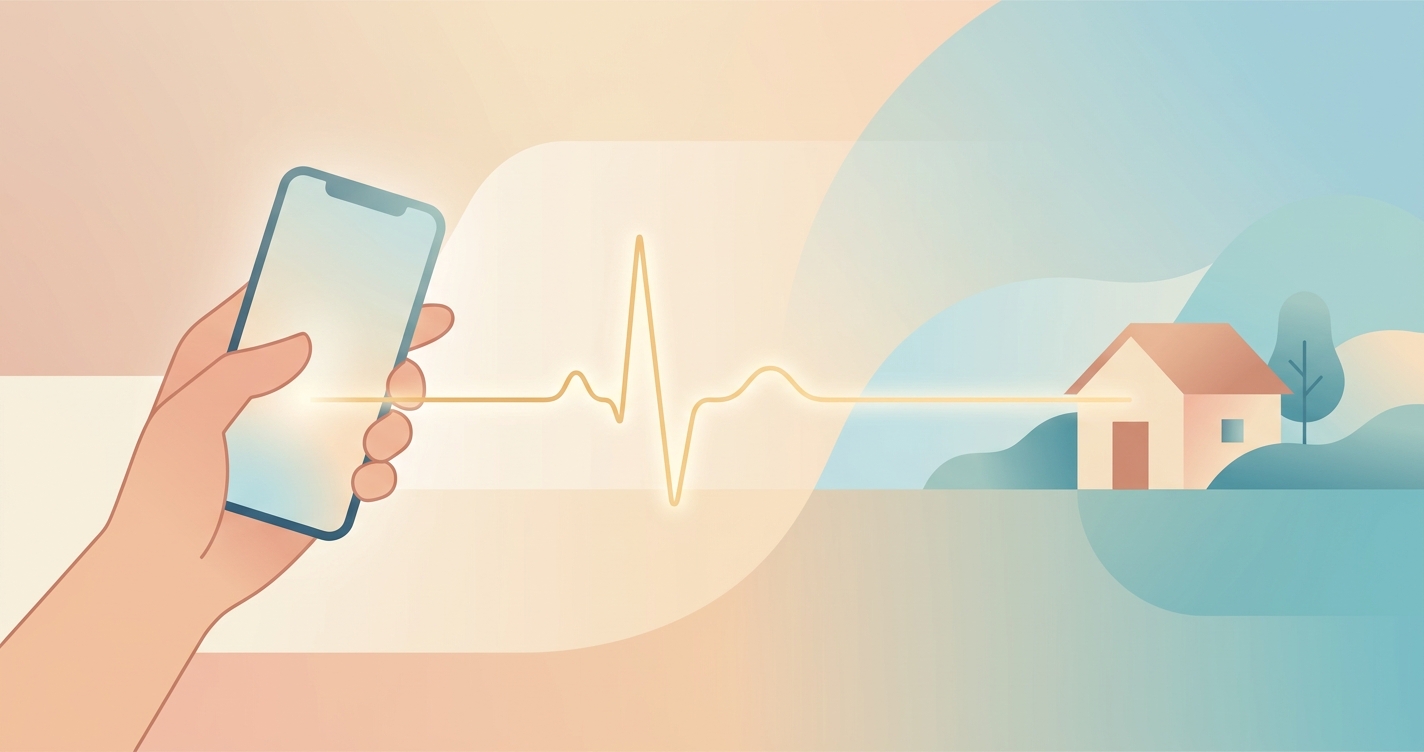
The hardest conditions to catch are the ones that do not hurt. Hypertension, early diabetes, and many of the diseases that quietly drive premature death give no warning at all until damage is already done. That gap between feeling well and being well is exactly why routine checks matter, and it is also why contactless screening in developing nations has become a serious topic for mobile health platforms trying to keep people engaged with their own health over time, not just during a crisis. For the global health teams building these systems, the question is no longer whether to screen people who feel fine. It is how to do it often enough, cheaply enough, and close enough to home that screening becomes a habit rather than an event.
An estimated 1.4 billion adults aged 30 to 79 have hypertension, and roughly 600 million of them, about 44 percent, do not know it. Two-thirds live in low- and middle-income countries. (World Health Organization, Global Report on Hypertension, 2023)
What contactless screening developing nations programs are actually solving
Contactless screening in developing nations describes a class of tools that estimate vital signs and risk indicators without dedicated medical hardware, usually through a smartphone camera or sensor a community health worker already carries. The clinical value is not that any single reading replaces a clinic diagnosis. It is that screening can happen repeatedly, at the doorstep, for people who would otherwise be invisible to the health system until they arrive at a facility with advanced disease.
This matters because the dominant burden in these settings has shifted. Non-communicable diseases now account for over 75 percent of global NCD deaths in low- and middle-income countries, and most of those conditions develop silently. A person who feels well today may have been hypertensive for years. The only way to find that person is to check them on a routine schedule, before symptoms force the issue.
Routine, low-friction screening changes the math in three ways:
- It catches asymptomatic conditions during the long window when intervention is cheap and effective.
- It creates repeated touchpoints, so a single high reading can be confirmed over weeks rather than lost.
- It builds a baseline for each individual, which makes future readings far more meaningful than a one-time number.
The contrast with the traditional model is stark when you lay the two approaches side by side.
| Dimension | Symptom-driven clinic visits | Routine contactless screening |
|---|---|---|
| Trigger for a check | Patient already feels unwell | Scheduled, regardless of symptoms |
| Equipment required | Cuffs, oximeters, lab access | Smartphone the worker already carries |
| Location | Fixed facility, often hours away | Doorstep or community gathering |
| Frequency per person | Rare, often once a crisis hits | Repeatable, monthly or quarterly |
| Cost per additional screen | High, scales with staff and supplies | Low, marginal cost near zero |
| Best at detecting | Advanced, symptomatic disease | Early, silent risk factors |
| Engagement pattern | One-off, transactional | Ongoing relationship |
The right-hand column is what mobile health platforms are trying to deliver. The value proposition is not a better blood pressure reading. It is a sustained relationship with a population that has historically only interacted with the health system in emergencies.
Why feeling well is the worst time to skip a check
The intuition that you only need a check-up when something feels wrong is precisely backwards for the conditions that kill the most people. Hypertension is the clearest example. It is often called the silent killer because it produces no reliable symptoms until it has already damaged the heart, kidneys, or brain. The WHO's 2023 hypertension report found that the number of people living with the condition doubled between 1990 and 2019, from 650 million to 1.3 billion, with nearly all of that growth concentrated in low- and middle-income countries.
The same logic applies to early diabetes, elevated cardiovascular risk, and many maternal complications. By the time a person feels unwell enough to travel to a distant clinic, the cheap interventions, things like diet counseling, low-cost medication, and lifestyle change, have lost much of their power. Screening someone who feels fine is not wasted effort. It is the only point at which prevention is still possible.
Industry applications
Community health worker programs
CHWs are the backbone of preventative care in low-resource settings, but a 2024 scoping review on NCD mitigation among community health workers identified recurring constraints: lack of equipment, inadequate skills, weak supervision, and poor referral systems. Contactless tools address the equipment barrier directly. A worker who can screen with a phone they already own can fold checks into routine household visits, turning every contact into a chance to catch silent disease.
Mobile health platforms
For platform operators, the strategic prize is engagement. A 2024 study of a digital health intervention in rural Bangladesh paired CHWs with regular screenings, remote consultancy, and digital referrals, showing that recurring contact, not single visits, keeps populations connected to care. Contactless screening gives platforms a reason to return to the same household again and again, which is the foundation of any longitudinal health record.
National NCD surveillance
Routine community screening feeds the data that ministries of health use to plan. WHO STEPS surveys in 2024 continued to track NCD risk factors across developing countries, and low-friction screening tools can extend that surveillance reach into populations that fixed facilities never see.
Current research and evidence
The evidence base for community-led, technology-assisted screening is growing quickly. A 2024 pilot in Chiang Mai, Thailand, led by Eduardo and colleagues working with community health leaders, assessed telehealth-based NCD screening and reported significant competency gains among the screeners after training, along with high participant satisfaction. A related body of work on non-invasive biosensors integrated into telemedicine kiosks in rural Thailand reported measurable improvements in the management of diabetes and hypertension.
Cost evidence is encouraging as well. A 2024 scoping review in PMC covering CHW programs focused on NCDs in low- and middle-income countries from 2015 to 2024 examined cost-effectiveness across multiple deployments, reflecting growing confidence among funders that community screening can be economically defensible at scale. Earlier foundational work published in PLOS One on community health workers for NCD prevention in developing countries established that CHWs can deliver preventive services effectively when given the right tools and support.
The consistent thread across these studies is that the technology is rarely the limiting factor. Training, supervision, referral pathways, and sustained funding determine whether routine screening actually improves outcomes. The tools lower the cost of a single check. The program design decides whether those checks add up to better health.
The future of contactless screening developing nations
Several shifts are likely over the next few years. First, expect tighter integration between screening tools and the data systems ministries already run, so that a doorstep reading lands in a national record rather than a disconnected app. Second, expect screening cadence to become a measured outcome in its own right, with programs judged on how consistently they re-screen the same people, not just how many they reach once.
Third, the line between screening and ongoing monitoring will blur. As contactless readings become routine, the same household visit can support both an initial risk flag and the repeated checks needed to confirm and manage a condition. That progression, from one-off detection to continuous engagement, is where the preventative model finally delivers on its promise. The technology that makes a check possible when someone feels well is the same technology that keeps them connected once a risk is found.
Frequently asked questions
Why should I be screened if I have no symptoms?
Because the conditions that cause the most premature death in low- and middle-income settings, especially hypertension and early diabetes, are usually symptom-free until they have already caused damage. Screening while you feel well is the only time prevention is cheap and effective. Once symptoms appear, the easy interventions have often lost their power.
How accurate is contactless screening compared to clinic equipment?
Contactless tools are designed to sort people into risk groups and flag who needs confirmation, not to deliver a final diagnosis. A flagged reading is followed by a confirmatory check or a referral. The value comes from screening many people repeatedly at low cost, which catches silent disease that would otherwise go unnoticed for years.
How often should routine screening happen?
There is no universal number, but the principle is that one reading tells you little while repeated readings build a meaningful baseline. Many community programs aim for monthly or quarterly contact, which lets a single high reading be confirmed over time rather than acted on in isolation or lost entirely.
Does routine screening actually change outcomes?
Evidence from 2024 pilots in Thailand and Bangladesh suggests that recurring, technology-assisted screening by community health workers improves both detection and engagement. The studies are clear that outcomes depend on more than the tool: training, referral systems, and sustained funding all shape whether screening leads to treatment.
Circadify is working on this exact space, building zero-equipment vital signs screening that community health workers can run in the field without dedicated hardware, so routine checks can reach people long before they feel unwell. For implementers evaluating how this works in practice, our deployment case studies and global health analysis are available at circadify.com/blog.