Can a phone camera measure my blood pressure if I have no cuff?
Exploring the science of contactless blood pressure estimation using smartphone cameras for health screening in low-resource settings.
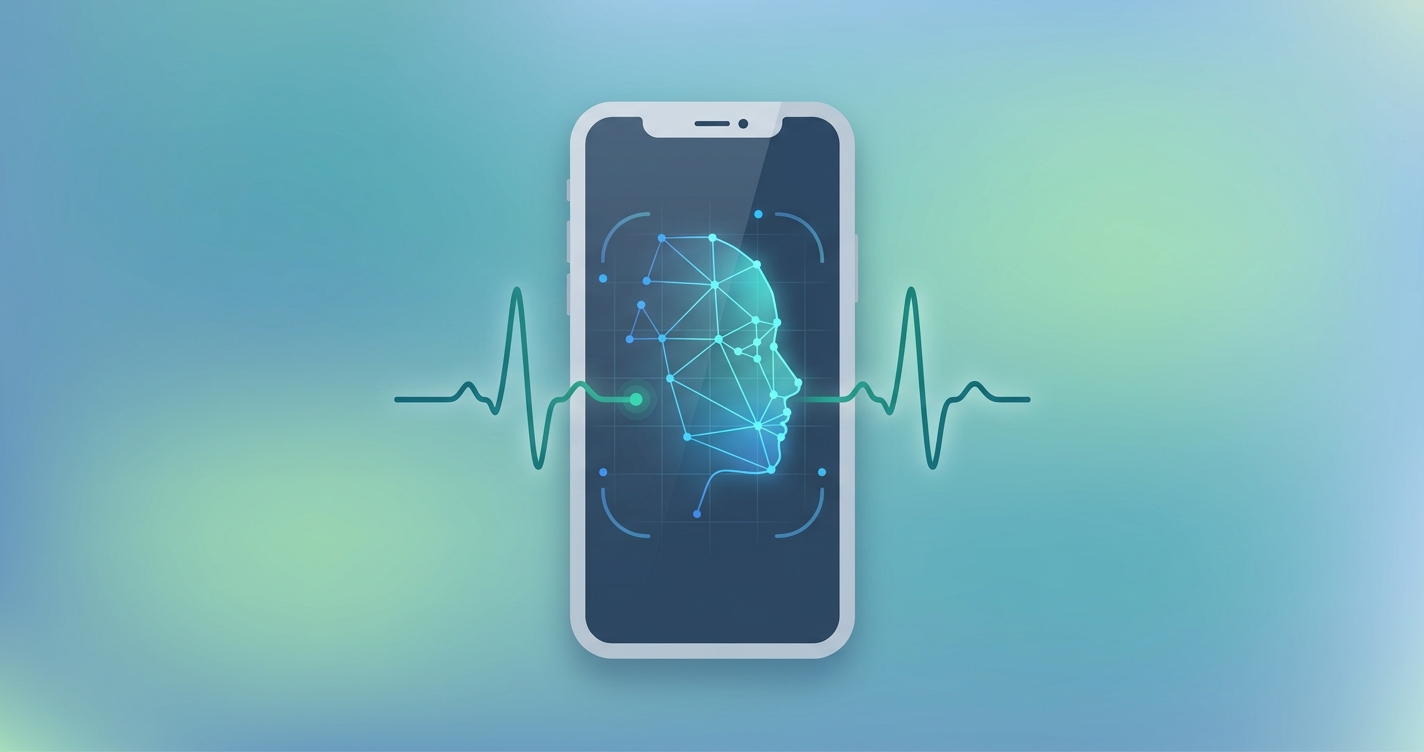
The question of how to measure health when tools are scarce is a critical challenge in global health delivery. For the 1.28 billion people worldwide living with hypertension, the majority of whom are in low- and middle-income countries (LMICs), access to a simple blood pressure cuff is not a given. This equipment gap leads to a massive, silent public health crisis, as undiagnosed and unmanaged high blood pressure is a primary driver of cardiovascular disease, stroke, and kidney failure. In settings where clinics are distant and community health workers (CHWs) are the frontline of care, the need for zero-equipment screening tools is critical. This has pushed researchers and health implementers to ask a vital question: can the smartphone camera, already in the pockets of billions, help bridge this gap?
"An estimated 46% of adults with hypertension are unaware that they have the condition. Less than half of adults (42%) with hypertension are diagnosed and treated, and only about 1 in 5 adults (21%) with hypertension have it under control." - World Health Organization (WHO), 2023
How a phone can measure blood pressure without a cuff
The technology that allows a smartphone to measure blood pressure without a cuff is known as remote photoplethysmography (rPPG). While it may sound futuristic, the principle is an extension of the light-based measurement seen in pulse oximeters. When a person holds their finger over a smartphone's camera and flash, the camera can detect minute changes in the color of the skin. These changes correspond to the pulsing of blood through the capillaries under the skin. The phone captures the waveform of this blood flow, creating a photoplethysmogram.
However, a PPG waveform by itself is not a blood pressure reading. The next, more complex step involves using machine learning algorithms to translate these optical signals into systolic and diastolic blood pressure estimates. Researchers train these algorithms on vast datasets containing paired PPG signals and traditional cuff-based blood pressure readings. The algorithm learns the subtle patterns and features in the waveform that correlate with specific blood pressure levels. One pioneering approach, known as Transdermal Optical Imaging (TOI), developed by researchers including Kang Lee at the University of Toronto, uses the phone's camera to analyze blood flow patterns in the face, eliminating the need even to touch the phone. This research, published in 2019, demonstrated how video of a face could yield blood pressure estimations by tracking changes in skin color as blood flows through underlying vessels.
It is crucial to understand that this method provides an estimation of blood pressure, not a direct measurement in the way a cuff-based device works. The accuracy is highly dependent on the quality of the algorithm, the diversity of the training data, and the conditions of measurement.
| Feature | Traditional Cuff-Based Measurement | Smartphone-Based Estimation (rPPG) |
|---|---|---|
| Method | Auscultatory or Oscillometric; physically restricts and releases artery. | Photoplethysmography (PPG); detects changes in light reflection from blood flow. |
| Equipment | Sphygmomanometer (arm cuff, pump, gauge). | Standard smartphone with a camera; no additional hardware. |
| Accessibility | Limited by equipment availability, cost, and user training. | High; uses ubiquitous technology. Accessible anywhere with a phone. |
| Measurement Type | Direct measurement of arterial pressure. Considered the clinical standard. | Indirect estimation based on optical signals and machine learning models. |
| Use Case | Clinical diagnosis, treatment monitoring, high-accuracy readings. | Opportunistic screening, risk stratification, remote monitoring, trend analysis. |
| Validation | Established protocols (AAMI, ESH, ISO) for clinical accuracy. | Emerging validation standards; performance varies by application and model. |
Industry applications for low-resource settings
For global health programs, the ability to perform contactless screening has profound implications. The target buyer for this technology is not an individual wanting to replace their home cuff, but a health systems planner looking to screen thousands.
- Screening at Scale: CHWs can triage entire communities for hypertension risk in a fraction of the time and cost it would take with cuffs. This allows programs to focus limited resources on high-risk individuals.
- Longitudinal Monitoring: For programs managing chronic diseases like HIV or TB, integrating blood pressure screening into regular follow-ups becomes seamless. It allows for tracking a patient's cardiovascular health over time without requiring extra clinic visits.
- Supply Chain Independence: This technology eliminates the need to procure, distribute, and maintain thousands of physical cuffs, pumps, and gauges, a major logistical and financial burden in many LMICs.
- Data Integration: The output is digital by default, easily integrated into mHealth platforms like DHIS2 or CommCare, providing real-time data for public health surveillance and program management.
Current research and evidence
The evidence base for smartphone-based blood pressure estimation is growing rapidly, but it requires careful interpretation. A 2021 systematic review published in JMIR mHealth and uHealth confirmed that while multiple studies show a strong correlation between PPG signals and blood pressure, accuracy can be inconsistent. The European Society of Hypertension (ESH) currently advises against the clinical use of most cuffless devices for diagnosis until more rigorous validation is complete.
A multi-country study assessing a smartphone application across diverse settings highlighted the challenges. While the technology performed well under ideal conditions, accuracy could be affected by factors like ambient lighting, skin tone, and the specific model of the smartphone. This highlights the need for algorithms trained on diverse populations, a critical factor for equitable performance in global health contexts. The promise remains significant, but the scientific community is still working toward the universal, calibration-free models needed for widespread, reliable deployment.
The future of contactless screening
The trajectory for this technology is focused on overcoming current limitations. Future developments will likely involve:
- More Sophisticated AI: Advanced models that can self-calibrate and adapt to different devices, lighting conditions, and user physiologies.
- Expanded Datasets: Training algorithms on larger and more inclusive datasets representing populations from across Africa, Asia, and Latin America to reduce bias and improve equity.
- Sensor Fusion: Combining rPPG data with other sensor inputs from the phone, such as the accelerometer (to measure pulse transit time), could further refine accuracy.
- Regulatory Pathways: Establishing clear validation protocols and regulatory pathways specifically for cuffless, software-as-a-medical-device (SaMD) technologies.
As these models mature, the ability to measure blood pressure without a cuff will move from a promising research concept to a standard tool in the global health toolkit.
Frequently asked questions
Q: Is a smartphone blood pressure reading as accurate as a cuff? A: Not for clinical diagnosis. Smartphone-based methods provide an estimation for screening and risk stratification. They are designed to identify individuals who may be at risk and require a follow-up measurement with a validated, cuff-based device.
Q: What are the main challenges of using this technology in the field? A: Key challenges include variability in smartphone camera quality, differing ambient light conditions, the need for algorithms trained on diverse skin tones to ensure equity, and user error in capturing a stable video or placing a finger correctly.
Q: Does this technology require regulatory approval? A: Yes. Any application that makes a medical claim, such as measuring blood pressure, must undergo rigorous validation and receive clearance from regulatory bodies (like the FDA in the US or national equivalents) before it can be used for clinical purposes.
The challenge of closing the global hypertension screening gap is enormous, but it is not insurmountable. Zero-equipment, smartphone-based solutions represent a fundamental shift in how public health can be delivered at scale. Circadify is actively working to address these challenges by developing robust, evidence-based tools for global health implementers. To see how these technologies are being deployed in real-world programs, explore our deployment case studies at circadify.com/blog.