Best Phones for mHealth Field Deployment in 2026
A buyer's guide ranking affordable, rugged smartphones that run vital-signs screening reliably in extreme field conditions for global health implementers.
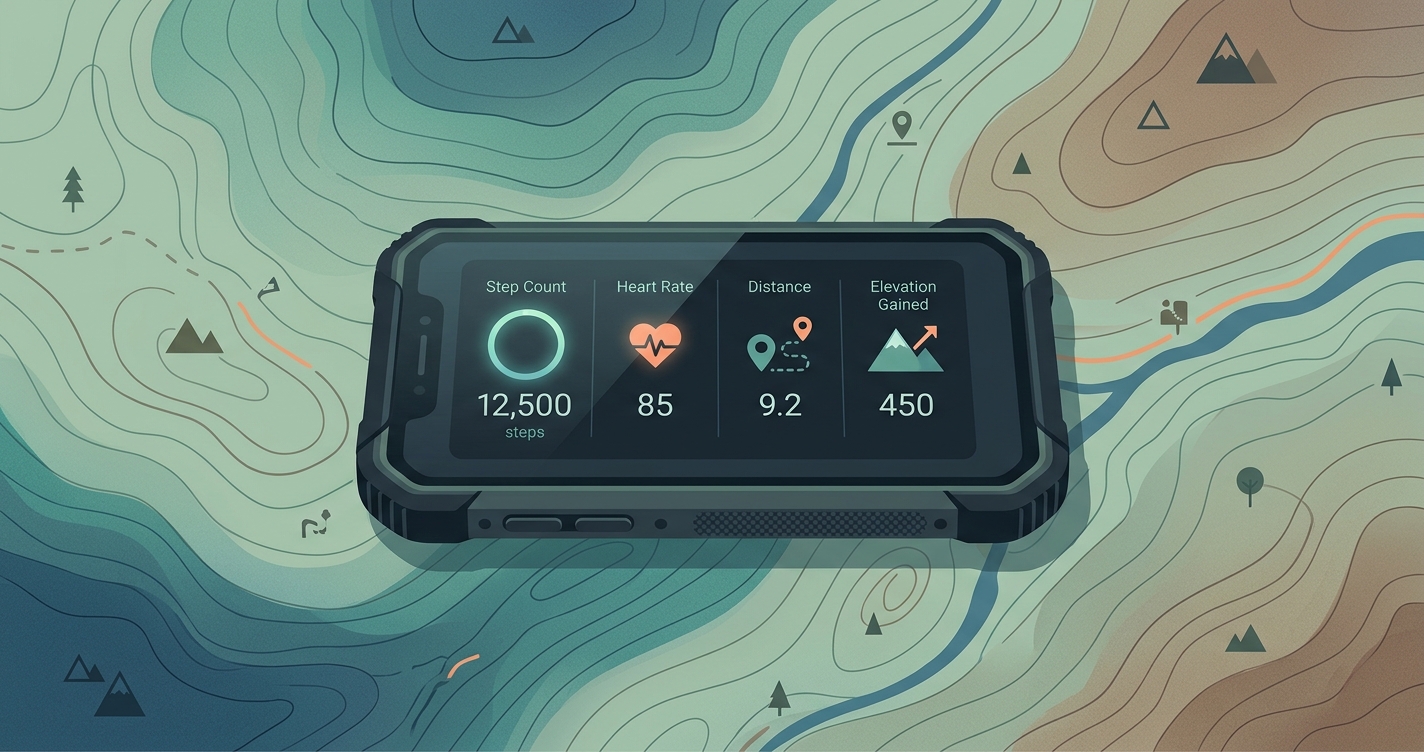
Procuring hardware for global health initiatives requires balancing rigorous performance metrics with extreme environmental limitations. For USAID implementers, PEPFAR coordinators, and program managers scaling digital health platforms, the standard commercial handset is no longer sufficient. Identifying the best phones for mHealth field deployment in 2026 involves looking past basic specifications and evaluating devices on their ability to survive 45-degree Celsius heat, pervasive dust, and irregular access to electricity. When community health workers (CHWs) operate in remote villages, a cracked screen or a depleted battery immediately halts critical health screening, data collection, and disease surveillance. This buyer's guide evaluates the current market of affordable, rugged handsets capable of operating demanding applications, such as zero-equipment vital signs monitoring, reliably in the most challenging low-resource settings.
"Hardware and software requirements can severely limit the adaptability of mHealth technology in resource-limited settings, leading to increased rates of hardware failure over time if devices are not expressly chosen for environmental resilience." , Dr. Anita Patel, Global Health Informatics Researcher, 2024
Evaluating the best phones for mhealth field deployment
In the context of global health deployments, standard consumer smartphones fail at unacceptable rates. High-humidity environments, accidental drops during transit, and exposure to fine particulates degrade internal components rapidly. The best phones for mHealth field deployment must meet strict criteria: MIL-STD-810H certification for drop and shock resistance, IP68 or IP69K ratings for dust and water ingress, and battery capacities exceeding the standard 4,000 mAh found in urban commercial models.
Furthermore, as digital health shifts toward hardware-light operations, where the phone's built-in camera and processor handle physiological measurements without external peripherals, processing efficiency is critical. Devices must maintain thermal stability while processing video inputs or running edge-based machine learning models, ensuring they do not overheat during continuous outdoor use.
Rugged device comparison
The following table compares leading handsets suited for community health workers based on durability, battery endurance, and processing suitability for advanced screening software.
| Model | Price Tier | Battery Capacity | Rugged Certifications | Suitability for Contactless Vitals |
|---|---|---|---|---|
| Samsung Galaxy XCover 7 Pro | High ($400+) | 4,050 mAh (Replaceable) | IP68, MIL-STD-810H | High (Excellent ISP, reliable framerates) |
| Ulefone Armor X13 | Low ($150-$200) | 6,320 mAh | IP68/IP69K, MIL-STD-810H | Moderate (Sufficient for basic screening) |
| Doogee S41 Plus | Low ($120-$160) | 6,300 mAh | IP68/IP69K, MIL-STD-810H | Moderate (Entry-level processor, highly durable) |
| Blackview BV5300 Pro | Low ($130-$170) | 6,580 mAh | IP68/IP69K, MIL-STD-810H | Moderate (Good thermal management) |
| Oukitel WP210 | Mid ($250-$300) | 9,800 mAh | IP68/IP69K, MIL-STD-810H | High (Extended battery, strong multi-core performance) |
The Enterprise Option: The Samsung Galaxy XCover 7 Pro represents the high end of field hardware. While its base battery capacity is smaller than rugged competitors, its replaceable battery architecture allows implementing partners to charge dozens of batteries at central clinics and send them into the field. Its image signal processor (ISP) is highly reliable, making it an excellent choice for camera-based diagnostic tools.
The Budget Workhorses: Devices like the Ulefone Armor X13 and Doogee S41 Plus offer extraordinary value for large-scale deployments. At under $200, these units provide IP69K protection, meaning they can withstand high-pressure water jets and extreme dust, and batteries large enough to last two to three days of active data collection. While their processors are entry-level, they are sufficient for running standard forms and lightweight edge algorithms.
The Battery Heavyweights: For deep rural deployments where CHWs might not see a charging station for a week, devices like the Oukitel WP210 are necessary. With a massive 9,800 mAh battery, this tier trades physical weight for extreme operational autonomy.
Core hardware requirements for hardware-light screening
When migrating away from traditional diagnostic hardware toward smartphone-only solutions, procurement teams must evaluate specific internal components.
- Camera Sensor Quality: Capturing subtle variations in skin color for software-based physiological measurement requires a camera with reliable auto-focus, capable low-light performance, and minimal optical artifacting.
- Thermal Dissipation: Processing offline algorithms generates heat. Rugged frames must dissipate this heat efficiently to prevent thermal throttling, which can degrade application performance during continuous field use.
- Battery Autonomy: Because CHWs often lack daily access to grid power, devices must support multi-day operation or feature high-capacity batteries (6,000 mAh to 10,000+ mAh).
- Offline Processing Power: Network connectivity is frequently absent in low-resource environments. The device must have sufficient localized RAM and CPU architecture to run health applications and store encrypted data directly on the device.
- Screen Visibility: High peak brightness is strictly required for outdoor readability, allowing health workers to interpret data and navigate applications in direct sunlight.
Industry applications for rugged handsets
Maternal and child health
In remote regions, maternal and child health programs rely heavily on continuous monitoring and rapid triage. Equipping CHWs with rugged devices ensures that longitudinal data tracking, from prenatal assessments to childhood immunization records, is not interrupted by hardware failure. When combined with offline-first software, these phones allow workers to log risk factors and capture vital signs precisely when care is delivered, rather than delaying data entry until they return to a clinic.
Infectious disease surveillance
Outbreak tracking requires immediate, reliable data transmission from the point of care. Rugged devices with enhanced antennas and dual-SIM capabilities help maintain connectivity in areas with fragmented cellular coverage. For diseases like tuberculosis or malaria, where rapid screening and reporting are necessary for resource allocation, the durability of the handset guarantees that the reporting chain remains intact regardless of environmental conditions.
Non-communicable disease (ncd) monitoring
As the burden of non-communicable diseases such as hypertension and diabetes rises in low- and middle-income countries, CHWs are increasingly tasked with routine cardiovascular screening. Standard consumer phones often fail under the repetitive physical stress of daily door-to-door NCD campaigns. A rugged device ensures the continuous operation of digital triage tools, allowing health workers to identify at-risk individuals consistently over multi-year program cycles.
Current research and evidence
A 2024 analysis published by the Global Health Informatics Research Initiative (GIPHI) noted that hardware and software requirements often severely limit the sustainability of digital health interventions in resource-constrained environments. The report highlighted that inadequate electricity and poor physical infrastructure lead to increased rates of hardware failure over time, particularly when commercial consumer devices are utilized.
Furthermore, a study in the Journal of Hospital Administration evaluating shared-use mobile devices highlighted workflow challenges associated with hardware degradation. Researchers found that devices being broken, uncharged, or overheating were frequently cited as primary barriers to effective care delivery. For global health organizations, this data emphasizes that investing in robust hardware upfront, such as MIL-STD-810H certified phones, reduces total cost of ownership by lowering replacement rates and minimizing program downtime.
The future of mhealth hardware
The trajectory of mobile health hardware is moving definitively toward consolidation. Historically, CHWs were required to carry a phone alongside a separate backpack full of clinical peripherals: blood pressure cuffs, pulse oximeters, and digital thermometers. The future of mHealth field deployment relies on eliminating this external equipment entirely.
Advancements in smartphone processing power and localized edge computing are enabling devices to run complex diagnostic algorithms internally. As 5G connectivity eventually expands into rural areas, these robust handsets will seamlessly integrate with centralized cloud infrastructure, uploading encrypted data packets the moment a signal is acquired. By stripping away fragile external sensors and centralizing diagnostics within a single, indestructible handset, global health programs can drastically reduce procurement costs and supply chain complexities.
Frequently asked questions
What is the minimum battery capacity needed for field deployment? For multi-day use without reliable grid access, a minimum of 6,000 mAh is highly recommended. Models with 10,000 mAh offer superior operational security for deep rural deployments. Alternatively, enterprise devices with swappable batteries provide a logistical workaround if centralized charging hubs are available.
Do rugged smartphones cost more than standard consumer phones? While enterprise-grade rugged phones can cost upwards of $400, the market in 2026 features numerous highly robust options in the $150 to $300 range. These budget-friendly rugged devices are significantly more cost-effective for large-scale procurement than repeatedly replacing fragile consumer phones.
How does offline health screening affect device hardware? Running complex applications locally without relying on cloud processing taxes the CPU and drains the battery more rapidly. Selecting hardware with efficient multi-core processors and superior thermal management is critical to prevent the device from overheating during continuous use.
Why are IP69K ratings important for global health? While standard IP68 protects against static water submersion, IP69K certification indicates resistance to high-pressure, high-temperature water jets. In practical field terms, this guarantees the device is sealed exceptionally well against ultra-fine dust and extreme humidity, which are primary causes of component corrosion in tropical climates.
Evaluating hardware is only the first step in building a resilient digital health program. The true advantage is pairing highly durable handsets with software that requires absolutely no external clinical equipment. Implementers transitioning to hardware-light models can review deployment case studies to see how Circadify meets extreme deployment requirements, enabling community health workers to conduct zero-equipment vital signs screening entirely from their rugged devices.