Best Offline Health Apps for Villages With No Internet
A ranked review of offline-capable screening apps that sync later, mapped to how teams choose an offline health app for rural areas with no connectivity.
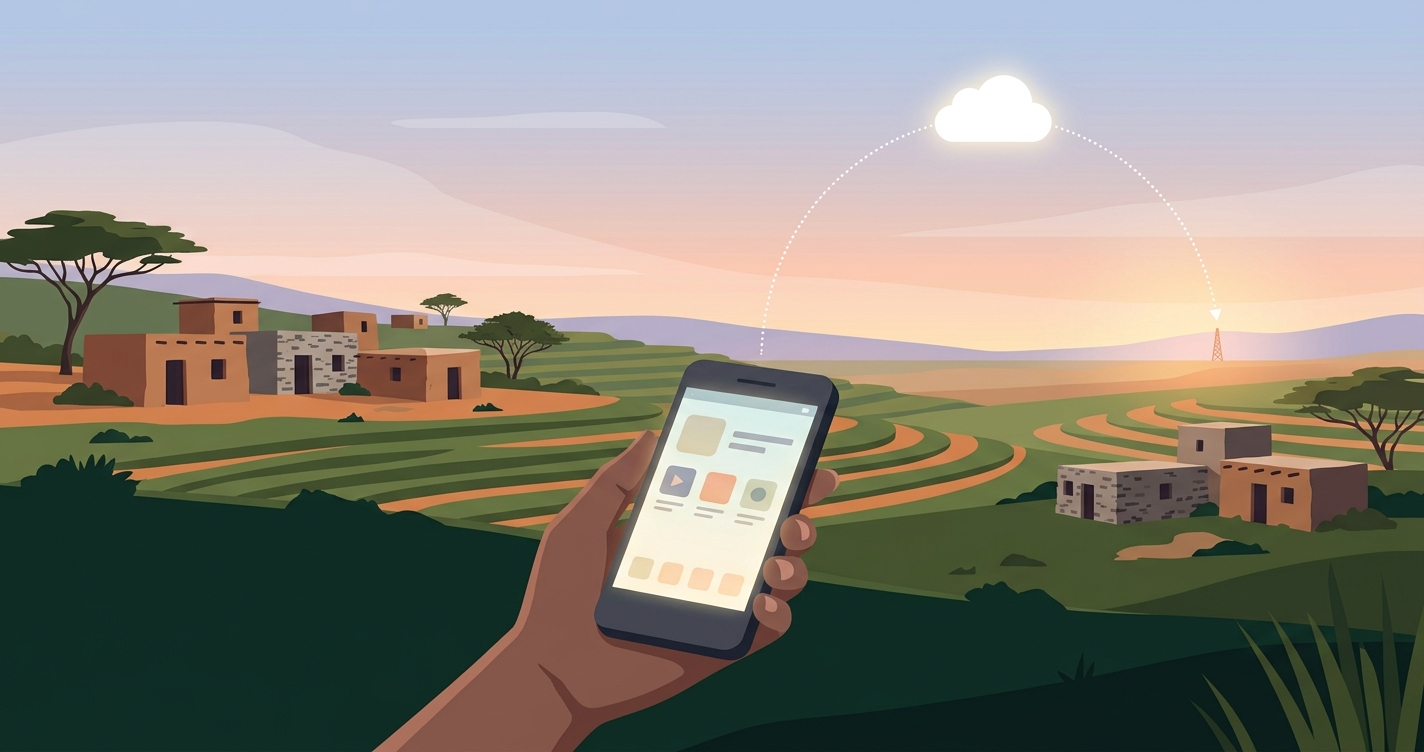
Procurement teams equipping frontline workers in disconnected villages keep running into the same wall: most health software assumes a network that simply is not there. Choosing an offline health app for rural areas is therefore less about feature checklists and more about how gracefully a tool behaves when the last bar of signal disappears for days at a time. The apps that survive in the field are the ones built offline-first, storing every reading locally and syncing later when a worker reaches a town, a hub, or a satellite uplink. This review ranks the categories of offline-capable screening tools that implementers, ministries, and mobile health platforms are actually evaluating, and explains what separates a tool that merely opens without a connection from one that can run a full screening workflow in a place the grid forgot.
A 2024 multi-country survey of community health workers reported that intermittent or absent connectivity remains one of the most consistently cited barriers to digital tool use at the community level, even as smartphone access expands. Offline-first design is the difference between a device that helps and one that sits idle., adapted from findings summarized in PMC, "The use and potential impact of digital health tools at the community level," 2024
Why an offline health app for rural areas is a different category
An offline health app for rural areas is not just an online app with a cache. The distinction matters because the failure modes are different. A cached app can show yesterday's data but often cannot complete a new screening, validate a form, or queue a referral. A true offline-first tool treats the local device as the source of truth and the server as an eventual mirror.
The Community Health Toolkit documents this design philosophy directly, noting that its applications are built to optimize for intermittent, unreliable, and low-bandwidth connections in hard-to-reach communities. Google's Open Health Stack publishes similar offline and sync design guidelines, framing local-first data handling as a baseline requirement rather than a premium feature. Simple.org, a hypertension program platform, has argued publicly that offline-first apps are appropriate for many clinical environments precisely because they remove connectivity from the critical path of care.
For mobile health low resource settings, three properties define the category:
- Local capture: every reading, form, and note is written to the device first, with no network dependency to start or finish a workflow.
- Deferred sync: data uploads automatically when any connection appears, with conflict handling so two field devices do not overwrite each other.
- Degraded-mode integrity: the app must validate entries, flag danger signs, and guide referral logic entirely offline, not just collect raw fields.
Ranking the offline screening app categories
No single product wins for every program, so the honest way to rank options is by deployment fit. The table below compares the main categories of no internet health screening tools that buyers evaluate, scored on how they handle disconnection, screening depth, and operational overhead.
| Tool category | Offline capability | Screening depth | Sync model | Best-fit buyer |
|---|---|---|---|---|
| Offline-first CHW platforms (toolkit-based) | Full workflow offline | Protocol-driven forms, danger-sign logic | Auto background sync on reconnect | Ministries and large implementers building national CHW programs |
| Form-based data collection apps | Full offline forms | Configurable but manual logic | Manual or scheduled sync | Researchers and survey-heavy field studies |
| Disease-specific offline apps (BP, TB, maternal) | Full offline for one workflow | Deep in one domain | Periodic sync at hubs | Single-disease vertical programs |
| Offline AI triage and predictive screening | On-device model, no cloud needed | Symptom and risk prediction | Sync results when online | Programs needing decision support where no clinician is present |
| Contactless smartphone vitals capture | Capture offline, queue results | Vital signs without peripherals | Deferred upload after capture | Zero-equipment community screening at scale |
A few patterns are worth pulling out of the table.
- Toolkit-based platforms rank highest for breadth because they were architected offline-first from the start, but they carry heavier configuration and IT requirements.
- Form-based collection tools are the most flexible for research, yet they push clinical logic onto the program designer rather than building it in.
- Disease-specific apps win on depth and simplicity for vertical programs, at the cost of fragmenting a worker's device into many single-purpose tools.
- Offline AI triage is the fastest-moving category, with on-device models removing the cloud dependency that once made smartphone diagnostics global health applications impractical in dead zones.
Industry Applications
National CHW programs
For governments scaling community health worker networks, offline-first platforms are the default. Workers in remote catchments collect data across weeks, then sync when they reach a health post or supervisory meeting. The priority here is reliability and standardized protocols over feature richness, because thousands of low-literacy users must get consistent results.
Single-disease vertical screening
Hypertension, tuberculosis, and maternal health programs often deploy disease-specific offline apps. These tools embed one protocol deeply, which keeps training short and danger-sign logic tight. The tradeoff is device clutter when a worker must juggle several vertical apps, a problem implementers increasingly solve by consolidating onto one offline-first base.
Humanitarian and disaster response
In refugee camps and flood-cut regions, connectivity is not just intermittent, it can vanish entirely for weeks. Offline-first electronic health records have been studied for exactly these vulnerable populations. A mixed-methods feasibility study published in PMC examined an offline-first EHR for displaced and unstable settings, finding that local-first capture preserved continuity of care where cloud systems would have failed.
Zero-equipment screening at scale
The newest application combines offline capture with contactless smartphone vitals, letting a worker screen for risk without a cuff, oximeter, or thermometer. Results queue locally and sync later. This is the category most relevant to programs that need to screen large populations quickly with nothing more than a phone in hand.
Current research and evidence
The evidence base for offline-first mHealth has matured from anecdote to study. A 2024 scoping review in PMC, "The Impact of Digital Health Solutions on Bridging the Health Care Gap in Rural Areas," identified limited internet connectivity and digital literacy as the two dominant barriers to rural digital health adoption, reinforcing why offline capability is a precondition rather than a nicety.
On the diagnostic side, a 2023 study described in "Towards Real-time Offline Health Screening Using AI-based Predictive Models" demonstrated an AI-driven malaria screening system designed for offline deployment, reporting high diagnostic accuracy using demographic and symptom inputs without any cloud connection. This matters because it shows decision support, not just data capture, can run entirely on-device.
Researchers studying community health workers in low- and middle-income countries, including work summarized in PMC on mHealth in integrated community case management in Kampala, Uganda, have repeatedly found that mobile tools improve data quality by reducing manual record-keeping errors. The benefit only holds, however, when the tool functions during the actual moment of care, which in rural settings means offline.
A consistent caveat across these reviews is that offline performance is rarely tested rigorously. Many published pilots evaluate apps in conditions with better connectivity than the eventual deployment site, which inflates expectations. Buyers should ask vendors for evidence gathered in genuinely disconnected conditions, not lab or urban pilots.
The future of offline health screening
Three shifts are reshaping what an offline health app for rural areas can do. First, on-device machine learning is moving triage and risk prediction off the cloud, so smartphone diagnostics work in true dead zones rather than requiring a round trip to a server. Second, offline-first is becoming a published design standard, with frameworks from the Community Health Toolkit and Open Health Stack giving smaller developers a tested blueprint instead of forcing each team to reinvent sync logic. Third, contactless capture is removing the peripheral devices that used to break, drift out of calibration, or run out of consumables in the field.
The convergence point is a single phone that captures vital signs without equipment, runs risk logic locally, and syncs to national systems whenever a connection appears. That combination would let a worker screen an entire village with no internet and no kit, then reconcile every record the moment they reach signal.
Frequently asked questions
What makes an app truly offline-first rather than just cached?
A cached app stores data for viewing but often cannot complete new tasks offline. A true offline-first app writes every new reading, form, and referral to the device as the primary record, validates and applies clinical logic locally, and treats the server as an eventual sync target rather than a live dependency.
How does data get synced if a village has no internet at all?
Offline-first tools queue data on the device and upload automatically whenever any connection appears, whether the worker travels to a town, returns to a health post, or connects through a periodic satellite or hub link. Robust tools also handle sync conflicts so two field devices do not overwrite each other's records.
Can offline apps do real screening or only collect raw data?
The better tools do real screening. They apply danger-sign logic, flag risk categories, and guide referral decisions entirely offline. A 2023 study even demonstrated an offline AI model performing malaria risk screening on-device, showing that decision support, not just data entry, can run without connectivity.
What should buyers ask vendors before deploying in no-signal areas?
Ask for evidence collected in genuinely disconnected conditions rather than urban or lab pilots, confirm the full screening workflow completes offline, and verify the sync model handles long gaps and device conflicts. Battery use, low-end device support, and low-literacy interface design are equally decisive in the field.
Circadify is addressing this space with offline deployment options built for zero-equipment screening where connectivity cannot be assumed, designed so community health workers capture vital signs on a phone and sync when signal returns. To see how field teams are putting this into practice, explore the deployment case studies in the global health section at circadify.com/blog.