
5 Grant Funders Supporting Mobile Health Technology for Frontline Workers
A research-based look at five grant funders backing mobile health technology for frontline workers, from early pilots to scaled public-health deployment.
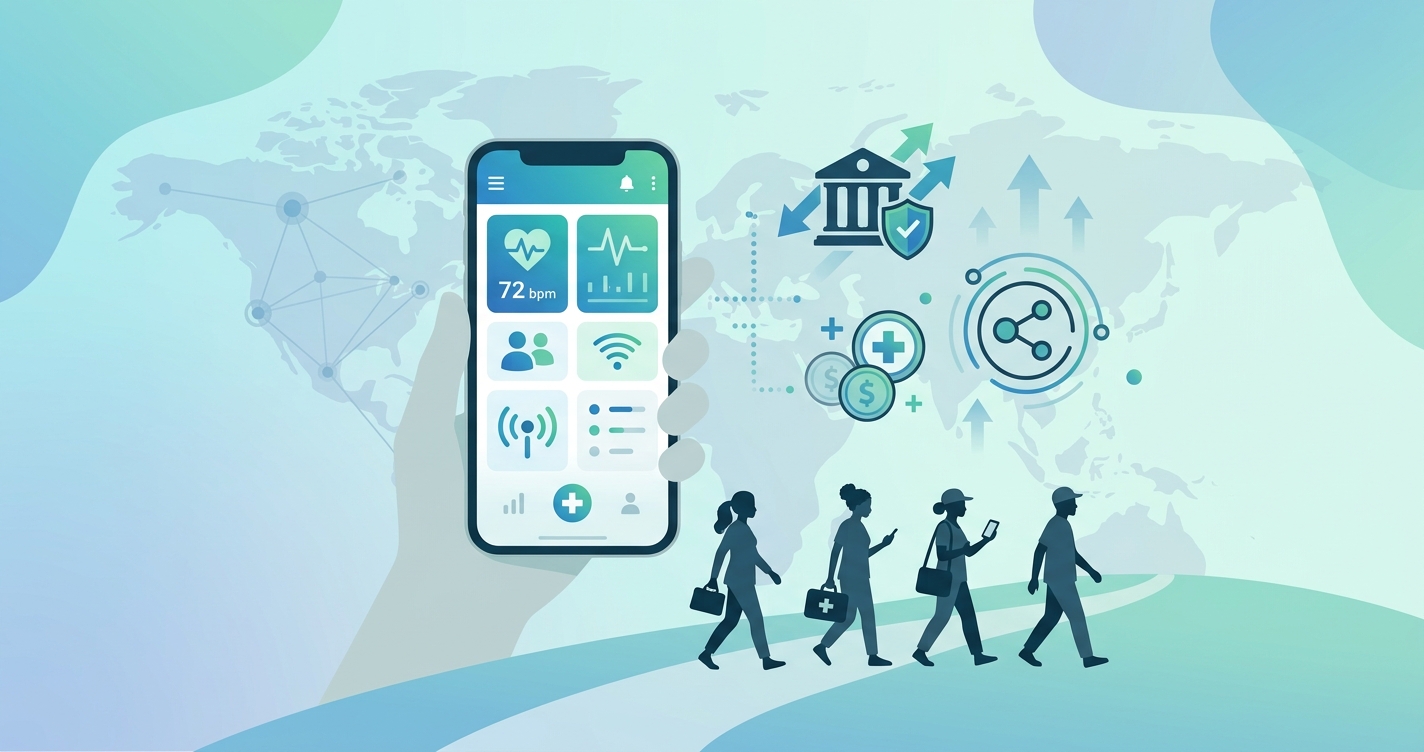
5 Grant Funders Supporting Mobile Health Technology for Frontline Workers
Grant funders now shape a surprising amount of the mobile-health roadmap for frontline workers. In low-resource settings, the real question is often not whether smartphone-based screening, supervision, and reporting tools are technically possible. It is which funders are willing to back the messy middle: early feasibility work, country adaptation, interoperability, workforce training, and the long stretch from pilot to routine use.
"Digital health interventions are not a substitute for functioning health systems, and can only support health systems if they are carefully designed and implemented." — WHO guideline contributors led by Alain Labrique and Pascale Allotey (2019)
Grant funders supporting mobile health technology for frontline workers are funding different stages of the stack
Not every grant maker funds the same thing. Some back early research. Some pay for health-system infrastructure. Others fund open-source digital public goods or transition-to-scale work. That distinction matters for ministries, implementing partners, and product teams because the right funding target depends on whether the need is evidence generation, deployment, data integration, or national expansion.
Courtney T. Blondino, Alex Knoepflmacher, Ingrid Johnson, Cameron Fox, and Lorna Friedman reported in 2024 that community health workers across 28 countries were already using digital tools at meaningful rates, while cost remained a major barrier to wider use. That is probably the clearest reason this funding category matters. Frontline demand exists. The constraint is usually capital, operating support, or both.
Here are five funders worth tracking.
| Funder | Best fit for applicants | What it tends to support | Why it matters for frontline mobile health |
|---|---|---|---|
| NIH Fogarty International Center | Research institutions and LMIC partnerships | mHealth evidence generation, feasibility, validation, outcomes research | Useful when teams need rigorous proof and publication-grade evidence |
| The Global Fund | National programs, major implementers, disease programs | Digital health systems, CHW tooling, data infrastructure, disease-program operations | Strong fit for scaled deployment in HIV, TB, and malaria programs |
| Gates Foundation | Global health innovators, data and platform builders, health-system partners | Digital health, AI, primary-care workflows, data systems | Influential where mobile tools connect to broader primary-healthcare modernization |
| Grand Challenges Canada | Early and growth-stage innovators in low-resource settings | Seed funding and transition-to-scale support for health innovation | Good match for teams moving from promising pilot to wider field use |
| UNICEF Venture Fund | Open-source startups and digital public goods builders | Low-resource digital tools, frontier tech, health-system innovation | Relevant for open, reusable platforms that can reach frontline teams in fragile settings |
A practical way to read this table is to think in layers. NIH Fogarty can help teams prove something works. The Global Fund can help countries and large implementers scale digital operations around disease programs. Gates can influence system design at a strategic level. Grand Challenges Canada is often where unconventional field-ready ideas get breathing room. UNICEF Venture Fund matters when the goal is a digital public good rather than a closed product.
- Research funders usually ask for stronger study design and institutional partnerships
- Scale funders usually care more about interoperability, procurement, and system fit
- Open innovation funders often prioritize low-resource usability and reuse
- The strongest proposals explain who will maintain the tool after the grant ends
Which five funders stand out right now
1. NIH Fogarty International Center
Fogarty's current mobile-health funding opportunity, PAR-25-242, is one of the clearest fits for teams building evidence around mobile health technology in low- and middle-income countries. The program supports phased R21/R33 work, which means applicants can fund early development and feasibility work first, then move into larger validation and effectiveness studies if milestones are met.
That structure is unusually important for frontline-worker technology. A lot of mobile-health ideas die in the space between prototype enthusiasm and field evidence. Fogarty gives academic and implementation partners a way to study whether a tool improves outcomes, fits workflow, and holds up in real operating conditions.
The opportunity also requires meaningful LMIC partnership. For teams working with ministries, universities, or implementation networks in-country, that requirement is not a burden so much as a signal of seriousness.
2. The Global Fund
The Global Fund is a very different kind of backer. Its digital-health portfolio is tied less to innovation theater and more to health-system operations. According to the organization's own digital-health materials, it invests about US$150 million a year in digital tools across more than 90 countries.
That scale matters because frontline mobile health technology is rarely just an app. It usually touches reporting, diagnostics, disease surveillance, supply chains, remote supervision, and payment systems. In HIV, TB, and malaria programs, those pieces already sit inside major funding and implementation structures. The Global Fund can therefore matter more than a classic innovation grant when the goal is sustained field deployment rather than a narrowly scoped pilot.
I keep coming back to one simple point here: if a proposal depends on national workflows, district reporting, and community-level execution, funders with operating-system reach are often more useful than funders looking for novelty.
3. Gates Foundation
The Gates Foundation has become a central strategic funder in digital health because it operates where primary care, data systems, AI, and delivery economics meet. Its digital-health work is broader than frontline-worker tools alone, but that breadth is exactly why it deserves attention.
Mobile health technology for frontline workers rarely creates value in isolation. It creates value when it improves triage, supervision, continuity, or population data inside a larger primary-healthcare system. Gates-backed work often lives in that larger frame.
For applicants, that means proposals should usually be written as health-system infrastructure rather than just point solutions. A smartphone screening workflow that reduces hardware burden for community teams may be interesting. A workflow that also feeds better decision support and stronger data visibility at primary-care level is usually more compelling.
4. Grand Challenges Canada
Grand Challenges Canada remains one of the more practical funding routes for teams that are innovative but not yet institutionally huge. Its digital-health and community-health investments often target better, faster, and more affordable care in resource-constrained environments.
That is a good fit for frontline-worker tools because the best field technologies often look modest before they look transformative. They may simplify screening, improve referral follow-up, or remove extra equipment from a CHW workflow. Those are not always dramatic demos. They are, however, the kinds of changes that can make deployment actually workable.
Grand Challenges Canada is also useful because it thinks in terms of transition to scale. That may be the most honest lens in the sector. Plenty of ideas can raise a seed round or win a pilot. Far fewer can survive procurement, training, supervision, and country adaptation. GCC's model is built around that problem.
5. UNICEF Venture Fund
UNICEF Venture Fund deserves attention because it invests in open-source solutions and digital public goods optimized for low-resource settings. For mobile health technology aimed at frontline workers, that is a distinct angle.
Some health programs do not just need a vendor. They need a reusable foundation they can adapt, localize, and connect to other systems over time. UNICEF's emphasis on open products, child and community health, and fragile-context usability makes it especially relevant for organizations building tools that may need to travel across countries or implementer networks.
The fund is also notable for backing early-stage companies and technical teams from emerging markets. That matters. Some of the most useful frontline tools are designed closest to the deployment reality they are meant to serve.
Industry applications for mobile health grant funding
Community health worker screening and triage
CHW programs often need the same things at once: quick intake, decision support, referral capture, and simple follow-up. Funding can support the technology itself, but it also has to cover phones, training, supervision, and integration. Without that, the tool stays interesting but operationally thin.
Disease-program deployment
Programs focused on HIV, TB, malaria, maternal health, or NCD screening often have stronger grant pathways because the use case is clearer and the reporting architecture already exists. This is where funders like the Global Fund can matter most.
Digital public goods and platform layers
Some teams are not trying to fund one app. They are trying to fund reusable infrastructure: open-source workflows, shared modules, analytics layers, or interoperable mobile tooling. UNICEF Venture Fund and strategic philanthropic backers are better fits here than conventional research grants.
Evidence-building for procurement decisions
Procurement teams and ministries still need evidence. That is where research-oriented grant funding stays relevant. Alain Labrique and colleagues argued back in 2018 that digital health would only fulfill its promise if it moved beyond fragmented pilots and connected to real health-system needs. Fogarty-style funding helps build the evidence base required for that move.
Current research and evidence
The evidence for investing in frontline digital tools is stronger than the evidence for any one funding model.
Blondino and colleagues' 2024 multi-country study of 1,141 community health workers found substantial existing use of digital devices and a strong belief that digital tools can improve community-level impact. Just as important, the study identified cost as a major barrier. That finding lands squarely on the funding question. If frontline workers and programs already see value, then grants matter not because they create demand, but because they lower the access barrier.
The WHO's 2019 digital interventions guideline, developed with leadership from Alain Labrique and Pascale Allotey alongside systematic-review teams including Nicholas Henschke, Nicola Maayan, Smisha Agarwal, Heather Ames, and Josip Car, made a related point from a policy angle. Digital tools can support registration, decision support, telemedicine, and data exchange, but only when implementation is grounded in real systems. In plain English, money aimed at software alone is usually not enough.
A second important thread comes from funder design itself.
- Phased research grants are useful when evidence is still thin
- Systems funders are useful when deployment touches national workflows
- Innovation funds are useful when field-ready ideas still need product and market adaptation
- Open digital public goods funds are useful when programs need reusability rather than lock-in
That is why there is no single best grant funder for mobile health technology for frontline workers. The best one depends on what stage the work is in.
The future of funding for frontline mobile health technology
The next few years will probably separate generic digital-health enthusiasm from more disciplined frontline investment. Funders are getting less interested in pilot theater and more interested in measurable service capacity, interoperable data, and deployment models that survive outside a demo district.
That shift should benefit teams building smartphone-based screening and low-equipment workflows for community and field settings. The reason is practical: the less extra hardware a program has to buy, ship, maintain, and replace, the easier scale becomes. Solutions like Circadify are being brought to market in that direction, especially for programs that want smartphone-based vital-signs screening without adding much equipment burden. For broader context, see Circadify's global health coverage.
My own bias is that the strongest proposals will look a little less flashy and a lot more operational. They will explain integration, supervision, training, and total cost of ownership. Funders have seen enough pilots. What they want now is a believable path to routine use.
Frequently Asked Questions
Which grant funder is best for early-stage mobile health research?
NIH Fogarty is one of the strongest options when a team needs structured evidence generation, feasibility work, and later-stage validation in low- and middle-income countries.
Which funder is most relevant for large public-health deployments?
The Global Fund stands out for scaled digital-health investment tied to HIV, TB, malaria, and broader health-system operations across many countries.
Are there grant funders for open-source frontline health technology?
Yes. UNICEF Venture Fund is especially relevant for open-source digital public goods designed for low-resource settings, while other innovation funders may also support open platforms depending on the use case.
What do grant funders usually want to see in mobile health proposals?
Most want a clear deployment problem, evidence that the workflow fits frontline users, a plan for interoperability and training, and a realistic view of sustainability after the grant period.
For related reading, see our analysis of mobile health in low-resource settings, how smartphone screening integrates with DHIS2, and building a national CHW digital toolkit.